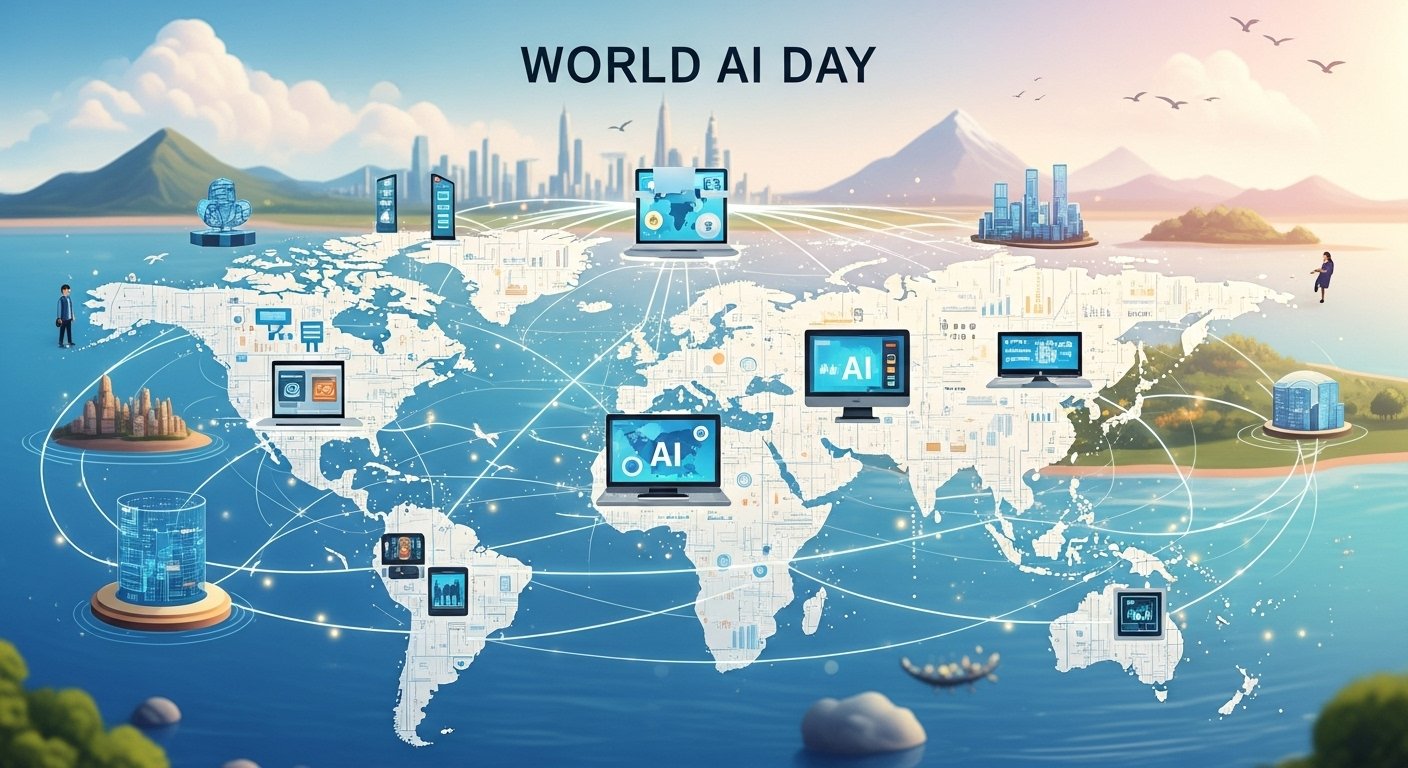
Beyond the Hype: Celebrating World AI Day and AI’s profound Impact on Humanity
What if the technology quietly guiding a daily commute, powering streaming recommendations, and even helping doctors diagnose diseases had a special day of recognition? It does, and its influence is far more profound than one might imagine. Join us as we celebrate World AI Day and delve into the multifaceted ways Artificial Intelligence is reshaping human society.
The Dawn of a New Era: Unpacking World AI Day
Artificial Intelligence has transitioned from a futuristic concept to an integral part of daily life, prompting the establishment of dedicated observances to acknowledge its growing influence. “AI Appreciation Day,” observed annually on July 16, serves as a focal point for this recognition. This observance, created in May 2021 by A.I. Heart LLC, celebrates the transformative power of artificial intelligence in shaping the world and honors the researchers, engineers, and visionaries who advance these technologies.1 It highlights how AI drives efficiency and innovation across diverse industries, from enhancing healthcare diagnostics to streamlining business operations, ultimately making life more connected and insightful.1
Beyond celebrating technological breakthroughs, AI Appreciation Day also serves as a crucial moment for reflection on ethical AI development, emphasizing the need for inclusivity and fairness. It aims to inspire a broader dialogue on AI and its ethical implications.1 Industry leaders consistently affirm AI’s significance. Anand Mahurkar, CEO & Founder of Findability Sciences, notes AI’s role in reshaping industries and enhancing daily life, emphasizing its limitless opportunities for innovation and efficiency despite growing complexities.1 Rajeev Singh, Managing Director of BenQ India, observes a consumer shift towards AI solutions that truly understand, adapt, and add value.1 Saurabh Kumar, Partner at Deloitte India, underscores AI’s role in driving bold transformations and empowering faster, smarter decisions, advocating for “inclusive intelligence” as a destination beyond mere operational excellence.1 Pankaj Rana, CEO of Hisense India, highlights AI’s true power in its ability to intuitively simplify lives, adapting to preferences and enhancing comfort behind the scenes.1 Individuals are encouraged to participate in this dialogue through campaigns like #WOAII (Without A.I. I _____), prompting reflection on the specific benefits of AI they would miss.2
Complementing AI Appreciation Day, “International Accessible AI Day” is observed annually on July 18. This distinct observance is dedicated to recognizing the importance of making AI technologies accessible and inclusive for everyone.4 This day directly addresses significant biases that persist within AI systems, particularly those disproportionately impacting people with disabilities. Such biases frequently arise because AI systems reflect the prejudices embedded in the data they are trained on.4 The goals of this day include championing the development of AI systems that are universally accessible, celebrating diverse contributions to AI advancement, and educating on specific accessibility needs within AI applications. The symbolic connection to Euler’s number (2.718) on July 18th further highlights the vast potential and exponential growth that inclusive AI can offer across all segments of society.4
The existence of two distinct AI observances in close proximity, each with a slightly different emphasis, signals a significant evolution in the public and industry discourse surrounding AI. While “AI Appreciation Day” initially focuses on broad innovation and impact, its general emphasis on ethics is notably expanded upon by “International Accessible AI Day.” The latter’s explicit and urgent focus on inclusivity, bias mitigation, and accessibility indicates a critical maturation in how society views AI. This progression suggests that the initial phase of awe surrounding AI’s capabilities is evolving into a more nuanced understanding that acknowledges AI’s systemic flaws and the imperative for equitable development. This shift from general appreciation to specific ethical action reflects a growing societal demand for responsible AI, moving beyond mere technological advancement to consider its societal implications comprehensively.
Furthermore, the very act of creating dedicated days for AI underscores the profound impact this technology has already exerted on human society. The immediate inclusion of ethical considerations, particularly concerning bias and accessibility, within these celebrations implicitly acknowledges AI’s potential for significant societal harm if its development and deployment are left unchecked.1 This is not simply about celebrating a novel technology; it represents a collective realization that AI is so powerful it necessitates dedicated reflection, dialogue, and proactive measures. These measures are essential to ensure that AI’s benefits are widely shared and its risks are effectively mitigated. The urgency surrounding “ethical AI development” and the pursuit of “inclusive intelligence” 1 are not merely moral stances but practical necessities for the sustainable and equitable integration of AI into society.
AI’s Transformative Footprint: Shaping a Smarter Society
Artificial intelligence is profoundly reshaping numerous sectors, driving efficiency, enhancing capabilities, and addressing complex challenges across the globe. Its applications are diverse, ranging from critical medical advancements to optimizing daily urban living.
Revolutionizing Healthcare
In healthcare, AI is enhancing precision in medical diagnostics and treatment. AI systems are instrumental in developing risk assessment models for cancer diagnosis and improving CT image reconstruction, which is vital for precise diagnostics amidst increasing patient volumes.6 These systems can rapidly detect early signs of diseases, as exemplified by Google’s DeepMind Health, which developed an AI system to analyze retinal images and identify diabetic retinopathy, a condition that can lead to blindness if undiagnosed.6 AI also plays a crucial role in creating highly personalized treatment plans by analyzing a patient’s genetic profile and medical history, leading to more effective and targeted interventions.7
The process of drug discovery and medical research is significantly accelerated by AI. By analyzing complex biological data, AI identifies potential drug candidates and predicts their effects, drastically reducing the time required to bring new medications to market.6 Operationally, AI-driven telehealth platforms enable remote consultations and real-time patient monitoring, streamlining care delivery.6 Virtual nursing assistants and chatbots provide 24/7 guidance, symptom checking, and medication reminders, alleviating strain on overburdened healthcare systems and increasing accessibility, particularly for remote patients.6 Furthermore, AI optimizes intelligent healthcare data management, ensuring quick access to patient records and facilitating data-driven decisions that improve operational efficiency and patient care quality.6 Even in surgical procedures, AI-guided robotic systems enhance precision and control, leading to improved patient outcomes.6 AI applications also extend to mental health support, monitoring patient data and offering interventions like virtual counseling or cognitive behavioral therapy when necessary.6
Smarter Living & Mobility
The impact of AI is also evident in smarter living and mobility solutions. Self-driving cars stand out as a prominent example, utilizing sensors, cameras, radar, and LiDAR technology to perceive environments and navigate safely. These vehicles hold the potential to eliminate up to 90% of road accidents caused by human error.8 In urban environments, AI-powered traffic signals and predictive analytics are used to manage congestion, reducing it by up to 25%, minimizing travel time, and improving fuel efficiency.8
Public transportation and logistics are also benefiting from AI’s optimizing capabilities. AI improves the efficiency and reliability of public transit by analyzing passenger flow data to optimize schedules and routes.8 In logistics, AI streamlines fleet management through real-time vehicle tracking, route optimization, and predictive maintenance, leading to reduced operational costs and faster delivery times.8 Beyond these large-scale applications, AI enhances daily conveniences through ride-hailing services that determine optimal routes and estimated times of arrival 10, navigation apps like Waze and Google Maps that provide real-time traffic updates and suggest alternative routes 11, and advanced home security systems that leverage facial recognition and can autonomously notify emergency services.10
Empowering Industries
AI is a pivotal force in empowering various industries, driving innovation and efficiency. In finance, AI is crucial for fraud detection and prevention, analyzing spending patterns and flagging suspicious transactions in real-time.10 It also underpins algorithmic trading, risk management, and credit scoring, while providing personalized financial insights.12 AI-driven chatbots and virtual assistants, such as Bank of America’s “Erica,” have handled over 1.5 billion interactions, offering 24/7 customer support, reducing wait times, and significantly improving customer satisfaction.11
In education, AI is transforming learning by providing intelligent tutoring systems that offer personalized feedback 14 and automated grading and assessment tools that streamline tasks for educators.15 It aids in smart content creation for digital lessons and individualized education plans.15 Furthermore, AI-driven assistive technologies, like speech recognition software for hearing-impaired students or tools for dyslexia detection, ensure more inclusive learning environments.15
The creative industries are also experiencing AI’s influence. AI is emerging as a powerful tool in music composition, personalizing listening experiences, and even reshaping gastronomy.16 In visual arts and writing, tools like DALL-E and ChatGPT can generate vivid images and coherent narratives from textual prompts.16 AI also enhances interactive and immersive media, including virtual, augmented, and mixed reality applications, as well as image editing. Robots guided by AI are even being used for physical creations in architecture and fashion design, challenging traditional notions of artistry and craftsmanship.16 This integration sparks a fascinating debate: is AI a threat to human creativity, potentially making individuals “lethargic” and restricting thinking power, or is it an “opportunity” to creatively blend human efforts with AI, fostering adaptation and new forms of innovation?17
Boosting Efficiency & Innovation
AI excels at boosting efficiency and innovation across business operations. It automates mundane, time-consuming tasks such as data entry, invoice processing, and email sorting. This automation leads to significant cost savings, a remarkable reduction in errors, and enhanced productivity across various business functions.18 For instance, companies like allpay have reported a 10% increase in developer productivity by using AI-powered tools like GitHub Copilot.19
AI systems also significantly enhance decision-making. They process and analyze vast datasets in milliseconds, identifying subtle patterns and extracting actionable information that would overwhelm human capabilities. This leads to more informed budgeting, robust risk mitigation, and strategic planning.18 In the legal industry, AI revolutionizes document reviews, analyzing thousands of legal documents in mere hours—a task that previously took weeks—while bringing unprecedented accuracy to legal research.20 Customer service is also experiencing excellence through AI-powered chatbots and predictive personalization, which enhance engagement by providing instant support and tailored experiences, allowing human employees to focus on more complex, creative work.18 Furthermore, AI plays a crucial role in
cybersecurity, enabling real-time threat detection, identifying unusual patterns, and safeguarding against cyber threats, fraud, and financial losses.18
Addressing Global Challenges
AI offers significant potential in addressing some of humanity’s most pressing global challenges. In climate change mitigation, AI can develop and optimize new green and renewable energy systems, minimize carbon emissions, and improve decision-making for sustainable resource management.23 AI also accelerates
scientific discovery by analyzing vast biomedical data, generating new hypotheses, and uncovering previously unknown disease mechanisms.7 Global initiatives like the UN’s “AI for Good Summit,” organized by the International Telecommunication Union (ITU) in partnership with over 40 UN Sister Agencies, explicitly aim to harness AI’s potential to solve global challenges and achieve the Sustainable Development Goals (SDGs), fostering innovation, building skills, and advancing partnerships.24
A deeper look at AI’s integration reveals that a significant portion of its transformative power lies in its subtle, behind-the-scenes presence within existing systems. This pervasive, often unnoticed, integration is what makes AI truly foundational. Examples include AI optimizing traffic signals 8, managing vast amounts of healthcare data 6, flagging fraudulent financial transactions 10, and curating personalized music recommendations.10 This indicates that AI’s profound influence is not solely in creating entirely new technologies but in fundamentally enhancing and streamlining nearly every existing aspect of human society, often without explicit user awareness. This “invisible hand” contributes to both its widespread adoption and the challenge of fully grasping its pervasive influence, making it a truly foundational technology.
Despite concerns about job displacement, a recurring theme within AI’s beneficial applications is its role in augmenting human capabilities and freeing up human resources. AI assists doctors with diagnoses 6, empowers employees to engage in “more complex and creative work” by automating mundane tasks 19, and helps legal professionals with rapid document review.20 This indicates a trend where AI is increasingly functioning as a co-pilot or an intelligent assistant that handles the “heavy lifting” of data processing and repetitive tasks. This, in turn, allows humans to focus on higher-order cognitive functions like creativity, critical thinking, emotional intelligence, and strategic decision-making, reframing AI’s value proposition from mere automation to human empowerment and intellectual expansion.
Here is a summary of AI’s positive impact across key sectors:
Table 1: AI’s Positive Impact Across Key Sectors
| Sector | Key AI Applications | Primary Benefits |
| Healthcare | Predictive Diagnostics, Drug Discovery | Faster, more accurate diagnoses; Accelerated research; Personalized treatment 6 |
| Transportation | Self-Driving Cars, Smart Traffic Management | Reduced accidents, Less congestion, Fuel efficiency 8 |
| Finance | Fraud Detection, Personalized Banking | Enhanced security, Improved customer experience, Cost savings 10 |
| Education | Intelligent Tutoring Systems, Automated Grading | Personalized learning, Increased teacher efficiency, Inclusivity 14 |
| Creative Industries | AI Art/Music Generation, Virtual Prototyping | New creative tools, Streamlined design, Enhanced immersive experiences 16 |
| Business Operations | Process Automation, Predictive Analytics | Cost savings, Error reduction, Increased productivity, Informed decisions 18 |
| Global Challenges | Climate Change Mitigation, Scientific Discovery | Environmental protection, Accelerated breakthroughs, SDG achievement 23 |
Navigating the AI Landscape: Challenges and Ethical Imperatives
While AI offers transformative benefits, its rapid advancement also presents significant challenges and ethical dilemmas that require careful consideration and proactive management. These concerns span human welfare, societal equity, and fundamental rights.
The Human Element: Jobs, Creativity, and Inequality
One of the most significant and debated concerns is AI-driven job displacement. Research indicates that entry-level jobs, often filled by younger workers, are particularly vulnerable, with nearly 50 million U.S. jobs potentially affected. Already, 14% of all workers have experienced displacement due due to AI, with higher rates observed among younger and mid-career professionals in tech and creative fields.27
The impact on creativity is another nuanced and often contradictory area. Some experts, like comedian-turned-actor Munawar Faruqui and Krystle D’souza, express concern that AI may make future generations “lethargic,” “kill creativity,” and “dumb down” thinking power by automating creative tasks.17 They argue that reliance on AI for projects restricts original thought. In contrast, director Farhan P. Zamma views AI not as a threat but as an “opportunity” to creatively blend human efforts with AI, encouraging adaptation and learning new things, much like past technological shifts.17 This perspective suggests that AI can serve as a tool for innovation rather than a replacement for human ingenuity.
AI systems also carry the potential to exacerbate societal inequalities if not carefully designed and deployed. This can manifest along gender or racial lines, particularly if the training data used for AI development is biased.28 There is a risk that the benefits of AI may be unevenly distributed, requiring specific cognitive skills or financial resources to access AI-powered products, potentially leading to a divide where some citizens lead “AI-enhanced lives” while others do not.28 Conversely, AI also holds the potential to ameliorate socio-economic differences by making services such as automated healthcare advice and educational tools more widely available, especially in underserved regions.28
The Bias Conundrum
AI systems are inherently dependent on the data they are trained on, meaning they are only as unbiased as that data. They frequently reflect and amplify biases present in historical or societal data used for their development.4 This
algorithmic bias can lead to discriminatory outcomes. For example, if a facial recognition model is trained predominantly on lighter-skinned individuals, it may struggle to accurately identify people with darker skin tones, leading to discriminatory results.5 Such biases can have severe real-world consequences, including wrongful arrests linked to AI-powered decision-making in law enforcement.29 Ultimately, these inherent biases undermine the fundamental principle of fairness and equitable treatment for all users, potentially leading to unfair allocations of opportunities or resources.26
Privacy in the Age of AI
Privacy is a critical concern in the age of AI, largely due to the massive data collection required by AI systems. These systems often process terabytes or petabytes of text, images, or video, much of which can be highly sensitive, including healthcare information, personal finance data, or biometric data used for facial recognition. This sheer volume significantly increases the odds of data exposure or misuse.29
Significant concerns also arise regarding consent and data usage. Data is sometimes procured for AI development without the express consent or knowledge of individuals, as seen when some LinkedIn users were automatically opted into generative AI training.29 Even when data is collected with consent, privacy risks persist if it is used for purposes beyond those initially disclosed, such as medical photos being repurposed for AI training datasets without specific authorization.29 AI also exacerbates existing privacy concerns related to widespread and unchecked
surveillance, whether through security cameras on public streets or online tracking cookies, as AI models are used to analyze this surveillance data.29 A critical concern also arises from AI models using
copyrighted content scraped from the internet for training without authorization, leading to legal issues for image generation platforms like Stability AI and Midjourney.31 Furthermore, there is a heightened risk of
data exfiltration (data theft) from AI applications. Malicious actors can employ strategies like prompt injection attacks, where deceptive inputs trick generative AI systems into exposing sensitive data.29
The very characteristics that make AI so transformative and beneficial—its ability to collect and process vast amounts of data, identify complex patterns, and automate tasks at scale—are precisely what amplify its risks. For instance, AI’s power to analyze extensive data for efficiency 18 directly correlates with the increased risk of collecting sensitive data without consent 29 or perpetuating biases present in that data.5 This indicates that the scale and speed of AI’s positive impact are inherently linked to the scale and speed of its potential negative consequences, making careful ethical oversight not just a moral choice, but a fundamental requirement for sustainable AI development.
A critical underlying factor explaining the pressing nature of challenges like job displacement, bias, and privacy is what has been termed the “pacing gap.” The World Health Organization observes that the “rapid pace of technological innovation continues to outstrip the development of legal and ethical frameworks”.24 This means that the technology is advancing at a rate faster than society’s collective ability to understand, regulate, and adapt to its implications. This dynamic often leads to a reactive policy-making environment rather than proactive governance, making it inherently more difficult to mitigate risks effectively. This observation connects the rapid technological advancements with the ethical dilemmas, highlighting a core systemic issue in AI governance that requires urgent attention.
Here is a summary of the key challenges and ethical considerations of AI:
Table 2: Key Challenges and Ethical Considerations of AI
| Challenge Area | Brief Description | Societal Impact |
| Job Displacement | Automation of routine tasks | Economic disruption, Need for reskilling/upskilling, Workforce anxiety 27 |
| Impact on Creativity | Debate on human vs. AI creation | Shifting paradigms of creative work, Potential for human lethargy vs. augmentation 17 |
| Societal Inequality | Uneven distribution of benefits; AI reproducing disparities | Widening socio-economic gaps, Exacerbating existing discrimination 28 |
| Algorithmic Bias | Unfair outcomes from biased training data | Discrimination, Unfair treatment, Erosion of trust in AI systems 4 |
| Data Privacy | Unauthorized data collection/use; Unchecked surveillance | Erosion of individual privacy rights, Increased surveillance risks 29 |
| Intellectual Property | Use of copyrighted content for training without authorization | Legal challenges, Questions of ownership and fair use in the digital age 31 |
Shaping a Responsible AI Future: Principles and Pathways
Recognizing both the immense potential and the significant challenges of AI, global efforts are underway to shape a responsible future for this transformative technology. These initiatives are built upon core ethical principles and emphasize multi-stakeholder collaboration.
Global Initiatives for Ethical AI
International organizations and governments are actively developing frameworks for ethical AI governance. The “AI for Good Summit,” organized by the ITU in partnership with over 40 UN Sister Agencies, stands as the United Nations’ leading platform. It focuses on identifying innovative AI applications to solve global challenges, building skills, developing standards, and advancing partnerships for the UN Sustainable Development Goals.24
A landmark achievement is UNESCO’s ‘Recommendation on the Ethics of Artificial Intelligence,’ adopted in November 2021. This document represents the first-ever global standard on AI ethics, applicable to all 194 member states. Its cornerstone is the protection of human rights and dignity, based on fundamental principles such as transparency, fairness, and the crucial importance of human oversight of AI systems.26 Regionally, the EU AI Act, approved in March 2024, introduces a significant risk-based regulatory framework. It aims to balance AI innovation with fundamental rights protection, promoting transparency and accountability, although concerns about national security exceptions and potential surveillance risks persist.32 Beyond these governmental and intergovernmental efforts, major tech companies (e.g., Microsoft’s Responsible AI Framework, Google’s Responsible AI Practices, Salesforce’s AI Ethics Maturity Model) and leading research centers (e.g., NIST AI Risk Management Framework, Centre for the Governance of AI) are proactively developing their own responsible AI frameworks and guidelines.30
While there is a strong global push for ethical AI, evidenced by UNESCO’s global standard and UN-led initiatives, the implementation of these principles at regional or national levels can be complex. The EU AI Act, for instance, faced delays due to opposition from countries like France and Germany, who feared overregulation could harm Europe’s AI competitiveness, and it includes “national security exceptions”.32 This reveals a fundamental tension between the desire for universal ethical standards and the realities of national economic interests, geopolitical competition, and sovereign control over data and technology. The principle of “multi-stakeholder and adaptive governance” 26 becomes particularly important here, as it implies the necessity of navigating these complex, often conflicting, interests to achieve effective and widely accepted global AI governance.
Core Principles for Development
Universally recognized principles guide the responsible development and deployment of AI. Fairness dictates that AI systems should treat all people equitably, ensuring opportunities, resources, and information are allocated fairly and avoiding discriminatory outcomes.26
Reliability and Safety require AI systems to perform consistently and securely, mitigating unwanted harms (safety risks) and vulnerabilities to attack (security risks).26
Privacy and Security are paramount, demanding that privacy be protected throughout the AI lifecycle, including minimizing data collection to only what is absolutely necessary, ensuring robust encryption, and respecting consent regarding data usage.26
Inclusiveness emphasizes that AI systems should empower everyone and engage all people, regardless of their backgrounds or abilities, fostering diverse contributions in their design and testing to avoid perpetuating biases.4
Transparency and Explainability are crucial for ethical deployment, requiring clear documentation, explanations of AI decisions, and appropriate levels of transparency for different contexts, allowing users to understand how AI systems function.26
Accountability necessitates that clear ownership and responsibility for AI systems be designated, with mechanisms like audit trails, impact assessments, and ethical review boards in place to ensure compliance and address issues.26 Finally,
Human Oversight and Determination is a non-negotiable principle, ensuring that AI systems do not displace ultimate human responsibility and accountability, maintaining human control and decision-making authority over critical AI applications.26 Despite these well-articulated principles, practical difficulties arise in their implementation, such as balancing the drive for innovation with ethical adherence, addressing the lack of diverse perspectives within AI development teams, and overcoming resource constraints, particularly for smaller entities.35
Many global and corporate frameworks articulate high-level ethical principles. However, a significant challenge lies in translating these abstract ideals into concrete, measurable, and enforceable practices. The need for “From Principles to Practice” frameworks 33 and Microsoft’s detailed approach to
implementing responsible AI through governance, team enablement, sensitive use review, and public policy 30 highlights this gap. The identified challenges of “balancing innovation and ethics,” “lack of diverse perspectives,” and “resource constraints” 35 further underscore that articulating principles is merely the initial step. The real and ongoing challenge lies in translating these abstract ideals into concrete, measurable, and enforceable practices across diverse organizations and contexts. This implies a growing focus within the AI ethics community on developing practical tools, methodologies, and compliance mechanisms to effectively bridge the gap between aspirational principles and real-world AI development and deployment.
The Path Forward
Shaping a responsible AI future requires a multi-faceted approach. Fostering public awareness and literacy is critical, promoting understanding of AI and data through open and accessible education, civic engagement, digital skills training, and media and information literacy. This empowers individuals to engage meaningfully and responsibly with the AI era.26
Multi-stakeholder collaboration is also essential, necessitating active participation from diverse groups—policymakers, technologists, health practitioners, humanitarian leaders, civil society, and academia—in AI governance to ensure inclusive approaches and effectively address complex challenges.24 Finally,
continuous monitoring and adaptation are vital. This includes ongoing research, regular audits, and adaptive governance models that can evolve alongside AI’s rapid advancements. Developing technical standards, governance strategies, and localized implementation pathways for AI solutions are all part of this dynamic process.24
Conclusion: AI – A Force for Progress, Guided by Human Values
As celebrated on World AI Day, Artificial Intelligence stands as an unprecedented force driving innovation and efficiency across virtually every sector of human society. It has revolutionized healthcare through advanced diagnostics and drug discovery, made living smarter and mobility safer through autonomous vehicles and intelligent traffic management, and empowered industries from finance to education and creative arts. AI boosts business efficiency through automation and enhanced decision-making, and it offers significant potential in addressing global challenges like climate change and accelerating scientific discovery.
However, this transformative power is accompanied by significant ethical challenges. Concerns about AI-driven job displacement, the nuanced and sometimes contradictory impact on human creativity, the potential for exacerbating societal inequalities, the pervasive issue of algorithmic bias, and critical data privacy concerns all demand careful attention. The inherent characteristics that make AI so powerful also amplify its risks, creating a critical need for robust ethical safeguards that keep pace with technological advancements.
The trajectory of AI’s future is not predetermined; it is actively shaped by collective human choices and actions. The critical importance of ongoing dialogue, unwavering adherence to ethical principles, and the establishment of robust, adaptive governance frameworks cannot be overstated. The dual message embodied by AI Appreciation Day and International Accessible AI Day—celebrating AI’s remarkable innovations while committing unequivocally to its ethical, inclusive, and fair development—serves as a guiding light. By prioritizing human values, fostering cross-sector collaboration, investing in responsible AI development, and promoting widespread AI literacy, humanity can collectively harness AI’s full potential. This will enable the construction of a future that is not only more intelligent and efficient but also fundamentally more equitable, sustainable, and aligned with humanity’s best interests.