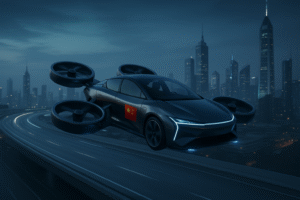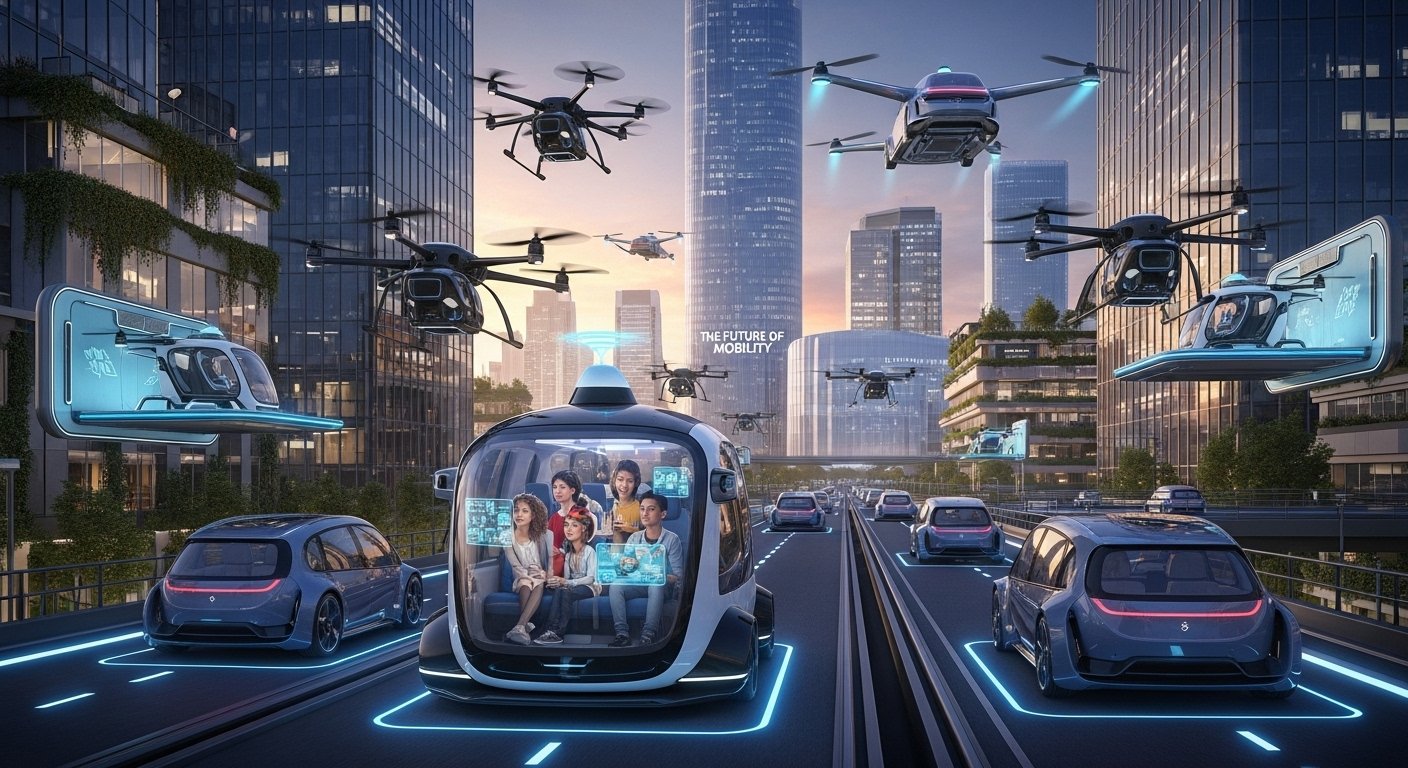
If you’ve ever sat in bumper-to-bumper traffic and dreamed of a world where you could simply fly over it, or imagined a car that drives itself while you work, eat, or even sleep, then you’re already aligned with the vision of the 2030 generation. We are on the precipice of a full-scale mobility revolution, a shift so profound it will make the transition from horse-drawn carriages to automobiles seem quaint. This isn’t just about faster or smarter cars; it’s about fundamentally liberating humanity from the constraints of ground-based travel, rigid schedules, and the very concept of a “driver.” The world is not just flying past you; it’s about to take off.
In a nutshell, this comprehensive guide explores the multi-faceted future of mobility, a converging ecosystem of revolutionary technologies. We will delve into the rapid adoption of electric vehicles (EVs), examining their impact on brand loyalty and infrastructure. We’ll then ascend to the skies to understand Urban Air Mobility (UAM), from drone taxis to flying cars, and the new regulatory frameworks they require. On the ground, we’ll explore the paradigm shift to Level 4 and 5 autonomous driving and the move from vehicle ownership to on-demand, shared mobility services. We’ll also analyze the critical societal changes this new era will bring, from the transformation of urban architecture to the creation of new careers and the ethical dilemmas of AI, providing a roadmap for how the 2030 generation will live, work, and travel in a world where motion is no longer a chore, but a seamless, integrated experience.
The 5 Pillars of Next-Generation Mobility
Pillar 1 🔌 Electrification
The unstoppable shift to electric vehicles and renewable energy, redefining the automotive industry and energy grid.
Pillar 2 🤖 Autonomy
The end of human driving as AI takes the wheel, leading to safer roads and a new definition of a driver’s license.
Pillar 3 ✈️ Urban Air Mobility
The sky becomes the new highway with drone taxis and flying cars, transforming urban commuting and logistics.
Pillar 4 🤝 Shared Economy
The move from vehicle ownership to subscription-based services and on-demand mobility platforms.
Pillar 5 🏛️ Urban Redesign
Cities are reimagined with vertical architecture, reclaimed green spaces, and integrated multi-modal transit hubs.
1. The Mobility Revolution Sparked by EVs
EV adoption rates transforming Millennial & Gen Z habits: Driven by sustainability values and tech-forward mindsets, these generations are adopting electric vehicles at an unprecedented rate, with global market share expected to surge to over 50% by 2030.
The fall of combustion engines and rise of eco-conscious spending: A clear preference for brands with strong ESG (Environmental, Social, and Governance) policies is accelerating the decline of fossil fuel vehicles and redefining brand loyalty.
Trust and branding: Tesla, Hyundai, and BYD: Brands are building trust not just on performance, but on their vision for a sustainable future, with companies like Tesla, Hyundai, and BYD leading the charge and setting the benchmark for the industry.
Urban vs. rural EV charging infrastructure gaps: While urban centers are seeing a boom in charging stations, rural areas face significant infrastructure challenges, creating a critical need for new business models and government incentives to bridge the gap.
Government subsidies and generational beneficiaries: Policies like tax credits and rebates are making EVs more accessible, directly benefiting younger generations who are more likely to be first-time EV buyers.
2. Urban Air Mobility (UAM): Present & Future
What is UAM? Definitions & components: Urban Air Mobility refers to a future transportation system that uses highly automated electric Vertical Take-Off and Landing (eVTOL) aircraft for passenger and cargo transport within urban areas.
Young investors fueling the flying car boom: The promise of a sci-fi future is attracting a wave of investment from young venture capitalists and tech-savvy individuals eager to get in on the ground floor of the next major tech revolution.
Cities already piloting drone taxis: Major cities in the US, UAE, and Europe are already conducting pilot programs and feasibility studies, mapping out urban flight paths and vertiport locations to prepare for the commercial launch of drone taxi services.
Human pilots vs. autonomous flight AI: Early UAM services will likely use human pilots, but the ultimate goal is fully autonomous flight, where AI pilots manage routes and ensure safety more effectively than a human could.
Public concerns: noise and air safety: The biggest hurdles to UAM adoption are public concerns about noise pollution from eVTOLs and the safety of aircraft flying over densely populated areas, which companies are addressing with advanced propulsion systems and redundant safety protocols.
3. Autonomous Driving Is Redefining Driving Itself
The road to Level 4 autonomy: The industry is progressing from Level 2 (partial automation) to Level 4 (high automation), where the vehicle can handle all driving tasks in specific conditions without human intervention.
The changing role of driver’s licenses: In a world of Level 4 and 5 autonomy, the purpose of a driver’s license will shift from a license to operate a vehicle to a license to be a passenger in a self-driving car, with a focus on understanding its functionalities.
Integration of AVs into smart cities: Autonomous vehicles will be seamlessly integrated into a city’s central nervous system, communicating with traffic lights, other vehicles, and infrastructure to optimize traffic flow and reduce congestion.
Ethics in AI-based driving: Developers are grappling with complex ethical dilemmas, such as how an AV should make decisions in an unavoidable accident, leading to a new field of research focused on ethical AI and public policy.
Liability and insurance policy shifts for AVs: The legal framework for accidents will shift from the individual driver to the vehicle’s manufacturer, software provider, or fleet operator, completely overhauling the insurance industry.
4. Shared vs. Owned Mobility: A Generational Shift
Why car-sharing is booming among Gen Z: High costs, environmental concerns, and a preference for on-demand services are driving Gen Z away from car ownership and towards flexible car-sharing platforms.
“Experience over ownership” mindset: The new currency is not ownership of a vehicle but access to the best travel experience for any given situation, whether it’s an electric scooter for a short trip or a spacious autonomous van for a group outing.
Self-driving shuttles as public transit: Autonomous shuttles will serve as flexible, on-demand public transit in cities, filling gaps in traditional bus routes and providing last-mile connectivity.
Monthly mobility subscription models: Consumers will pay a single monthly fee for a subscription that grants access to a curated fleet of vehicles and transportation services, from ride-hailing to bike-sharing.
Competition between city EVs, scooters, and e-bikes: A fierce competition is underway among different micro-mobility and full-size EV options to become the go-to mode of transport for urban dwellers, each vying for a share of the on-demand market.
5. Drone Taxis as the Next Public Transit Mode
Countries leading drone taxi pilots: Countries like the UAE, China, and Germany are at the forefront of drone taxi development, with companies like EHang and Volocopter conducting extensive testing and aiming for commercial launch by mid-decade.
Price tiers and model types of drone taxis: Early models will be premium services with prices comparable to private cars, but as the technology scales, a tiered system will emerge, with more accessible price points for multi-passenger vehicles.
Urban flight path regulations and air traffic rules: The biggest regulatory challenge is creating safe and efficient air traffic rules for thousands of drones flying simultaneously, including designated corridors and altitude restrictions.
Sky stations: Understanding vertiports: Vertiports are specialized landing and charging hubs for eVTOLs, which will be integrated into urban infrastructure on rooftops, ground-level pads, and existing transit hubs.
The future of commuting via sky reservations: Commuters will book drone taxi flights through apps, with a reservation system that optimizes flight paths and ensures timely arrivals and departures, much like a flight booking today.
6. Global Flying Car Market Race
XPeng (China) vs. Joby (USA) showdown: A global competition is heating up between Chinese firms like XPeng’s AeroHT and American players like Joby Aviation, each leveraging different technological approaches and government support to lead the flying car market.
EU-based Volocopter & EHang collaborations: European company Volocopter is forming strategic partnerships with Chinese firm EHang to accelerate the development and certification of its eVTOLs, showcasing a trend of global collaboration over competition.
Comparing regulatory speeds by country: The speed of regulatory approval varies dramatically by country, with some nations creating fast-track programs to attract investment, while others take a more cautious approach to new aviation technologies.
Battery innovations driving the industry: The flying car industry is heavily dependent on battery technology. Advancements in solid-state and other high-density batteries are crucial for extending flight range and ensuring vehicle safety.
Hybrid vs. pure eVTOL technologies: The debate between hybrid eVTOLs (which use a combination of electricity and fossil fuels) and pure battery-electric models is ongoing, with each approach offering different benefits in terms of range, weight, and environmental impact.
7. Eco-Friendly Transport & Brand Loyalty
ESG policies and Gen Z buying behavior: Gen Z is more likely to choose brands with robust ESG policies and a clear commitment to sustainability, making a company’s environmental footprint as important as the product itself.
Net-zero goals reshaping transport systems: Governments and corporations are setting ambitious net-zero targets, which are driving large-scale investments in renewable energy and green transportation infrastructure.
Renewable energy-powered mobility: The future of mobility is not just electric, but also renewable, with charging stations and vertiports powered by solar, wind, and other green energy sources.
Certified green vehicle programs: New certification programs will emerge to help consumers identify vehicles that meet the highest environmental and sustainability standards, providing a transparent way to make eco-conscious choices.
Emissions reduction case studies by major automakers: Automakers are openly sharing their strategies and successes in reducing carbon emissions, building brand trust and attracting new customers.
8. Smart Cities & Traffic Big Data
Data-driven analysis of mobility trends: Smart cities will use data from connected vehicles, public transit, and micro-mobility to understand mobility patterns, identify bottlenecks, and plan for future infrastructure needs.
Real-time transit APIs and applications: New APIs will allow developers to build real-time transit apps that integrate a variety of mobility options, from public buses and trains to on-demand autonomous shuttles and drone taxis.
Predictive traffic modeling via AI: AI-powered systems will analyze real-time data to predict traffic congestion before it happens, rerouting autonomous vehicles and adjusting public transit schedules to prevent gridlock.
AI-optimized traffic light systems: Traffic lights will no longer operate on simple timers but will be dynamically controlled by AI systems that adjust to real-time traffic flow, reducing waiting times and improving efficiency.
Smart transportation in smart city ecosystems: The transportation system will be just one part of a larger smart city ecosystem, interconnected with smart grids, waste management, and public safety networks to create a more efficient and livable urban environment.
9. Behavioral Shifts in 2030-Gen Mobility
Rise of short-distance micro-mobility: The use of e-scooters and e-bikes for short trips is becoming the norm, driven by their convenience, low cost, and ability to bypass traffic.
Preference for contactless and solo travel: The post-pandemic world has accelerated the preference for contactless and solo travel, with many opting for private ride-hailing or on-demand micro-mobility to avoid crowded public transit.
Booking rides via mobile-first platforms: The booking and payment experience for all forms of mobility will be mobile-first, with seamless apps that offer a single interface for planning, booking, and paying for journeys.
Growing adoption of one-seater vehicles: The rise of solo travel is leading to the popularity of small, efficient, one-seater vehicles that are ideal for navigating congested urban environments.
Mini-mobility linked with pedestrian paths: Cities are redesigning their layouts to create dedicated lanes and paths for micro-mobility, seamlessly integrating them with pedestrian zones and public transit hubs.
10. Startup Opportunities in Mobility
AV software startups and ecosystems: The demand for AV software is creating a fertile ground for startups specializing in everything from sensor fusion and perception to decision-making algorithms and in-vehicle UX.
Drone taxi platform development: The need for sophisticated booking, routing, and fleet management software is driving a boom in startups focused on building the digital infrastructure for the UAM industry.
UAM-enabled logistics services: New companies are emerging to provide logistics and delivery services using drones, revolutionizing the way goods are transported within and between cities.
Flying car maintenance as a new market: The specialized maintenance and repair of eVTOLs will create a new, high-growth industry for mechanics and technicians with expertise in advanced aviation technologies.
Subscription EV business models: Startups are pioneering new business models for EV ownership, offering flexible subscription services that bundle vehicle access, insurance, and maintenance into a single, predictable monthly fee.
11. Future Careers in Mobility
UAM pilots and air traffic controllers: As the urban airspace becomes more crowded, there will be a new demand for specialized UAM pilots and air traffic controllers trained to manage vertical takeoff and landing aircraft.
Demand for drone mechanics: The widespread use of drones for logistics and transport will create a high demand for skilled mechanics and technicians to maintain and repair them.
UX/UI specialists for eVTOL platforms: The unique challenges of designing user interfaces for autonomous and flying vehicles will create a new field for UX/UI specialists focused on safety, trust, and intuitive interaction.
Smart transport infrastructure engineers: The engineers of the future will be tasked with designing and building the physical and digital infrastructure for smart cities, including smart roads, charging grids, and vertiports.
AI mobility data analysts: As mobility systems generate massive amounts of data, there will be a growing need for data analysts who can use AI to identify trends, optimize systems, and predict future needs.
12. Battery Tech Driving EVs & UAM
High-power and stable battery materials: The industry is racing to develop new battery chemistries that offer higher power density, longer range, and improved safety, with a focus on materials like solid-state electrolytes.
Innovations in battery cooling: Advanced battery cooling systems are essential for managing the heat generated by fast charging and high-power discharge, ensuring battery longevity and performance.
Wireless charging for flying vehicles: The development of wireless charging technology for eVTOLs would enable autonomous recharging at vertiports, reducing downtime and streamlining operations.
Drone taxi battery swap stations: Similar to EV battery swapping, vertiports could be equipped with automated stations that can swap a depleted battery for a fresh one in minutes, minimizing turnaround time.
Lithium alternatives and next-gen materials: Research is focused on developing alternatives to lithium, such as sodium-ion or magnesium-ion batteries, to create more sustainable and globally accessible power sources.
13. Infrastructure for the Sky
Criteria for vertiport placement: Vertiport locations will be strategically chosen based on population density, proximity to public transit, and a minimal impact on urban noise levels.
Standardization of flying car flight lanes: Regulatory bodies will need to standardize the location and rules for flying car flight lanes, ensuring clear and safe separation from traditional aviation and other urban traffic.
Legal challenges in urban airspace height: Defining and regulating the legal height of urban airspace for eVTOLs is a major challenge, requiring new laws to govern public and private property rights.
Traffic signals for air vehicles: A new system of air traffic signals and communication protocols will need to be developed to manage the flow of flying cars and drones, preventing mid-air collisions.
Urban-to-airport link solutions: UAM services will create seamless links between urban centers and airports, offering a fast, on-demand way to travel that bypasses traditional ground traffic.
14. Legal & Policy Frameworks
Drone traffic laws around the world: Countries are developing new laws to regulate drone traffic, including licensing requirements for pilots, no-fly zones, and public data-sharing requirements for commercial drone operators.
Ethical regulations for autonomous driving: New laws will be passed to regulate the ethical decision-making of autonomous vehicles, with a focus on defining accountability in the event of an accident.
Public data-sharing frameworks: Governments and tech companies will need to establish frameworks for sharing mobility data to ensure privacy while allowing for data-driven urban planning and public safety initiatives.
Regional regulation comparisons: The regulatory landscape is a patchwork of different rules and standards, creating a need for international harmonization to enable seamless cross-border travel for autonomous and aerial vehicles.
Citizen participation in mobility governance: Cities are creating new ways for citizens to participate in the governance of mobility, ensuring that new transportation systems are implemented with public consent and benefit all communities.
15. Global Startup Case Studies
Joby (USA) and their VC investment rounds: Joby Aviation, based in California, has secured massive venture capital and corporate investment, positioning it as a leader in the US eVTOL market.
AeroHT (China) and their manufacturing plans: AeroHT, an affiliate of XPeng, is focused on building a large-scale manufacturing capacity for its eVTOLs, leveraging China’s robust supply chain to achieve rapid commercialization.
Germany’s Lilium jet propulsion systems: The German startup Lilium is developing a unique ducted fan propulsion system for its eVTOLs, which is designed for a quieter and more efficient flight experience.
Urban-Air Port developments in South Korea: South Korea is investing heavily in urban-air port infrastructure, with companies developing modular, scalable vertiport designs that can be rapidly deployed in cities.
Japan’s SkyDrive UAM roadmap: Japanese company SkyDrive has a clear roadmap for UAM, focusing on small, two-seater eVTOLs for both passenger transport and logistics services.
16. UX/UI Design in Mobility Systems
In-car UX for autonomous vehicles: The interior of AVs will be redesigned as a third space—a mobile living room or office—with intuitive, screen-based interfaces for entertainment, productivity, and communication.
Drone taxi booking app flows: The user experience for booking a drone taxi will be seamless and simple, with an app that handles everything from selecting a vertiport and checking weather conditions to managing payments.
Multi-device mobility control interfaces: Users will be able to control their mobility experience across multiple devices, with a single app that integrates their personal preferences and travel data.
Flying car HUD (Heads-Up Display) designs: Flying cars will use heads-up displays to provide pilots and passengers with critical flight information, augmented reality overlays, and safety alerts.
Gesture-based interaction systems: Future vehicles will use gesture-based controls and voice commands, eliminating the need for physical buttons and creating a more intuitive and natural user experience.
17. Education & Public Awareness of Future Mobility
Autonomous mobility in school curriculums: Schools are beginning to incorporate autonomous mobility into their curriculums, with robotics, AI, and coding classes that prepare students for the jobs of the future.
University mobility & engineering programs: Universities are launching new mobility and engineering programs that focus on the specialized skills needed to develop, design, and manage the next generation of transportation systems.
Startup incubators with eVTOL labs: Startup incubators are creating dedicated labs and workshops for eVTOL companies, providing them with the resources and mentorship they need to scale their businesses.
VR/AR pilot training simulations: Virtual and augmented reality are being used to train the first generation of UAM pilots, providing a safe and cost-effective way to simulate complex flight scenarios.
National mobility awareness campaigns: Governments and industry groups are launching national campaigns to educate the public about the safety, benefits, and future of new mobility technologies, building public trust and support.
18. Psychology & Transportation Behavior
Identity & vehicle choice: The vehicle of the future will no longer be a symbol of personal identity, as consumers prioritize functionality and convenience over brand status.
Avoiding congestion: Behavioral trends: The availability of on-demand micro-mobility and drone taxis will change consumer behavior, with many opting for new modes of transport to bypass congestion.
Reducing anxiety with travel tech: New in-vehicle technology, such as autonomous safety features and real-time flight tracking, will help reduce travel anxiety and build trust in new mobility systems.
Building trust in autonomous systems: The key to consumer adoption is building trust in autonomous systems. This will be achieved through rigorous safety testing, transparent data, and public awareness campaigns.
Preference for private space in public transit: In an era of shared mobility, there will be a growing preference for private, on-demand transport options, with many willing to pay a premium for a personal or small-group travel experience.
19. Lifestyle, Fashion & Mobility
Clothing trends adapted for new vehicles: The clothes of the future will be designed for comfort and functionality in a mobile workspace, with features like integrated tech and wrinkle-resistant materials.
In-car interior design trends: Vehicle interiors will be designed to feel like a modern living room or a high-tech office, with features like modular seating, customizable lighting, and integrated entertainment systems.
In-flight entertainment for flying cars: The experience of flying will be enhanced with in-flight entertainment systems, augmented reality views, and connectivity that rivals modern air travel.
Mobile workspaces while commuting: The daily commute will be transformed into productive work time, with vehicles equipped with ergonomic workspaces, high-speed internet, and video conferencing capabilities.
Custom scents and audio in transit: The user experience will be highly personalized, with systems that can adjust the in-vehicle scent and audio based on the passenger’s preferences or mood.
20. Urban Architecture and Transport Shifts
Ground vs. air traffic planning: Urban planners will need to develop new master plans that account for both ground traffic and vertical air traffic, with dedicated air corridors and vertiports seamlessly integrated into the urban landscape.
Shrinking parking lots and growing green zones: The decline of car ownership will free up vast urban real estate, which will be repurposed from parking lots and garages into public parks, green spaces, and community hubs.
Building designs with vertical transport in mind: New buildings will be designed with integrated vertiports and drone delivery docks, reflecting a shift towards vertical transport and logistics.
Redesigning public transport hubs: Public transport hubs will be redesigned as multi-modal centers, seamlessly integrating buses, trains, autonomous shuttles, and vertiports into a single, cohesive network.
Shifting perceptions of inter-city distances: The rise of high-speed travel, like the Hyperloop, and air mobility will shrink the perceived distance between cities, changing how and where people choose to live and work.
21. The Role of Micro-mobility and Pedestrian Integration
The growth of e-bikes and e-scooters as first- and last-mile solutions: Micro-mobility vehicles are not just a trend; they’re becoming a vital component of the urban transportation network, providing crucial connectivity for short distances.
Dedicated infrastructure for micro-mobility: Cities are beginning to invest in dedicated bike lanes, scooter parking zones, and charging stations to encourage the use of micro-mobility and ensure safety.
Seamless booking and payment with public transit: Mobility apps will integrate micro-mobility services with public transportation, allowing users to book a bus, train, and an e-scooter all in one transaction.
Health and wellness benefits: The use of e-bikes and walking paths for mini-mobility will promote a healthier, more active lifestyle for city residents, reducing sedentary behavior.
Regulations on speed and urban access: Governments are working to create new regulations for micro-mobility, including speed limits, designated riding areas, and parking rules to manage their integration into the urban environment.
22. Automotive Industry and Supply Chain Transformation
From car manufacturers to mobility providers: Traditional automakers will evolve into mobility providers, offering a range of services from subscription models and fleet management to software and data services.
The rise of modular vehicle platforms: To meet the demands of fleet-based mobility, manufacturers will focus on developing modular vehicle platforms that can be easily configured for different uses, from cargo to passenger transport.
Shift from parts to software and batteries: The supply chain will shift its focus from traditional engine parts and transmissions to the components of the new mobility ecosystem, including advanced batteries, AI software, and autonomous sensors.
New labor force and skill sets: The demand for mechanics and assembly line workers for combustion engines will decline, replaced by a new workforce of software engineers, AI specialists, and battery technicians.
Vertical integration in manufacturing: Companies will increasingly move towards vertical integration, bringing more of the supply chain—from battery production to software development—in-house to maintain control and reduce costs.
23. The Future of Public Transportation
Public-private partnerships for an integrated network: Cities will form public-private partnerships to create a seamless, integrated network that combines public transportation with on-demand autonomous shuttles and drone taxis.
Autonomous buses and trains: Traditional public transport will become more efficient with the adoption of autonomous buses and trains, which can operate on optimized schedules and reduce human error.
Demand-responsive transit services: Public transit will move from fixed routes and schedules to a demand-responsive model, with buses and shuttles that adjust their routes based on real-time rider demand.
The transit hub as a central point for all mobility: The train or bus station of the future will be a multi-modal hub, where you can easily transfer from a traditional train to an autonomous shuttle, a bike-share, or a drone taxi.
Data sharing for system optimization: Public transportation systems will share real-time data with autonomous vehicles and private mobility providers, creating a unified ecosystem that optimizes travel for all users.
24. Mobility for Leisure, Tourism, and Entertainment
Drone tours and aerial tourism: Drone taxis will offer a new form of tourism, providing scenic aerial tours of cities and natural landmarks, with augmented reality overlays that enhance the experience.
Entertainment on demand in autonomous vehicles: The car interior of the future will be a private entertainment pod, with high-definition screens, surround sound, and connectivity for gaming, movies, and virtual reality experiences.
Autonomous camping and travel vans: The popularity of “van life” will be redefined by autonomous travel vans, which can drive themselves to your destination while you sleep, work, or relax.
Mobility for events and festivals: Autonomous shuttles and drone taxis will be used to transport large crowds to and from events and festivals, reducing traffic congestion and improving public safety.
Personalized travel experiences: AI will be used to create highly personalized travel experiences, with vehicles that can suggest scenic routes, local restaurants, and tourist attractions based on your interests.
25. Data Privacy and Security in the Mobility Ecosystem
Data collection and ownership: The sheer volume of data collected by connected vehicles raises critical questions about who owns that data, how it’s used, and how it’s protected from misuse.
The need for anonymized and encrypted data: To protect personal privacy, all data collected by mobility systems will need to be anonymized and encrypted, ensuring that individual users cannot be identified.
User consent and data-sharing agreements: Companies will need to develop transparent data-sharing agreements that require user consent before any personal mobility data can be used or shared with third parties.
Protection against data breaches and cyberattacks: The mobility ecosystem is a new frontier for cybersecurity, requiring robust security measures to protect against data breaches, hacking, and unauthorized access to vehicle systems.
Balancing innovation with privacy concerns: The challenge for governments and tech companies will be to strike a balance between encouraging innovation in mobility and ensuring that the privacy and security of citizens are protected.
Test Your Knowledge: The Future of Mobility Quiz
1, What is the main reason cited for the generational shift away from car ownership towards shared mobility?
a) The inconvenience of having to drive to destinations.
b) High costs, environmental concerns, and a preference for on-demand services.
c) The lack of car models that appeal to younger generations.
d) A shift in focus from personal travel to public transportation.
2, What are the specialized landing hubs for Urban Air Mobility (UAM) vehicles called?
a) Skyports b) Air Stations c) Vertiports d) Heli-pads
3, According to the blog, what is the primary ethical dilemma facing AI in autonomous driving?
a) Deciding which passenger’s music to play.
b) Making decisions in an unavoidable accident scenario.
c) Choosing the most fuel-efficient route.
d) Communicating with other vehicles on the road.
4,Which technology is crucial for reducing noise pollution and increasing efficiency in flying cars?
a) High-speed tires b) Advanced propulsion systems c) Self-healing body materials d) In-flight entertainment systems
5, What will be the new purpose of a driver’s license in a world of Level 4 and 5 autonomy?
a) It will be replaced entirely by a digital ID.
b) It will be a license to operate a drone taxi.
c) It will shift to a license to be a passenger in a self-driving car.
d) It will be unnecessary, as no one will drive anymore.
6, What is one of the key changes in urban architecture mentioned in the blog, driven by the decline of car ownership?
a) The conversion of parking lots and garages into public parks and green spaces.
b) The construction of more multi-story car parks.
c) The widening of roads to accommodate more autonomous vehicles.
d) The demolition of all existing transit hubs.
7, What new career is specifically mentioned as a result of the widespread use of drones for logistics and transport?
a) AI mobility data analysts.
b) Smart transport infrastructure engineers.
c) UAM pilots and air traffic controllers.
d) Drone mechanics.
8, According to the blog, what will traditional car manufacturers evolve into in the future?
a) They will continue to produce only combustion engine vehicles.
b) They will pivot to manufacturing only luxury goods.
c) They will evolve into mobility providers, offering a range of services.
d) They will cease to exist.
Quiz Answers
- b) High costs, environmental concerns, and a preference for on-demand services.
- c) Vertiports
- b) Making decisions in an unavoidable accident scenario.
- b) Advanced propulsion systems
- c) It will shift to a license to be a passenger in a self-driving car.
- a) The conversion of parking lots and garages into public parks and green spaces.
- d) Drone mechanics.
- c) They will evolve into mobility providers, offering a range of services.