Innovative Automation Solutions: Merging Robotics and AI for a Brighter Future
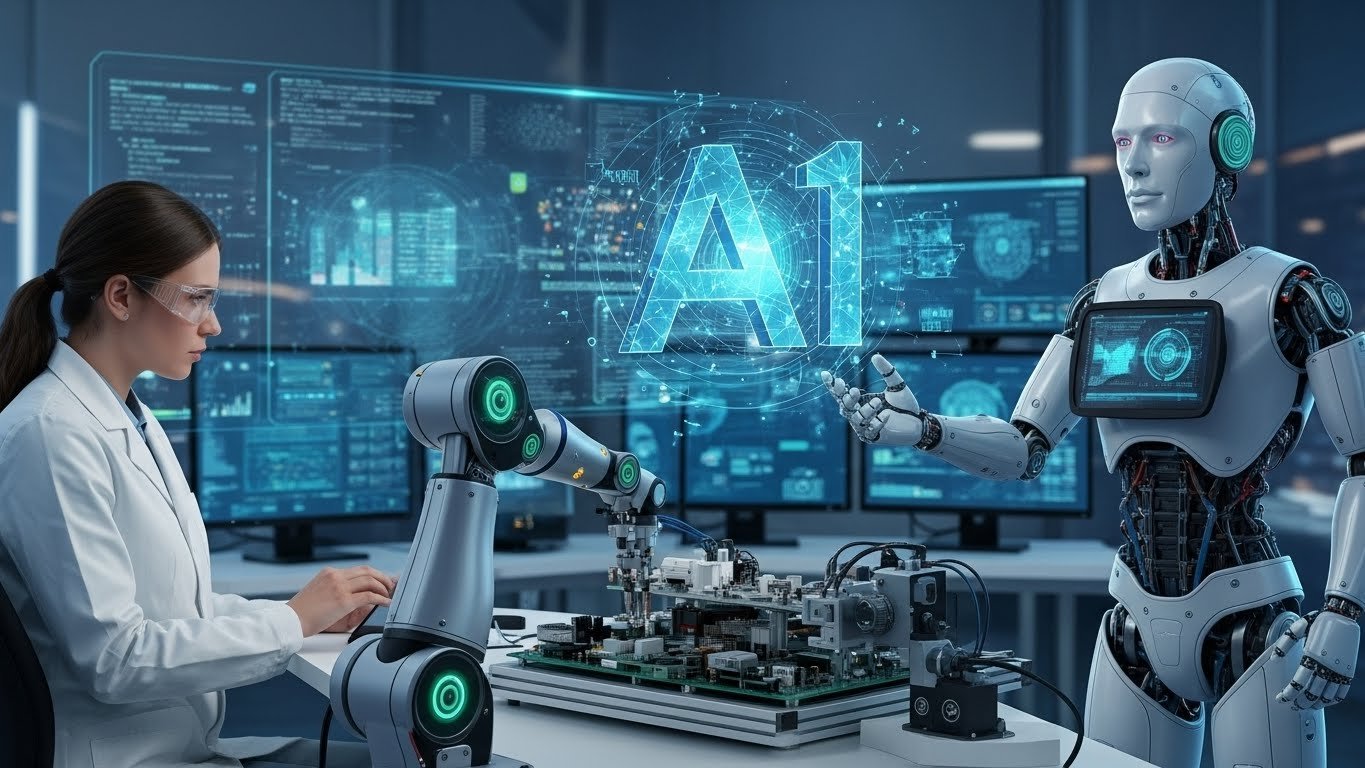
In a nutshell: The technological frontier of 2025 is defined by the final bridge being built between digital intelligence and physical reality. This convergence, known as Physical AI, involves the integration of large-scale foundation models into robotic embodiments, allowing machines to move beyond the rigid, pre-programmed scripts of the past. By utilizing vision-language-action (VLA) models, robots are now capable of perceiving unstructured environments, reasoning through complex tasks, and executing precise physical movements with minimal human intervention. From humanoid robots assisting in automotive assembly to AI-driven surgical platforms reducing recovery times, this merger is not merely an incremental upgrade to automation but a fundamental shift in how humanity interacts with the material world. While the transition poses significant questions regarding labor displacement and reliability, the trajectory points toward a future where intelligent machines amplify human productivity, enhance safety in hazardous roles, and provide personalized care for an aging global population.
To gain a comprehensive visual understanding of how these technologies are currently being deployed, the following presentation offers critical insights into the convergence of neural networks and mechanical systems:
(https://www.youtube.com/watch?v=7zj-YGvp7TM).
The Emergence of Physical AI: Transcendence of the Digital Boundary
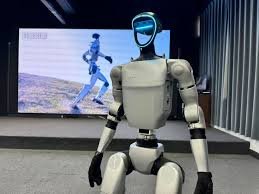
The evolution of artificial intelligence has transitioned from the purely digital processing of text and images into the complex, three-dimensional realm of physical interaction. This paradigm shift, articulated by industry analysts as the “Physical AI inflection point,” represents a critical juncture where algorithms transcend digital boundaries to manipulate the tangible world. Unlike traditional automation, which relied on deterministic programming within highly controlled environments, physical AI systems are characterized by their ability to perceive their surroundings, learn from experience, and adapt their behavior based on real-time data and changing conditions.
The structural foundation of this breakthrough lies in the convergence of high-performance computing, advanced sensing, and versatile mechanical hardware. Robotics is no longer confined to factory floors or research labs; AI-enabled drones, autonomous vehicles, and humanoid agents are increasingly common in smart warehousing, city navigation, and even domestic environments. The shift from prototype to production is currently being fueled by the maturation of vision-language-action (VLA) models, which unify perception and control into a single neural architecture capable of executing split-second, safety-critical decisions without reliance on cloud processing.
| Feature | Traditional Automation | Physical AI Systems |
| Programming |
Rigid, set instructions |
Adaptive, learning-based |
| Environment |
Controlled, predictable |
Unstructured, dynamic |
| Learning Method | Manual coding |
Reinforcement and Imitation Learning |
| Hardware |
Task-specific |
General-purpose embodiments |
| Decision Latency | Pre-determined |
Real-time, split-second |
The technical readiness of Physical AI is supported by the commoditization of hardware components and the emergence of specialized neural processing units (NPUs) optimized for edge computing. These processors enable robots to run large language models (LLMs) locally, processing high-speed sensor data to navigate human-centric spaces with unprecedented capability. As organizations overcome initial technical and operational barriers, these intelligent robotic systems are transitioning from niche applications to mainstream adoption across global enterprises.
Foundation Models as the Neural Architecture of Robotics
The “brain” of modern robotics has been revolutionized by the development of foundation models—large-scale AI architectures trained on massive, multimodal datasets. These models, such as OpenAI’s GPT-5 or Physical Intelligence’s π0, serve as generalist engines that provide a baseline of intelligence applicable to various tasks and robotic forms. This shift away from task-specific architectures allows for a level of generalization previously deemed impossible, where a single model can control diverse robotic hardware systems, adapting to new tasks with minimal additional training.
Vision-Language-Action (VLA) Model Mechanisms
At the core of these “robot brains” are Vision-Language-Action (VLA) models, which process visual tokens from cameras and textual instructions from users to output direct action commands for robot joints. The technical sophistication of these models is exemplified by Physical Intelligence’s π0 (Pi0), a general-purpose algorithm that utilizes a transformer model with 3 to 5 billion parameters. By streaming RGB-D camera images and tokenizing the robot’s movement history, π0 can predict the next 50 physical steps in approximately 100 milliseconds.
The training of these models involves sophisticated techniques such as RECAP (Reinforcement Learning with Experience & Corrections via Advantage-conditioned Policies), which combines demonstration-based learning with autonomous experience to improve performance over time. This approach has doubled throughput on complex tasks like folding unseen laundry or assembling cardboard boxes, proving superior to imitation learning alone.
| Model Name | Developer | Key Capability / Benchmark |
| GPT-5 (2025) | OpenAI |
79x efficiency boost in molecular cloning protocol design |
| π0 (Pi0) | Physical Intelligence |
Doubled throughput in box assembly and laundry folding |
| NitroGen | NVIDIA/Stanford |
52% higher task success on new games vs baseline |
| DeepSeek-V3.2 | DeepSeek (China) |
99.2% on elite math tests; 128k context window |
| EBind (2025) | Broadbent et al. |
Binds image, text, video, audio, and 3D embeddings |
| Helix VLA | Figure AI |
Unifies perception and continuous upper body control |
Reasoning and “Thinking” Laws in Robotics
The smartest AI systems are now being trained to “think before they speak” or act, utilizing reasoning laws that allow models to decompose complex problems into manageable sub-tasks. This agentic capability enables robots to reason ahead, iteratively acting through tools and making structured, constraint-aware execution plans. In laboratory automation, this has led to AI agents that not only perform experiments but also redesign laboratory protocols, achieving a significant leap in research efficiency.
The scaling laws for these reasoning models continue to improve at an exponential rate, with all technical metrics—including intelligence and context window—improving by more than 10x year-over-year.11 The duration of human tasks that a model can reliably perform is doubling every seven months, a trend that suggests robots will soon handle multi-hour, open-ended missions in dynamic environments.
Mechanical Evolution: Actuators, Sensors, and the “Body” of the Robot
While AI provides the intelligence, the physical success of modern robotics depends on advancements in hardware. The transition from heavy, bulky torsos to streamlined, cable-free frames is evident in the latest generation of humanoid robots, such as Boston Dynamics’ electric Atlas. These machines utilize high-torque electric actuators paired with specialized gearboxes, which are more energy-efficient and easier to control than traditional hydraulic or pneumatic systems.
Sensing and Perception Breakthroughs
For a robot to navigate the material world, it must perceive its environment with high fidelity. This is achieved through a suite of integrated sensors:
-
Computer Vision: Most humanoids utilize a network of RGB and depth cameras to recognize objects and perceive 3D space. For instance, Figure 02 employs six cameras for comprehensive spatial awareness.
-
LiDAR: Light Detection and Ranging sensors emit laser pulses to map environments in 3D, allowing robots like Agility Robotics’ Digit to detect obstacles and navigate warehouse floors.
-
Tactile Sensors: Breakthroughs in tactile sensing allow robots to “feel” objects. Sanctuary AI has integrated tactile sensors into its Phoenix robots, enabling “blind picking” and slippage detection that vision alone cannot handle.
-
Proprioception: Inertial Measurement Units (IMUs) containing accelerometers and gyroscopes provide the feedback loops necessary for bipedal balance, allowing robots to stand on one leg or traverse uneven terrain without visual input.
Soft Robotics and Bio-Inspired Design
A significant sub-field of hardware innovation is soft robotics, which utilizes flexible, bio-inspired materials like silicone and elastomers to handle delicate objects.21 Unlike rigid traditional arms, soft robotic grippers conform to an object’s geometry, making them ideal for harvesting fragile crops, handling lab samples, or assisting in minimally invasive surgeries. These grippers often feature high-resolution tactile sensors embedded within the gripping surface, allowing for real-time adjustments of grip force through sophisticated algorithms.21
| Sensor Type | Function | Impact on Autonomy |
| Tactile Arrays |
Measures pressure and force |
Prevents crushing delicate objects; enables blind picking |
| LiDAR |
3D environmental mapping |
Long-range obstacle detection in warehouses |
| RGB-D Cameras |
Object recognition and depth |
Essential for goal-based manipulation and navigation |
| IMU Sensors |
Detects orientation and tilt |
Critical for maintaining balance in bipedal locomotion |
Humanoid Robotics: Commercialization and Industrial Deployment
The year 2025 marks the transition of humanoid robots from laboratory research to commercial pilot programs and real-world deployments.13 Driven by significant advances in AI and mechanical dexterity, organizations are pushing general-purpose humanoids into roles within logistics, manufacturing, and service industries.
Leading Humanoid Platforms of 2025
Several platforms have emerged as leaders in the race for commercial viability:
-
Tesla Optimus Gen 2: Tesla’s robotics platform leverages its EV supply chain for components, aiming for a price point around $20,000.1 Production targets for 2025 sit at 5,000 units, with plans to scale to 50,000 by 2026.
-
Boston Dynamics Electric Atlas: Moving away from hydraulics, the new electric Atlas is designed for commercial use cases, highlighting safety and adaptability as a “robotic co-worker”.
-
Agility Robotics Digit: Digit is renowned for its human-like gait and is currently being deployed by GXO Logistics for bulk material handling at Spanx facilities under a “Robots-as-a-Service” (RaaS) model.
-
Figure 02: Figure AI has partnered with BMW to test humanoids at their Spartanburg facility, where the robots manipulate and load sheet metal parts for automotive assembly.
| Robot | Height | Weight | Payload | Battery Life |
| Digit | 1.2 m | 30 kg | 15 kg |
4 hours |
| Figure 02 | 1.7 m | 70 kg | 25 kg |
20+ hours |
| NEO BETA | 1.6 m | 70 kg | — |
3 hours |
| Optimus Gen 2 | 1.7 m | 60 kg (est) | 25 kg |
Full-day shift capacity |
| Walker S1 | 1.7 m (est) | — | — |
— |
The Economics of Humanoid Adoption
The business case for humanoid robots has been validated by a significant crash in manufacturing costs. Goldman Sachs documented a 40% decline in production costs between 2023 and 2024, with costs falling as low as $30,000 per unit for some models. This price point makes humanoids economically competitive with human labor, particularly in roles with high turnover or hazardous conditions. The projected market for humanoids is expected to reach $51 billion by 2035, with shipments rising from thousands today to millions in the next decade.
Industrial Transformation: Logistics, Manufacturing, and Supply Chain
The integration of AI and robotics is fundamentally reshaping industrial operations. In the supply chain, companies like Amazon have reported a 25% boost in efficiency through the use of intelligent automation. This shift is characterized by a move from static automation to “software-defined factories,” where data and AI manage the entire value chain from component logistics to final assembly.
Case Studies in Industrial ROI
The impact of physical AI is visible in various industry leaders:
-
Amazon: Warehouse operations are approaching robot-human parity, with robots handling tasks like transferring totes and recycling material. Strategy documents suggest that robots could replace over 500,000 jobs in the next decade, saving approximately 30 cents per item shipped.
-
Foxconn: The manufacturing giant reduced its deployment times by 40% by utilizing intelligent automation platforms.
-
BMW: General-purpose humanoids at BMW’s Spartanburg plant allow for more accurate positioning of sheet metal components within machine tooling, reducing human worker fatigue.
-
GXO Logistics: By using Digit robots at warehouse loading docks, GXO has automated real logistics workflows and reduced manual labor dependency during night shifts.
| Industry Sector | Primary AI-Robotic Application | Reported Outcome |
| Automotive |
Humanoid assembly and parts loading |
Improved precision; reduced worker fatigue |
| Logistics |
Autonomous mobile robots (AMRs) for totes |
25% increase in efficiency |
| Electronics |
Short-cycle manufacturing deployment |
40% faster deployment times |
| Warehouse |
Truck unloading and ASRS systems |
Lower labor dependency in high-density storage |
Healthcare Revolution: Precision, Rehabilitation, and Elder Care
Healthcare stands at the precipice of a transformation driven by the synergy of AI and medical robotics. From the operating room to the home care setting, these technologies are addressing the global healthcare labor crisis while improving patient outcomes.
AI-Assisted Surgical Precision
The robotic surgery market is projected to reach $14 billion by 2026, driven by platforms like Intuitive’s da Vinci 5 and Stryker’s Mako. AI is now being used to automate routine surgical maneuvers such as suturing or tissue dissection with high consistency, leading to a 30% decrease in intraoperative complications and a 25% reduction in operative time.
In orthopedics, AI-powered software enhances the ability of specialists to diagnose joint issues by analyzing imaging with greater accuracy than the human eye. Robotic-assisted joint replacements provide unprecedented precision by mapping anatomy preoperatively, minimizing tissue damage, and reducing recovery times by an average of 15%.
Rehabilitation and Elder Care Innovations
For elderly patients and those with mobility impairments, robotics offers a new lease on life:
-
Exoskeletons: Companies like Wandercraft are developing robotic exoskeletons that restore the ability to walk in rehabilitation settings.
-
Humanoid Caretakers: Robots like “Grace” use natural language processing and emotional intelligence to monitor patient distress and detect pain, assisting nursing staff in physically taxing environments.
-
Autonomous Triage: Systems like DAISY (Diagnostic AI System for Robot-Assisted A&E Triage) collect symptoms and vital signs, allowing senior doctors to prioritize urgent cases more efficiently.
| Healthcare Metric | Manual Method | AI-Robotic Assisted |
| Operative Time | Baseline |
25% Reduction |
| Intraoperative Complications | Baseline |
30% Reduction |
| Surgeon Workflow Efficiency | Baseline |
20% Increase |
| Healthcare Costs (over time) | Baseline |
10% Reduction |
| Patient Recovery Time | Baseline |
15% Faster |
The Human Workforce in the Age of Intelligent Machines
The rise of physical AI does not signal the end of human work but rather a fundamental reconfiguration of the human-machine partnership. As machines take over “repetitive, physically taxing, or time-sensitive tasks,” human workers are being redirected toward more strategic, creative, and compassionate roles.
Skill Evolution and the Rise of the Robotic Co-worker
Research indicates that more than 70% of human skills remain relevant in the age of AI, though they will be applied differently. Human workers are transitioning from “manual laborers” to “system supervisors,” where “AI fluency”—the ability to use and manage AI tools—is becoming the most in-demand skill in the global job market.
Amazon has already upskilled about 5,000 employees through its mechatronics apprenticeship program, preparing them for technical roles that didn’t exist a decade ago. Similarly, in the construction industry, robots handle high-risk tasks like demolition or heavy lifting, while skilled crews shift toward tech-driven roles in operating and maintaining these machines.
Emerging Job Titles of 2025
The convergence of AI and robotics has birthed a new set of specialized career paths:
-
Generative AI Engineer: Designing the foundation models that drive robot reasoning.
-
Computer Vision Engineer: Developing the perception systems that allow robots to see and understand.
-
Remote AI Training Specialist: Using teleoperation and simulation to “teach” robots new tasks.
-
Ethics in AI Specialist: Creating policies for compliance, fairness, and safety in robotic deployments.
-
Mechatronics Technician: Maintaining the mechanical and electrical health of complex robotic fleets.
| Skill Category | Automation Risk (2025-2030) | Future Outlook |
| Digital/Information Processing |
High |
Shift toward oversight and tool management |
| Assisting and Caring |
Low |
Continued human dominance; augmented by AI |
| Interpersonal Skills |
Low |
Highly valued in education and healthcare |
| Manual/Repetitive Physical |
High |
Primary target for humanoid robot deployment |
| Problem-Solving/Decision-Making | Moderate |
Humans remain essential for “on-the-fly” judgment |
Conclusion: Navigating the Path Toward a Bright Future
The merger of robotics and AI represents the next great leap in human productivity and well-being. By automating the “un-automatable,” industries are finding ways to overcome labor shortages, reduce costs, and operate more safely. The transition is currently in its commercial pilot phase, with leaders like Tesla, Amazon, and BMW proving that physical AI can deliver measurable ROI in real-world environments.
However, the journey ahead is not without challenges. Technical hurdles in reliability, ethical concerns regarding job displacement, and the high upfront costs of advanced systems remain persistent. Success will depend on the ability of organizations to reskill their workforces and establish transparent, ethical frameworks for human-machine collaboration. As we move toward 2030, the “symphony” of humans and robots will likely become the standard for the modern enterprise, unlocking trillions of dollars in economic value and creating a future where physical work is a choice, not a necessity.
Quiz: Innovative Automation and AI-Robotics Convergence
1. What is the primary difference between traditional robots and “Physical AI” systems?
A) Physical AI systems are always built with human-like bodies.
B) Traditional robots are adaptive, while Physical AI is pre-programmed.
C) Physical AI systems can perceive, learn, and adapt to unstructured environments.
D) Traditional robots are cheaper and use more sensors.
2. Which robotic model reported a 79x efficiency boost in molecular cloning laboratory protocols?
A) π0 (Pi0)
B) GPT-5
C) NitroGen
D) DeepSeek-V3.2
3. What is the significance of the “VLA” model in modern robotics?
A) It stands for “Variable Logic Array” used in hardware.
B) It stands for “Vision-Language-Action,” unifying perception and control.
C) It is a specific type of battery used for high-torque actuators.
D) It is the safety standard for robots working near humans.
4. How much did the manufacturing cost of humanoid robots drop between 2023 and 2024, according to Goldman Sachs?
A) 10%
B) 25%
C) 40%
D) 60%
5. Which company reported a 25% increase in supply chain efficiency due to intelligent automation?
A) Tesla
B) Foxconn
C) Amazon
D) BMW
6. What is the function of “action chunking” in the π0 model?
A) It breaks the robot’s hardware into modular chunks for repair.
B) It allows the model to predict the next 50 physical steps in 100 ms.
C) It limits the robot to only performing one “chunk” of a task at a time.
D) It refers to the way the robot sorts packages in a warehouse.
7. Which sense is Sanctuary AI’s Phoenix robot specifically using tactile sensors to enhance?
A) Visual object recognition
B) Audio command processing
C) Fine motor dexterity and “blind picking”
D) Long-range obstacle detection
8. By 2035, the global humanoid robot market is projected to reach what value?
A) $6 billion
B) $14 billion
C) $51 billion
D) $124.8 billion
9. What is the reported reduction in intraoperative complications when using AI-assisted robotic surgery?
A) 15%
B) 25%
C) 30%
D) 40%
10. What skill has seen a sevenfold increase in demand in US job postings over the last two years?
A) Manual data entry
B) AI fluency
C) Traditional mechanical welding
D) Paper-based record keeping
Quiz Answers
-
C) Physical AI systems can perceive, learn, and adapt to unstructured environments
-
B) GPT-5
-
B) It stands for “Vision-Language-Action,” unifying perception and control
-
C) 40%
-
C) Amazon
-
B) It allows the model to predict the next 50 physical steps in 100 ms
-
C) Fine motor dexterity and “blind picking”
-
C) $51 billion
-
C) 30%
-
B) AI fluency