🤖🌐 WAIC 2025 in Shanghai: From Pet Robots to Policy — Why Humanoid AI Is Coming to Every Home, and Who’s Deciding the Rules
In a nutshell: The 2025 World Artificial Intelligence Conference (WAIC) in Shanghai is a pivotal moment, showcasing not only the imminent arrival of humanoid robots in our homes but also China’s significant proposal for a global AI cooperation body. World leaders, tech giants, and scholars are converging to tackle the critical question: how do we govern this revolution responsibly, ensuring safety and equity for all?
🚀 When Your Roommate is a Robot — Who Makes the Rules?
Imagine this: a robot greets you at the door, makes your tea, plays music based on your mood, and even reads your kid a bedtime story. This isn’t a scene from Black Mirror — it’s daily life for a growing number of Chinese households.
Meanwhile, across the same city, world leaders, tech CEOs, and scholars are huddled around long tables at WAIC 2025 asking questions like:
- Should AI have rights?
- Who owns the data collected by your home robot?
- Can countries agree on AI safety — before it’s too late?
Two different rooms. Two urgent conversations. One global future.
Shanghai’s AI Ascent: WAIC 2025 and China’s Vision for Global Cooperation
As the world grapples with the transformative power of Artificial Intelligence, a pivotal event in Shanghai is set to redefine global AI collaboration – and China is proposing a bold new path forward.
In the nutshell: From July 26-29, Shanghai hosts the World Artificial Intelligence Conference (WAIC) 2025, a premier platform for AI innovation and industry exchange. Amidst this gathering, Chinese Premier Li Qiang has unveiled a groundbreaking proposal: the establishment of a global AI cooperation organization, potentially headquartered in Shanghai. This initiative aims to counter technological monopolies, promote open-source development, and bridge the digital divide, positioning China as a key architect of inclusive global AI governance, directly challenging existing frameworks and fostering a new era of international collaboration.
Introduction: Shanghai Takes Center Stage in the AI Era
The rapid evolution of Artificial Intelligence continues to reshape industries, economies, and societies worldwide. In this dynamic landscape, events that convene global leaders and innovators become crucial for charting the future of this transformative technology. The World Artificial Intelligence Conference (WAIC) in Shanghai has consistently emerged as one such pivotal gathering, solidifying its reputation as a nexus for cutting-edge AI discussions and breakthroughs.
This year, WAIC 2025 is poised to be even more significant, not just as a showcase of technological advancements but as the launchpad for a bold proposition from China: the establishment of a global body dedicated to AI cooperation. This move signals a profound shift in the discourse around international AI governance and collaboration. The increasing prominence of WAIC suggests a deliberate strategy by China to position itself as a central player in global AI discourse, extending its influence beyond technological development to assert a leadership role in shaping international norms and policies. By hosting such a prominent global conference and using it as a platform for a major policy announcement, China is actively shaping the narrative and agenda for global AI development and governance.
WAIC 2025: A Global Hub for AI Innovation
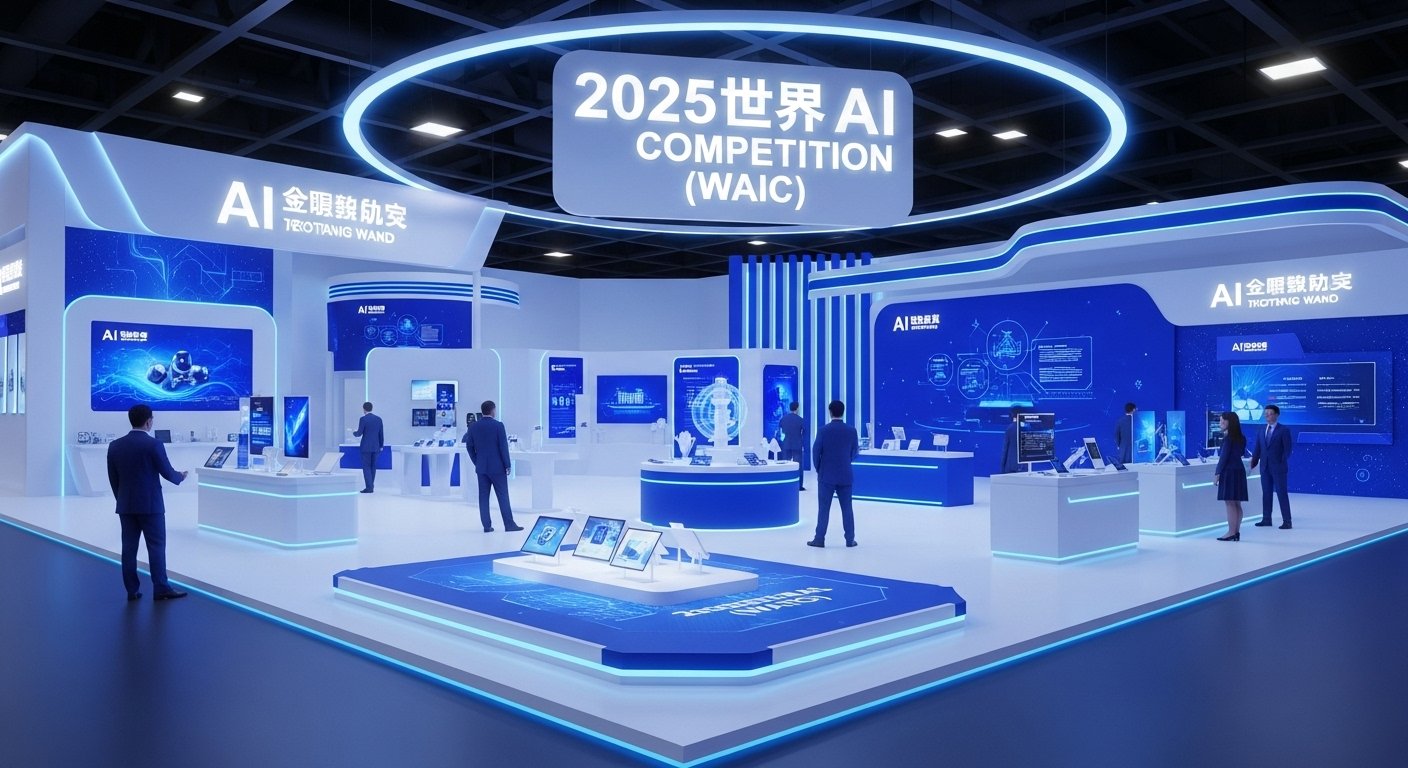
The 2025 World Artificial Intelligence Conference is strategically held across two major venues in Shanghai, maximizing capacity and thematic focus. The Shanghai Expo Center will host events from July 26 to 28, while the Shanghai World Expo Exhibition and Convention Center will extend its activities from July 26 to 29.1 The dual venue and overlapping dates highlight the massive scale of WAIC 2025, indicating China’s significant investment and ambition in hosting a truly comprehensive global AI event. Hosting a multi-day event across two large venues simultaneously requires substantial logistical coordination, financial investment, and a high expectation of participant numbers. This suggests that China views WAIC not merely as a local event but as a flagship international gathering designed to project its influence and capabilities on a grand scale in the AI domain. The overlapping dates ensure continuous engagement and a broad scope of activities, reinforcing its status as a premier global platform.
WAIC is designed as a world-class platform with three primary objectives: fostering cutting-edge innovation, facilitating robust industry exchange, and enabling crucial investment matchmaking.1 This holistic approach aims to accelerate the development and application of AI technologies globally.
The conference agenda, while not fully detailed for specific speakers, is structured around critical questions and themes that reflect the current global AI landscape. These include the nation’s AI industry as an economic growth driver, and the crucial debate between competition and cooperation in the AI age. Discussions also delve into understanding AI empowerment and its global perspective, the role of AI in academia and education, including human traits in the AI era, and the future of AI and its significance for all of humanity. A specific focus is placed on how China and the US can shape the future of AI together, alongside explorations of mind-blowing AI technology and Shanghai’s role in building tomorrow’s AI.1 The listed themes reveal a strategic emphasis on AI governance, international cooperation, and ethical considerations, indicating a deliberate shift from purely technical discussions to broader societal and geopolitical implications. While innovation and industry exchange are core objectives, the explicit inclusion of themes like “competition or cooperation,” “global perspective,” and “China-US collaboration” signifies that WAIC is not just a technology showcase but a platform for shaping international norms and policies around AI. This thematic choice directly supports China’s broader agenda of proposing a global cooperation body, setting the stage for such a significant announcement and ensuring the discussions align with its foreign policy objectives in AI.
For further details and updates, visitors can refer to the official WAIC 2025 website:(https://english.shanghai.gov.cn/en-2025WAIC/index.html#page1).
To provide a quick overview of the conference’s logistical and strategic pillars, the following table summarizes key information:
| Category | Details |
| Dates | July 26-28 (Shanghai Expo Center), July 26-29 (Shanghai World Expo Exhibition and Convention Center) 1 |
| Venues | Shanghai Expo Center, Shanghai World Expo Exhibition and Convention Center 1 |
| Primary Objectives | Cutting-edge innovation, Industry exchange, Investment matchmaking 1 |
China’s Bold Proposal: A Global AI Cooperation Body
A defining moment of WAIC 2025 was Chinese Premier Li Qiang’s direct call for the establishment of a global artificial intelligence cooperation organization. This proposal, made on Saturday during the conference, positions Beijing as a proactive leader in shaping the future of AI governance.2 Premier Li Qiang’s direct involvement and strong statements elevate China’s AI cooperation proposal from a mere suggestion to a high-level strategic foreign policy initiative. When a head of government makes such a proposal at an international conference, it signals that the initiative is not just a technical or academic idea but a core component of the nation’s strategic foreign policy. It lends significant weight and political capital to the proposal, indicating a serious commitment and intent to push for its realization on the global stage, rather than just a discussion point.
The motivation behind this proposal is rooted in a concern over technological exclusivity. Premier Li explicitly warned that AI risks becoming “an exclusive game for a few countries and companies”.2 This statement underscores China’s apprehension regarding technological monopolies and restrictions on AI development, implicitly criticizing nations that limit access to advanced technologies. To counter this exclusivity, Li emphasized China’s unwavering commitment to open-source AI development. Crucially, he promised to share technological advances with developing nations, particularly those in the Global South, aiming to bridge the digital divide and ensure equitable access to AI’s benefits.2 The explicit focus on “open-source AI development” and sharing with “developing nations, particularly in the Global South” is a deliberate strategy to build a coalition of support and counter the perception of AI as a tool for dominance by a few powerful nations. By explicitly targeting the Global South and emphasizing open-source, China is cultivating goodwill and practical partnerships with a large bloc of nations that often feel marginalized in global technology discussions. This strategy directly counters the “exclusive game” narrative by positioning China as a champion of equitable AI development, thereby building a broad base of support for its proposed global cooperation body and challenging the existing power structures in AI governance dominated by Western nations.
China’s Vice Foreign Minister Ma Zhaoxu further revealed plans to potentially headquarter this proposed organization in Shanghai. The initiative is envisioned to promote pragmatic AI cooperation through concrete actions, including establishing cross-border open-source communities and facilitating international technology exchanges.2 This move is not merely about establishing a new body but about creating tangible mechanisms for global collaboration in AI.
The Geopolitical Chessboard: US vs. China in AI Governance
China’s proposal is explicitly framed as an alternative to Washington’s AI dominance, coming just days after the Trump administration unveiled its “low-regulation AI strategy” focused on maintaining American supremacy.2 This highlights the escalating technological competition between the world’s two largest economies. Premier Li Qiang, without explicitly naming the United States, criticized “technological monopolies and restrictions on AI development”.2 This directly references the US’s stringent export controls on high-end AI chips (e.g., Nvidia) and advanced chipmaking equipment, citing national security concerns. Despite these restrictions, Chinese companies like Huawei continue to innovate, developing AI systems to mitigate limited access to American technology.2 China’s proposal is a direct strategic counter to the US’s approach to AI, leveraging the WAIC platform to articulate a distinct vision for global AI governance centered on multilateralism and inclusivity. China is not merely proposing an organization; it is actively constructing an alternative global governance paradigm for AI. By criticizing “exclusive games” and “monopolies,” Beijing is directly challenging the perceived unilateral or bloc-based approach of the US (e.g., export controls, “maintaining American supremacy”). WAIC serves as a highly visible international stage to launch this counter-narrative, aiming to garner international support for a more distributed, multilateral model of AI development and regulation, thereby undermining US efforts to control the global AI landscape.
Premier Li also stressed the urgent need for international coordination on AI governance, describing current global efforts as “fragmented” with significant differences in regulatory approaches.2 This underscores China’s argument for a unified, multilateral framework. The “fragmented” nature of current global AI governance efforts creates a vacuum that China is strategically attempting to fill with its proposal, positioning itself as a leader in establishing a much-needed unified framework. This fragmentation presents both a problem and an opportunity. China is actively seizing this opportunity by proposing a new global body. By highlighting the current disarray, China can present its initiative as a necessary and unifying solution, thereby enhancing its own leadership credentials in global governance. This move aims to shape the foundational rules of AI development and deployment before other, potentially less favorable, frameworks become entrenched.
Experts cited in the Global Times report note that “China clearly wants to stick to the multilateral approach while the US wants to build its own camp, very much targeting the rise of China in the field of AI,” suggesting the formation of “two camps”.3 However, there is also a strong belief among experts, including former Google CEO Eric Schmidt, that AI should be a tool for global collaboration, emphasizing open dialogue and mechanism building for stability and human control over powerful AI systems.3 This highlights the ongoing debate between competition and cooperation that defines the current AI landscape.
The contrasting approaches of the United States and China in AI governance are critical to understanding the global dynamics. The following table provides a clear comparison:
| Aspect | US Approach | China’s Proposed Approach |
| Core Philosophy | Maintain American supremacy, low-regulation AI strategy 2 | Multilateralism, “AI for good,” inclusive development, “putting AI on people” 3 |
| Market Access/Control | Strict export controls on high-end AI chips/equipment 2 | Counter technological monopolies, promote open-source development 2 |
| Global Engagement | Building its “own camp,” targeting China’s rise 3 | Proposes global cooperation body, sharing tech with Global South 2 |
| Governance Status | Fragmented global efforts 2 | Seeks unified global framework, potentially headquartered in Shanghai 2 |
Bridging the Digital Divide: China’s Inclusive AI Vision
China’s action plan for global AI governance not only addresses the challenges of technological competition but also demonstrates its commitment to actively promoting “AI for good” and fair development.3 The focus is on delivering “real gains to people all over the world,” emphasizing a human-centric approach to AI.3 This framing is a strategic use of soft power. In a world increasingly concerned about AI’s ethical implications, job displacement, and potential for misuse, China is attempting to present itself as a benevolent leader focused on universal benefits. This narrative directly contrasts with perceptions of Western AI development being driven primarily by corporate interests or military applications, thereby enhancing China’s moral authority and appeal to developing nations and those concerned about equitable AI access.
A core tenet of China’s vision is to share AI technology with countries that may lack computing power and talent but are eager to develop independent large AI models. This directly aims to bridge the digital and intelligent divide, ensuring that the benefits of AI are inclusively distributed.3 This approach seeks to empower nations that might otherwise be left behind in the rapid advancement of AI.
China has consistently advocated for an open and cooperative approach to AI governance, prioritizing inclusivity and shared progress. This is not a new stance; it builds on previous significant initiatives. In October 2023, China unveiled the Global AI Governance Initiative, advocating for countries to balance development and security. Subsequently, in September 2024, China introduced the AI Capacity-Building Action Plan for Good and for All. This plan outlined key areas for collaboration, including infrastructure development, industrial empowerment, talent training, data management, and security governance.3 China’s consistent and multi-faceted approach to AI governance, evidenced by these prior initiatives, indicates a well-developed and long-term strategy rather than an opportunistic response. The current proposal at WAIC is not an isolated event but a continuation and escalation of a pre-existing, coherent strategy. This demonstrates that China’s push for global AI cooperation is deeply embedded in its long-term foreign policy and technological development goals, lending it credibility and signaling a sustained effort to shape global AI norms. It suggests a mature policy framework rather than a reactive one.
Experts view China’s latest proposals as practical actions to adhere to multilateralism and promote global governance through consultation, joint construction, and sharing. It is also seen as a direct response to the call of the Global South for more equitable development opportunities.3 This highlights a deliberate effort to align its AI strategy with the broader aspirations of developing nations, fostering a sense of shared progress.
Why This Matters: Implications for the Future of AI
China’s proposal for a global AI cooperation body, potentially headquartered in Shanghai, represents a significant attempt to reshape the architecture of international AI governance. It challenges the current fragmented landscape and the dominance of existing power blocs, advocating for a more inclusive, multilateral approach. The success of China’s proposal hinges on its ability to overcome geopolitical friction and build genuine trust, particularly with nations wary of its rising technological influence. While China’s proposal is ambitious and framed inclusively, its actual implementation and global acceptance will be heavily influenced by existing geopolitical rivalries and trust deficits. Nations, particularly those aligned with the US or wary of China’s intentions, might view the proposal through a lens of strategic competition rather than pure cooperation. Therefore, the viability and impact of this proposal will be determined by the complex political realities, implying that the how of building this body (e.g., transparency, genuine multilateralism, addressing security concerns) will be as crucial as the what.
Should this initiative gain traction, it could unlock unprecedented opportunities for cross-border collaboration in AI research, development, and application. Establishing cross-border open-source communities and facilitating international technology exchanges 2 could accelerate global AI progress and address shared challenges like climate change, healthcare, and education. This vision of collective advancement could lead to a more equitable distribution of AI’s benefits worldwide.
However, the proposal also raises complex challenges. The geopolitical competition, particularly with the US, suggests that achieving true global consensus will be difficult. Questions of data sovereignty, intellectual property, ethical guidelines, and ensuring equitable participation across diverse nations will need careful navigation. The very definition of “AI for good” and “fair development” will be subject to intense debate, as different nations and cultures hold varying perspectives on these complex issues. The path toward a unified global AI governance framework is fraught with political, economic, and ethical complexities.
Conclusion: Shaping Tomorrow’s AI Landscape from Shanghai
WAIC 2025 stands as a testament to Shanghai’s growing stature as a global AI innovation hub. More profoundly, it has served as the stage for China to articulate a compelling vision for a new era of global AI governance. By proposing a global AI cooperation body, China is not merely reacting to existing challenges but proactively seeking to shape a future where AI development is inclusive, open-source, and beneficial for all, especially the Global South. This commitment to multilateralism and shared progress offers a distinct pathway amidst escalating technological competition.
WAIC 2025 and China’s proposal represent a critical juncture where the future of global AI governance could diverge significantly, moving either towards increased collaboration or further fragmentation into competing blocs. The conference and China’s proposal are not just events but potential inflection points. They highlight a fundamental choice for the international community: embrace a more multilateral, inclusive approach as advocated by China, or continue down a path of technological competition and “camp” formation. The outcome of this strategic push at WAIC will have long-lasting implications for how AI is developed, regulated, and shared globally, potentially leading to vastly different technological and geopolitical futures.
As the world navigates the complexities of AI’s future, the discussions initiated and the proposals put forth at WAIC 2025 from Shanghai will undoubtedly play a critical role in defining the contours of tomorrow’s intelligent landscape. The call for cooperation echoes across borders, urging a collective approach to harness AI’s immense potential responsibly and equitably.