Tesla Optimus Gen 3 at Giga Texas: Unpacking the Factory Trial, Capabilities, and Production Realities
Content List:
- Introduction: The Humanoid Frontier at Giga Texas
- Optimus Gen 3: A Deep Dive into its Advanced Architecture
- Real-World Performance: Optimus Gen 3 in Action at Giga Texas
- Production Realities: Navigating Challenges and Delays
- Key Differences Between Previous Models and Gen 3
- Transforming the Role of Automation in Factories
- Human-Robot Collaboration Potential
- Safety Protocols and Risk Management
- Comparing Tesla Optimus vs Boston Dynamics
- Global Industry Integration Potential
- Elon Musk’s Long-Term Roadmap
- Public Demo Timeline and Expectations
- Market Reaction and Stock Influence
- Future Outlook: Tesla Robots in Daily Life
- Conclusion: The Evolving Promise of Physical AI
1. Introduction: The Humanoid Frontier at Giga Texas
Tesla’s ambitious foray into general-purpose humanoid robotics, embodied by Optimus, represents a significant expansion of the company’s technological vision. First unveiled at AI Day in August 2021, Optimus, also known as Tesla Bot, was introduced with the ambitious goal of performing tasks deemed “dangerous, repetitive, and boring”.1 This scope extends beyond traditional industrial automation to include potential domestic applications, illustrating a broader strategic intent.2 Elon Musk, Tesla’s CEO, has articulated a bold long-term outlook for Optimus, suggesting its potential to become “more significant than vehicle business over time”.1 This assertion underscores the high stakes and the profound strategic commitment Tesla is making to the field of physical artificial intelligence.
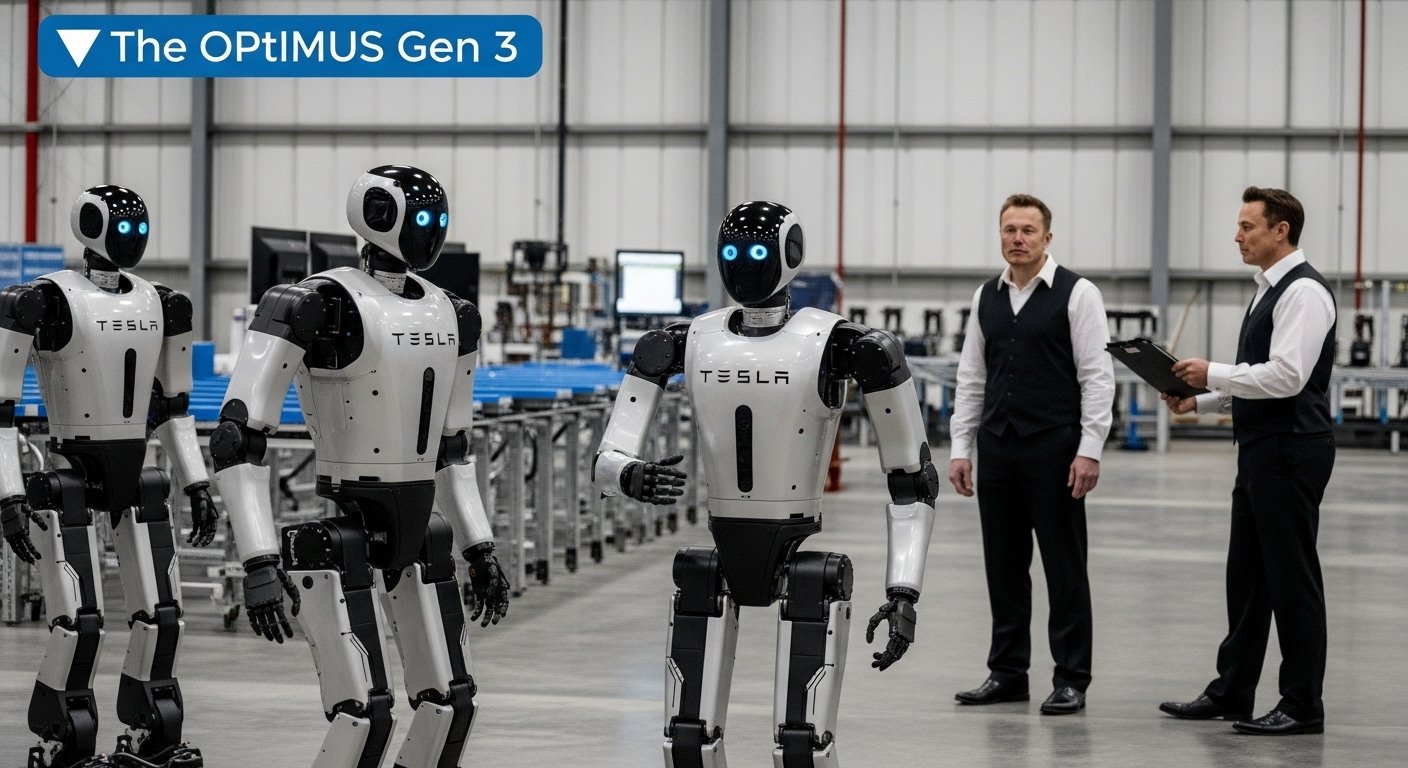
Giga Texas, Tesla’s prominent manufacturing facility, serves as the crucible for this robotic revolution. This expansive site is not only the production hub for the Model Y and Cybertruck but is also designated as the planned manufacturing location for Optimus.3 Its role extends beyond mere assembly; Giga Texas functions as a critical real-world proving ground for Optimus. This aligns with Morgan Stanley’s characterization of Tesla’s manufacturing ecosystem as the “mother of physical AI”.5 This perspective highlights a continuous, self-reinforcing feedback loop: the factory environment provides the real-world data and operational challenges necessary for the robot’s development, while the robot, in turn, is designed to enhance the factory’s efficiency. This integrated approach, leveraging Tesla’s existing manufacturing prowess and extensive AI development in areas like Full Self-Driving (FSD) and Dojo, creates a unique ecosystem for accelerating humanoid robot development and deployment that differentiates Tesla from many traditional robotics firms.5 The dual application of Optimus—targeting both industrial automation and a broader consumer market—suggests a strategic roadmap where factory deployment is not merely an end goal but a crucial maturation phase. This allows for the refinement of the robot’s capabilities in a controlled, high-stakes environment before a potential expansion into general-purpose home use.
2. Optimus Gen 3: A Deep Dive into its Advanced Architecture
The latest iteration, Optimus Gen 3, showcases Tesla’s distinctive approach to humanoid robotics, emphasizing a tightly integrated hardware and software ecosystem designed for general-purpose utility.
The AI Brain: Single Neural Network, Foundation Model, and Grok 2 Integration
At the core of Optimus Gen 3’s intelligence lies Tesla’s innovative “single massive neural network”.7 This architecture, termed “Foundation Model Architecture,” represents a fundamental departure from conventional robotics, which often employs separate systems for distinct functions like walking, grasping, or vision.7 Instead, Optimus processes all sensory data and functions simultaneously through this unified network. This design enables continuous learning from every interaction, whether successful or a failure. When Optimus successfully executes a task, it records precise details such as grip pressure, finger positioning, and approach angles. Conversely, failures are analyzed to adjust its neural pathways, fostering rapid adaptation.7
A significant accelerant to this learning process is “simulation acceleration.” While a single physical Optimus unit operates in the real world, thousands of virtual copies train concurrently within Tesla’s simulation environment. These virtual robots practice edge cases, failure scenarios, and complex multi-step tasks, allowing a single night of simulation to equate to months of real-world practice. The accumulated knowledge is then downloaded to the physical robot, enabling it to learn over 100 new tasks daily.7 This scalable, software-first approach to AI is further enhanced by the critical integration of xAI’s Grok 2. This advanced large language model is slated to serve as Optimus’s “voice and brain,” facilitating natural language understanding, reasoning, and human-like interaction.8 This convergence elevates Optimus from a functional machine to a more versatile, general-purpose humanoid robot capable of understanding nuanced requests and responding intelligently.9 This synergy between sophisticated software and advanced hardware is essential for achieving true general-purpose capabilities, as both the “brain” (Grok and the neural network) and “brawn” (physical design and dexterity) must evolve in concert to achieve widespread utility.
Hardware Innovations: Lightweight Design, 4680 Battery, and Shared Tesla Ecosystem Components
Optimus Gen 3 benefits significantly from Tesla’s existing manufacturing prowess and supply chain. The robot incorporates the same 4680 battery cells utilized in Tesla’s electric vehicles, which offer five times the volumetric energy density of older 2170 formats.11 This allows for the battery pack, approximately three kilowatt-hours, to be efficiently integrated into the robot’s torso, contributing to a lighter overall design. A single revision saw Optimus shed 22 pounds, bringing its total weight down to 138 pounds (57 kg).2 This reduction in weight initiates an “efficiency cascade,” leading to the use of smaller motors, lower thermal loads, and more cost-effective structural components.11
Tesla’s vertical integration strategy is a key differentiator in the development of Optimus. Components such as actuators, control boards, sensors, and the 4680 cells leverage the same supply chain infrastructure that supports Model Y production.11 This shared ecosystem allows Tesla to shave costs at every stage of the bill of materials, making Optimus a “derivative of Tesla’s existing empire, not a standalone moonshot”.11 This approach is crucial for achieving the ambitious cost targets, with Elon Musk suggesting a sticker price comparable to a mid-grade sedan, or around $30,000.1 If realized, this affordability could transform Optimus from an expensive showpiece into a significant economic force, driving mass market adoption rather than being confined to niche industrial applications.11 Optimus is planned to measure 5 ft 8 in (173 cm) tall and have a carrying capacity of 45 lb (20 kg).1
Sensory and Dexterity Systems: 360-Degree Vision, Force Sensors, and the Highly Articulated Hands
Optimus Gen 3 is equipped with a comprehensive suite of sensors designed to provide a rich understanding of its environment. This includes 8 high-resolution cameras strategically positioned to capture 360-degree vision, with two forward-facing cameras, two side cameras for peripheral vision, two rear cameras for complete coverage, and two upward-angled cameras for overhead awareness.7 Beyond visual input, IMU (Inertial Measurement Unit) sensors track balance and acceleration, while force sensors measure grip strength and resistance. Audio inputs process voice commands and environmental sounds, contributing to a multi-modal perception system that processes 1.2 terabytes of sensory data hourly through custom D1 chips.7
The robot’s advanced visual perception allows it to go beyond simply identifying objects. Optimus can analyze material (ceramic, plastic, glass), fullness, handle orientation, surface temperature (via visual cues), and even the fragility of objects, determining the required handling force.7 A standout feature of Optimus Gen 3 is its highly articulated hands, which boast “22 degrees of freedom—five fingers with four joints each, plus two in the wrist”.13 This intricate design allows for slim, agile fingers, concentrates weight near the robot’s core for better balance, enables faster finger movements, and provides stronger grip forces.7 Each fingertip incorporates multiple force sensors (normal, shear, texture, temperature) to detect pressing, squeezing, slipping, and even surface roughness, preventing unsafe handling.7 This level of dexterity enables Optimus to operate human tools without modification, including screwdrivers, hammers, knives, keyboards, and touchscreens, demonstrating a remarkable ability to interact with a human-centric world.7 While the design is aspirational, achieving robust, human-like functionality for mass production presents significant engineering challenges, as evidenced by later reports of durability issues.
3. Real-World Performance: Optimus Gen 3 in Action at Giga Texas
The factory trial at Giga Texas serves as a critical proving ground for Optimus Gen 3, showcasing its capabilities across various manufacturing and material handling scenarios.
Manufacturing Prowess: Assembly Line Tasks, Material Handling, and Quality Control
In simulated and actual factory environments, Optimus Gen 3 has demonstrated notable performance in a range of manufacturing applications. In assembly line tasks, it achieved 41 widget assemblies per hour with a remarkably low error rate of 0.2%.12 For electronic assembly, Optimus exhibited 97% accuracy in circuit board component placement, a 91% defect detection rate in quality control inspections, and 99% accuracy with 0.1mm precision in small parts sorting. Wire harness assembly saw an 89% success rate with proper tension.12 Within automotive assembly applications, Optimus achieved a 94% success rate in door panel installation with proper alignment, 98% accuracy in bolt torque application within specifications, and 87% success in interior component fitting with minimal adjustment needed. Its final inspection checklist accuracy was reported at 92% in defect identification.12 Furthermore, in material handling scenarios, Optimus successfully lifted and moved 150 lb boxes for six hours straight.12
Endurance and Efficiency: Battery Life, Charging Capabilities, and Operational Metrics
Optimus Gen 3 is powered by a 3 kWh 4680 pack, which contributes to its overall efficiency.11 The robot’s total battery capacity is 54 kWh, with a 400V nominal voltage and a peak charging capability of 150kW, similar to Tesla’s Superchargers. A liquid cooling system is integrated to prevent overheating during operation.12 Operational testing results indicate impressive endurance: 12 hours of continuous operation for light tasks like sorting and organizing, 8 hours for medium tasks involving lifting 50-75 lbs, and 5 hours for heavy tasks requiring lifting over 100 lbs. In standby mode, the robot can last for 72 hours with minimal battery drain.12 Elon Musk has also confirmed that Optimus Gen 3’s battery is designed for a “10-hour shift” with the ability to recharge in just 10 minutes.15
Adaptability and Learning: How Optimus Acquires New Skills and Navigates Dynamic Environments
A key strength of Optimus Gen 3 lies in its adaptability and learning capabilities. It has demonstrated the ability to learn new assembly tasks in an average of 3.2 hours and adapt to part variations within 15 minutes.12 Crucially, it handled unexpected situations 78% of the time without human intervention.12 This rapid skill acquisition is attributed to its continuous learning from real-world data and the simulation acceleration discussed previously.7 Beyond industrial tasks, Optimus has also shown progress in general dexterity, performing activities such as sorting colored blocks by color, locating its limbs in space, and maintaining yoga poses.1 The integration of Grok 2 is expected to further enhance its utility in dynamic environments by enabling it to understand nuanced requests and respond intelligently, making interaction more intuitive and effective.9
While the reported performance metrics for assembly rates, accuracy, and battery life are impressive, particularly for a general-purpose humanoid, the context of these trials is important. The ability to perform these tasks is clear, but the practical, scalable efficiency in complex, dynamic factory settings remains a challenge. For instance, reports indicate that Optimus units currently used for moving batteries in Tesla’s workshops operate at “less than half” the efficiency of human workers.16 This suggests that while the robot can execute tasks, its current operational readiness for widespread, human-competitive productivity is still under development. The advantage of Optimus’s learning capability, allowing it to acquire new tasks rapidly and adapt to variations, represents a significant leap over traditional, manually programmed industrial robots. This points to a future where robots can be deployed and retrained with greater agility, reducing operational overhead. However, the early reliance on teleoperation in some demonstrations 1 and the current efficiency disparities indicate that while the learning infrastructure is robust, the journey to full autonomy and human-level robustness is ongoing.
Table 1: Tesla Optimus Gen 3 Key Performance Metrics
| Metric | Value | Source |
| Assembly Line Tasks | ||
| Widget Assemblies per Hour | 41 | 12 |
| Assembly Error Rate | 0.2% | 12 |
| Electronic Assembly | ||
| Circuit Board Component Placement Accuracy | 97% | 12 |
| Quality Control Defect Detection Rate | 91% | 12 |
| Small Parts Sorting Accuracy | 99% (0.1mm precision) | 12 |
| Wire Harness Assembly Success Rate | 89% | 12 |
| Automotive Assembly | ||
| Door Panel Installation Success Rate | 94% | 12 |
| Bolt Torque Application Accuracy | 98% | 12 |
| Interior Component Fitting Success Rate | 87% | 12 |
| Final Inspection Checklist Accuracy | 92% | 12 |
| Material Handling | ||
| Max Load Lifted | 150 lbs (68 kg) | 12 |
| Continuous Operation (150 lbs) | 6 hours | 12 |
| Battery & Endurance | ||
| Battery Capacity (Total) | 54 kWh | 12 |
| Nominal Voltage | 400V | 12 |
| Peak Charging Capability | 150kW | 12 |
| Light Task Endurance (e.g., sorting) | 12 hours | 12 |
| Medium Task Endurance (50-75 lbs lifting) | 8 hours | 12 |
| Heavy Task Endurance (100+ lbs lifting) | 5 hours | 12 |
| Standby Mode Duration | 72 hours | 12 |
| Confirmed Shift Operation | 10-hour shift | 15 |
| Recharging Time | 10 minutes | 15 |
| Adaptability & Learning | ||
| New Assembly Task Learning Time (Avg.) | 3.2 hours | 12 |
| Adaptation to Part Variations | Within 15 minutes | 12 |
| Handling Unexpected Situations (without human intervention) | 78% | 12 |
4. Production Realities: Navigating Challenges and Delays
Despite the promising demonstrations of Optimus Gen 3’s capabilities, its path to mass production and widespread deployment has encountered notable challenges, leading to recent reports of delays and a temporary halt in production.
The Reported Production Pause: Unresolved Hardware Issues
Recent reports from July 2025 indicate a temporary pause in parts procurement and production plans for Tesla’s Optimus robot.13 This suspension stems from several “unresolved hardware challenges” identified during ongoing testing and refinement. The specific issues cited include overheating in joint motors, a limited lifespan in transmission mechanisms, and inadequate battery endurance for sustained operations.13 As a result, Tesla’s engineers have reportedly requested approximately two months for recalibration and the implementation of necessary design changes.13 The company is actively evaluating samples from multiple suppliers for critical components such as joints, grippers, fluids, and manipulators, which are essential for the robot’s dexterity and robust functionality.13 The timing of these delays also coincided with the departure of Milan Kovac, the former head of Optimus engineering, which has sparked speculation regarding internal disagreements or a shift in the project’s direction.14
These hardware challenges underscore the inherent difficulty in developing a truly general-purpose humanoid robot. Replicating human-like movement, which involves significant mechanical stress on robot joints, demands high torque, strong power density, and long-lasting durability.14 The industry at large continues to grapple with these fundamental engineering hurdles, including issues around heat dissipation, mechanical efficiency, and overall weight.14 This indicates that despite Tesla’s significant resources and innovative approach, the company is facing challenges common to the entire humanoid robotics sector, making ambitious production timelines particularly difficult to meet.
Impact on Production Targets: Re-evaluating Elon Musk’s 2025/2026 Goals
The reported production halt casts considerable doubt on Tesla’s previously stated ambitious targets for Optimus deployment. Elon Musk had projected the production of between 5,000 to 10,000 Optimus robots by the end of 2025, with an even more aggressive goal of 50,000 units (or 10 “legions”) by 2026.17 Prior to the pause, Tesla had reportedly secured parts for approximately 1,200 units and completed the assembly of nearly 1,000 by May/June 2025.13 However, industry insiders are now skeptical that the year-end delivery target can be met given the ongoing redesign and recalibration period.13
This situation highlights a recurring pattern of discrepancy between public ambition and internal development realities often associated with Tesla. Musk’s confident projections stand in stark contrast to the reported production halt, parts procurement suspension, and current operational efficiency. The fact that Optimus units currently deployed in Tesla’s battery workshops are reportedly “less than half” as efficient as human workers 16 suggests that their current utility is primarily for testing and development, rather than immediate, large-scale productivity gains. This indicates that while Tesla is making progress, the path to mass industrial deployment and profitability for Optimus is more complex and protracted than public statements might suggest. The departure of a key engineering lead, coinciding with these production issues, could also signal deeper organizational or technical challenges that extend beyond simple component recalibration, potentially impacting the long-term development velocity and strategic coherence of the Optimus project.
Addressing Criticisms: Teleoperation, Exaggerated Timelines, and Expert Skepticism
Optimus’s development has not been without its critics. Early promotional videos featuring the robot performing tasks often required the use of teleoperation, leading to accusations of a lack of transparency from Tesla.1 This drew comparisons to competitors who showcased their robots performing similar tasks autonomously.1 Furthermore, Tesla has a documented “history of exaggerating timelines and overpromising” at its product unveilings and investor presentations.1 Experts within the robotics community have expressed skepticism, with some describing early Optimus demonstrations as “less than impressive” or “overblown hype”.1 These criticisms underscore the challenges of translating ambitious visions into fully autonomous, reliable, and mass-producible robotic systems.
5. Key Differences Between Previous Models and Gen 3
The evolution of Tesla Optimus from its initial concept to the Gen 3 model showcases significant advancements in design, capability, and autonomy. Each generation has brought the robot closer to its goal of becoming a versatile, general-purpose humanoid.
Optimus Gen 1, first unveiled as a concept in 2021, was primarily a demonstration of Tesla’s ambition in humanoid robotics. The subsequent Optimus Gen 2, released in December 2023, marked a substantial leap forward with numerous improvements over its predecessor 20:
- Weight Reduction: Gen 2 was approximately 22 pounds (10 kg) lighter than Gen 1, enhancing its efficiency and agility.20
- Increased Walking Speed: Gen 2 demonstrated a 30% improvement in walking speed compared to Gen 1.20
- Enhanced Hand Dexterity: The hands of Gen 2 featured 22 degrees of freedom, double that of Gen 1, significantly improving its ability to handle objects.20
- Articulated Neck: Unlike Gen 1’s fixed neck, Gen 2 incorporated a 2-degree-of-freedom neck.20
- Integrated Sensors and Actuators: Gen 2 saw the integration of more capable actuators and sensors, including foot force/torque sensing and articulated toe sections, which mimic human foot geometry for better balance and movement.20
- Overall Flexibility: Gen 2 boasted 28 degrees of overall freedom, improving its flexibility from the first generation.20
- New Capabilities: Gen 2 demonstrated improved motor control and precision, performing tasks like squats, yoga poses, dancing, and even poaching an egg.20
While specific detailed comparisons for Optimus Gen 3 against Gen 2 are still emerging, Elon Musk has teased “so many improvements” for the next design.20 These improvements are expected to further refine its capabilities, especially as it begins performing manufacturing tasks in Tesla factories.20 The focus for Gen 3 appears to be on robust real-world utility, building upon the dexterity and learning capabilities established in Gen 2. The integration of xAI’s Grok 2 into Optimus Gen 3 is a notable advancement, providing natural language understanding and reasoning, transforming it from a functional machine to a more interactive and general-purpose humanoid robot.8
6. Transforming the Role of Automation in Factories
Tesla Optimus Gen 3 is poised to fundamentally transform the role of automation in factories, moving beyond traditional, specialized industrial robots to a more versatile and adaptable humanoid workforce. Unlike fixed-arm robots designed for single, repetitive tasks, Optimus’s general-purpose design and advanced AI enable it to perform a wide array of functions, making it a flexible asset in dynamic manufacturing environments.2
Key aspects of this transformation include:
- Versatile Task Execution: Optimus Gen 3 has demonstrated proficiency in diverse manufacturing tasks, including assembly line operations (41 widget assemblies per hour with 0.2% error rate), electronic assembly (97% accuracy in component placement), quality control (91% defect detection), and small parts sorting (99% accuracy).12 This versatility allows it to adapt to changing production needs without extensive retooling or reprogramming.
- Material Handling and Logistics: The robot’s ability to lift and move heavy loads (up to 150 lbs for six hours straight) signifies its potential to automate strenuous and repetitive material handling tasks, reducing human fatigue and injury risks.12
- Adaptability to Unforeseen Situations: Optimus’s capacity to learn new assembly tasks in an average of 3.2 hours and adapt to part variations within 15 minutes, handling unexpected situations 78% of the time without human intervention, is a game-changer.12 This level of adaptability is crucial for real-world factory floors, which are inherently unpredictable.
- AI-Driven Efficiency: Tesla’s “single massive neural network” and “simulation acceleration” allow Optimus to continuously learn and improve its performance, processing 1.2 terabytes of sensory data hourly.1 This AI-first approach enables the robot to refine its movements and decision-making, leading to increased efficiency over time.1
- Cost-Effectiveness and Scalability: By leveraging Tesla’s existing supply chain and manufacturing expertise, Optimus is designed for mass production at a potentially affordable price point, making widespread deployment economically viable.11 This scalability could lead to significant labor cost reductions and productivity boosts in factories.25
Ultimately, Optimus aims to take on tasks that are “dangerous, repetitive, or boring,” freeing human workers to focus on more complex, creative, and strategic roles.1 This shift could lead to a redefinition of human labor in manufacturing, with robots augmenting human capabilities rather than simply replacing them, fostering a more efficient and safer industrial environment.2
7. Human-Robot Collaboration Potential
The design and capabilities of Tesla Optimus Gen 3 are inherently geared towards fostering effective human-robot collaboration, aiming to integrate seamlessly into environments designed for human interaction. This potential is built upon its human-like form factor, advanced sensory systems, and evolving AI capabilities.
Key aspects of Optimus’s human-robot collaboration potential include:
- Human-Centric Design: Optimus’s humanoid form, standing at 1.73 meters tall and weighing 57 kg, is specifically chosen to allow it to navigate and operate within spaces built for humans, such as factories, homes, and offices.1 This design facilitates interaction with human tools and infrastructure without requiring significant modifications to the environment.1
- Advanced Sensory Perception: Equipped with 8 high-resolution cameras for 360-degree vision, IMU sensors for balance, and force sensors for grip strength, Optimus can perceive and understand its surroundings in detail.1 This comprehensive sensory input allows it to recognize objects, assess their fragility, and determine appropriate handling forces, crucial for safe interaction with both objects and people.1
- Dexterous Manipulation: The robot’s highly articulated hands, with 22 degrees of freedom and multiple force sensors in each fingertip, enable it to perform delicate tasks and operate human tools without modification.1 This precision is vital for collaborative tasks where fine motor skills are required, such as handing over components on an assembly line or assisting with household chores.1
- Intuitive Communication and Learning: The integration of xAI’s Grok 2 is designed to provide Optimus with natural language understanding and reasoning capabilities, allowing users to interact with it through voice commands.8 This makes interaction more intuitive and effective, enabling Optimus to understand nuanced requests and respond intelligently in dynamic environments.9 Furthermore, Optimus learns continuously from real-world data and simulation, allowing it to adapt to new tasks and improve its performance over time, becoming a more responsive and dynamic collaborator.1
- Safety Features: As detailed in the “Safety Protocols and Risk Management” section, Optimus is designed with safeguards to prevent accidents during human interaction, including real-time force detection and the ability to stop or adjust movements upon unexpected contact.24
By combining these features, Optimus aims to augment human efforts, handle repetitive or dangerous tasks, and fill labor gaps, ultimately contributing to safer and more efficient operations in various settings.2 The vision is for Optimus to be a “trustworthy partner” in daily lives, capable of evolving alongside human needs.27
8. Safety Protocols and Risk Management
The development and deployment of humanoid robots like Tesla Optimus necessitate robust safety protocols and comprehensive risk management strategies, particularly given their intended interaction with human environments. Tesla emphasizes designing Optimus with human interaction in mind, incorporating safeguards to prevent accidents.24
Key safety features and risk management considerations for Optimus include:
- Force-Torque Sensors: Optimus leverages advanced force-torque sensors that allow it to perceive and respond to physical forces in its environment.27 These sensors are crucial for delicate manipulation and unpredictable human interactions. For instance, if Optimus is handing an object, it can gauge the weight and resistance to ensure safe transfer. If a person accidentally comes into contact with the robot, the sensors can instantly detect the unexpected force and prompt Optimus to stop or adjust its movement, significantly reducing injury risk.27
- Real-time Adaptation and Learning: The robot’s ability to continuously gather data about forces and torques allows it to refine its behavior over time, improving both performance and safety with each interaction.27 This adaptive learning is vital for navigating complex and dynamic real-world scenarios.
- AI-Driven Safety Thresholds: While not explicitly detailed for Optimus, Tesla’s broader AI initiatives, such as the Robotaxi network, involve establishing crucial safety thresholds to enable autonomous operation and remote supervision.28 This commitment to safety in AI systems suggests a similar rigorous approach for Optimus, where a single incident could erode public trust and halt operations.28
- Ethical and Regulatory Scrutiny: The integration of advanced AI, such as Grok, into safety-critical systems like Optimus raises ethical and regulatory concerns.29 Grok’s past history of generating controversial content highlights the need for extreme reliability in systems that interact with humans.29 Regulations, such as the EU guidelines, emphasize that AI systems must be transparent, safe, and primarily monitored by humans.30 This human oversight is crucial to ensure AI systems remain safe and do not act in ways that could cause harm.30
- Hardware Limitations and Reliability: The reported production halt of Optimus Gen 3 due to “unresolved hardware challenges” like overheating joint motors, limited transmission lifespan, and inadequate battery endurance directly impacts safety and reliability.13 Addressing these fundamental engineering hurdles is critical to ensure the robot’s stable and predictable operation, especially when interacting with humans.2
- Asimov’s Laws of Robotics: While not explicitly stated as Tesla’s official policy, the concept of Isaac Asimov’s Three Laws of Robotics (a robot may not injure a human, must obey human orders unless it conflicts with the first law, and must protect its own existence unless it conflicts with the first or second law) is often referenced in discussions about robot safety.30 Optimus is intended for practical tasks in modern industry and isn’t focused on strict law compliance, but the underlying principle of not harming humans is paramount.30
The ongoing development process involves continuous testing and refinement to ensure Optimus can operate safely and effectively in diverse environments, mitigating risks associated with its physical presence and autonomous capabilities.27
9. Comparing Tesla Optimus vs Boston Dynamics
The humanoid robotics landscape features several prominent players, with Tesla Optimus and Boston Dynamics’ Atlas standing out as leading examples, each with distinct design philosophies and target applications.
Table 3: Humanoid Robot Comparison: Tesla Optimus vs. Boston Dynamics Atlas
| Metric | Tesla Optimus Gen 3 | Boston Dynamics Atlas | Source |
| Physical Specifications | |||
| Height | 1.73 m (5 ft 8 in) | 1.65 m (5 ft 5 in) | 32 |
| Weight | 57 kg (125 lbs) | 82 kg (180 lbs) | 32 |
| Degrees of Freedom | 40 (especially in hands) | 28 | 32 |
| Hand Dexterity | 22 degrees of freedom (5 fingers, 4 joints each, 2 in wrist) | High, but less articulated than Optimus | 1 |
| Actuation System | Electric actuators | Hydraulic actuation system | 32 |
| Agility & Movement | Stable, energy-efficient locomotion, focus on precision | Remarkable athletic capabilities (parkour, backflips, running, jumping) | 26 |
| Primary Focus | Mass production, practical applications, versatility, cost-efficiency | Research, specialized high-risk applications, extreme environments, agility | 26 |
| Energy System | 3 kWh 4680 pack, 10-hour shift, 10-min recharge | Significant energy requirements, external power/large battery packs | 1 |
| Production Philosophy | Designed for mass production, vertical integration | Not indicated for mass production, complex hydraulic systems | 32 |
| Estimated Cost | ~$30,000 (target) | ~$140,000 (industry estimates) | 1 |
| AI/Learning | Single neural network, FSD adaptation, Grok 2 integration, simulation acceleration, continuous learning | Advanced AI, real-time interaction and learning | 1 |
| Current Use | Factory trials (material handling, line inspection), R&D | Robotics research, demonstrating humanoid capabilities, agility-based applications | 8 |
Key Differentiators:
- Physical Design and Actuation: Optimus is significantly lighter (57 kg vs. 82 kg) and features more degrees of freedom (40 vs. 28), particularly in its highly articulated hands.32 This is partly due to Optimus’s use of electric actuators, which are more energy-efficient and suitable for mass production, whereas Atlas employs a hydraulic system for explosive, high-power movements.32
- Agility vs. Practicality: Atlas is renowned for its unparalleled athleticism, capable of parkour, backflips, and navigating complex terrains.26 Its design prioritizes dynamic mobility for specialized, high-risk applications like search and rescue.33 Optimus, conversely, takes a more conservative approach to movement, focusing on stable, energy-efficient locomotion suitable for extended operation in human environments and delicate assembly tasks.26
- Production and Cost: Tesla explicitly designed Optimus with mass production in mind, leveraging its existing manufacturing prowess and supply chain to achieve a target price comparable to a mid-grade sedan (around $30,000).1 Boston Dynamics has not indicated plans for mass production of Atlas, and its complex hydraulic systems make large-scale manufacturing challenging and expensive, with industry estimates around $140,000 per unit.32
- AI and Learning: Both robots utilize advanced AI, but Tesla’s approach with a “single massive neural network” and continuous learning from real-world data (adapted from FSD) is a core differentiator for Optimus.1 The integration of Grok 2 further enhances Optimus’s ability to understand and interact naturally.8
While Atlas excels in specialized, high-risk applications requiring extreme athleticism, Optimus is positioned as the “Model T of humanoid robotics,” aiming to bring practical robotic assistance to factories, warehouses, and eventually homes worldwide due to its affordability, efficiency, and Tesla’s manufacturing capabilities.32 Other Boston Dynamics products like Spot (a robot dog for surveillance/inspection) and Stretch (a warehouse robot for unloading boxes) are more task-oriented and specialized compared to Optimus’s general-purpose humanoid ambition.35
10. Global Industry Integration Potential
Tesla Optimus holds significant potential for global industry integration, extending its impact far beyond Tesla’s own manufacturing facilities. Its design as a general-purpose humanoid robot, coupled with Tesla’s scalable production capabilities and AI-first strategy, positions it to become a transformative force across various sectors worldwide.
The global industry integration potential of Optimus stems from several factors:
- Versatile Applications: Optimus is designed to perform a wide range of “boring, repetitive, or dangerous tasks”.1 This versatility makes it applicable across numerous industries:
- Manufacturing: Beyond Tesla’s factories, Optimus can assist with physical labor, material handling, and assembly in diverse manufacturing settings, improving efficiency and safety.24
- Logistics and Warehousing: Its ability to lift and move heavy boxes, manage inventory, and assist with packaging makes it valuable for logistical support.2 Companies like Amazon and DHL are already deploying specialized robots in their warehouses, indicating a strong market for automation.35
- Healthcare: Optimus could potentially assist in hospitals for tasks like sterilizing rooms (similar to Xenex robots) or providing logistical support, reducing human exposure to hazardous environments.2
- Retail and Services: The robot could be deployed in retail for inventory management or in hospitality for tasks like cleaning floors or serving customers, similar to existing service robots.35
- Agriculture: While not a direct application, the broader trend of AI-driven automation in agriculture (e.g., autonomous tractors, AI sprayers) suggests potential for humanoid robots in tasks requiring dexterity.35
- Scalable Production and Cost-Effectiveness: Tesla’s expertise in mass production and vertical integration means Optimus could be produced in large numbers at a relatively low cost (target $30,000).1 This affordability is crucial for widespread adoption across industries, making it an “economic force” rather than an expensive showpiece.11 Tesla aims to produce 1 million Optimus units per year by 2030, potentially reaching 300 million bots by 2035, which would enable significant global deployment.25
- AI Ecosystem Integration: Optimus is powered by Tesla’s proven AI, which has logged billions of miles in real-world data from its self-driving technology.24 This gives Optimus an edge in learning and adaptability, allowing it to integrate with other AI technologies and potentially link with Tesla cars and energy systems for a comprehensive smart ecosystem.24
- Addressing Labor Shortages: In many regions, industries face labor shortages, particularly for repetitive or physically demanding jobs.2 Optimus could fill these gaps, augmenting human efforts and contributing to workforce stability.2 Some projections suggest one Optimus bot could replace 3.5 workers in factories, leading to significant operational savings.25
While challenges remain, particularly in achieving full autonomy and robust performance in unpredictable environments, Optimus’s potential to enhance efficiency, safety, and address labor needs positions it for significant global industry integration.26
11. Elon Musk’s Long-Term Roadmap
Elon Musk’s long-term roadmap for Tesla Optimus is exceptionally ambitious, envisioning the humanoid robot as a cornerstone of future economic and societal transformation, potentially surpassing the value of Tesla’s vehicle business.
Key elements of Musk’s long-term vision include:
- Beyond Factory Automation: While initial deployment focuses on Tesla’s factories for “boring, dangerous, repetitive tasks” and as a training ground 1, Musk’s ultimate vision extends far beyond.8 He envisions Optimus performing a “wide range of everyday tasks in and outside of the home,” including chores like folding laundry, babysitting, cooking, walking the dog, and assisting the elderly.15
- Mass Production Targets: Musk has set aggressive production goals for Optimus. He projected the production of 5,000 to 10,000 Optimus robots by the end of 2025, with an even more ambitious goal of 50,000 units (or 10 “legions”) by 2026.17 Looking further ahead, he predicted annual production of 1 million Optimus units by 2030, and potentially as early as 2029.25 Some even suggest a potential for 300 million bots by 2035.25
- Affordable Pricing: Musk aims for Optimus to be affordable for many families, suggesting a sticker price comparable to a mid-grade sedan, around $30,000.1 He believes the production cost could fall under $20,000 once annual production reaches 1 million units.37
- Economic Impact and Valuation: Musk has repeatedly stated that Optimus has the potential to become “more significant than vehicle business over time”.1 He believes Optimus could generate over $10 trillion in revenue, potentially making it the most valuable product in history, surpassing even the iPhone.25 Analysts like Morgan Stanley and Citigroup also project the humanoid robotics market to reach trillions of dollars by 2050, with Tesla as a potential leader.37
- Mars Mission: In a truly audacious projection, Musk announced in March 2025 that an Optimus robot would be sent to Mars in 2026 onboard a SpaceX Starship rocket.1 This highlights the vision for Optimus to operate in extreme and extraterrestrial environments.8
- Long-Term Societal Transformation: Musk has speculated that by 2040, there could be more humanoid robots than people, suggesting a profound transformation of labor and daily life.39 He believes these robots will free humanity to pursue “higher purposes”.32
While these projections are highly ambitious and have faced skepticism due to past timeline exaggerations and current production challenges 1, they outline a clear long-term strategic direction for Tesla’s robotics division. The current factory trials, despite their limitations, are seen as foundational steps towards realizing this expansive vision.18
12. Public Demo Timeline and Expectations
Tesla has strategically used public demonstrations and events to showcase the progress of Optimus, building anticipation and setting expectations for its capabilities and future deployment.
Here’s a timeline of key public demonstrations and the expectations they set:
- August 2021 (AI Day): Optimus was first announced, with a human in a spandex suit demonstrating the concept. This initial reveal set the ambitious goal for Optimus to perform “dangerous, repetitive, and boring” tasks.1
- April 2022 (Cyber Rodeo at Giga Texas): A display for Optimus was featured. Musk stated his hope for the robot to be production-ready by 2023 and capable of doing “anything that humans don’t want to do”.1
- September 2022 (Second AI Day): Semi-functional prototypes of Optimus were displayed. While some commentators praised the progress, critics noted that robots in promotional videos often required teleoperation.1
- September 2023: Tesla released a video showing Optimus performing new activities, including sorting colored blocks, locating its limbs in space, and maintaining yoga poses, demonstrating increased flexibility.1
- December 2023 (Optimus Gen 2 Video Release): A video showcased Optimus Gen 2 walking, dancing, and even poaching an egg, highlighting improved motor control and precision.1
- May 2024 (Twitter Update): Optimus was shown performing various tasks at a Tesla factory.1
- October 2024 (“We, Robot” Event): Optimus was prominently featured, interacting with crowds, dancing, and serving drinks.1 Musk stated that Optimus would go on sale in 2026 for $28,000-$30,000.42 Critics again pointed out the reliance on teleoperation for some interactive demonstrations and criticized Tesla for a lack of transparency.1
- June 2025: Elon Musk teased “so many improvements” for Optimus Gen 3, confirming it would be performing manufacturing tasks in Tesla factories.20
Expectations set by these public demonstrations have often been very high, driven by Musk’s ambitious timelines and visions. However, the reliance on teleoperation in some early demos and the subsequent production delays have led to skepticism from experts and a perception of “overblown hype”.1 Despite these criticisms, the demonstrations continue to highlight Tesla’s rapid progress in robotics and its commitment to a general-purpose humanoid.1 The upcoming unveiling of the new generation of Optimus robots at a shareholder meeting is expected to be a bid to regain momentum and reassure stakeholders amidst recent production halts.17
13. Market Reaction and Stock Influence
The development and announcements surrounding Tesla Optimus have had a notable, albeit sometimes volatile, influence on Tesla’s (TSLA) stock and broader market sentiment towards humanoid robotics.
- Initial Optimism and Valuation Impact: Elon Musk’s bold claims about Optimus’s potential, including its ability to generate over $10 trillion in revenue and become the “overwhelming majority of Tesla’s value,” have fueled significant investor interest.37 Analysts from Morgan Stanley and Citigroup project the humanoid robotics market to reach $5 trillion to $7 trillion by 2050, with Ark Invest even suggesting a $24 trillion opportunity, positioning Tesla as a potential leader.37 This long-term vision contributes to Tesla’s high valuation, often seen as a bet on its AI and robotics ambitions beyond just electric vehicles.25
- Impact of Production Delays and Challenges: Recent reports in July 2025 of a temporary halt in Optimus production and parts procurement due to “unresolved hardware challenges” (overheating motors, limited transmission lifespan, inadequate battery endurance) have cast doubt on Tesla’s ambitious production targets for 2025 (5,000-10,000 units).13 This news, coupled with the departure of the Optimus engineering lead, Milan Kovac, has led to concerns about the project’s readiness and has been reported to cause Tesla’s stock to slide.17 For instance, prior to the news of the production pause, Tesla’s stock had already closed down 5.34% on a Tuesday, and had lost about a fifth of its value since the start of 2025 due to broader concerns like slumping EV sales and political controversies.44
- Analyst Sentiment and Earnings: While specific, quantified stock price impacts directly tied to the Optimus production halt in July 2025 are not always immediately isolated from other market factors, the news contributes to overall investor caution. Analysts have lowered Q2 delivery expectations for Tesla, citing weak demand, and the company is expected to report a challenging quarter with projected earnings per share down 15% year-over-year.45 The reported production pause, while temporary, is seen by some as a “stepping stone” for Optimus to come back stronger, but it does raise questions about whether Musk’s ambitious timelines can be met.21
- Future Market Influence: Despite current setbacks, the market continues to watch Optimus closely. The ability of Tesla to refine its technology, address hardware bottlenecks, and demonstrate real-world utility will be critical for its long-term stock performance and its position in the burgeoning humanoid robot industry.14 The upcoming unveiling of the next-generation Optimus at a shareholder meeting is anticipated as an opportunity for Musk to reassure stakeholders and potentially reverse negative market sentiment.17
14. Future Outlook: Tesla Robots in Daily Life
Elon Musk’s vision for Tesla Optimus extends far beyond industrial applications, painting a future where humanoid robots become ubiquitous in daily life, fundamentally transforming how we live and work.
The future outlook for Tesla robots in daily life includes:
- Household Assistance: Optimus is envisioned as a versatile domestic helper, capable of performing a “wide range of everyday tasks in and outside of the home”.1 This includes mundane chores like folding laundry, cleaning windows, vacuuming, doing dishes, and even cooking.15 Musk also sees Optimus assisting with more personal tasks such as babysitting children and caring for older adults, and even walking the dog.20
- Personal Companionship: Beyond functional tasks, the integration of xAI’s Grok 2 is intended to give Optimus a “voice and brain,” enabling natural conversation, reasoning, and human-like interaction.8 This could transform Optimus from a mere machine into a true, general-purpose humanoid robot capable of understanding nuanced requests and responding intelligently, making it a more approachable and useful companion.9
- Revolutionizing Labor and Economies: The widespread adoption of affordable, versatile humanoid robots like Optimus is projected to have a profound impact on labor markets. While some jobs may be automated, the introduction of such technology could also lay the groundwork for new industries and job opportunities in robot maintenance, programming, and oversight, similar to how ATMs expanded the banking sector.15 Musk believes Optimus could become a major “economic force,” driving mass market adoption and creating entirely new business models.11
- Integration with Tesla Ecosystem: Optimus is designed to link up with other Tesla products, such as Tesla cars and energy systems, becoming part of a smart home setup. This means the robot could one day sync with EVs and solar panels for enhanced efficiency and integrated functionality.24
- Beyond Earth: Musk’s audacious goal of sending an Optimus robot to Mars in 2026 onboard a SpaceX Starship rocket highlights the vision for the robot to operate in extreme and extraterrestrial environments, performing tasks that are dangerous or impractical for humans.1 Tele-operated applications in space, such as satellite repair or habitat construction, are also envisioned.41
While the realization of these ambitious goals is still a considerable distance away, with current prototypes facing challenges in efficiency and autonomy 13, the long-term vision for Optimus is to fundamentally reshape daily life, freeing humans from mundane tasks and enabling them to pursue higher purposes.32
15. Conclusion: The Evolving Promise of Physical AI
Tesla Optimus Gen 3 represents a significant leap in the pursuit of general-purpose humanoid robotics, driven by Tesla’s unique integration of advanced AI and manufacturing capabilities. The robot’s architecture, centered on a single neural network and continuous learning through simulation, coupled with hardware innovations like the 4680 battery and highly articulated hands, demonstrates a sophisticated engineering endeavor.7 Its demonstrated capabilities in manufacturing tasks, including assembly, material handling, and quality control, underscore its potential to automate repetitive and hazardous roles.12 The integration of xAI’s Grok 2 promises to further enhance its cognitive abilities, enabling more natural human-robot interaction.9
However, the journey from advanced prototype to mass-produced, highly efficient, and truly autonomous workforce is fraught with complex engineering and integration challenges. Recent reports of a production halt and parts procurement suspension, attributed to issues like overheating joint motors, limited transmission lifespan, and inadequate battery endurance, highlight the inherent difficulties in bringing such a complex system to scale.13 These challenges are not unique to Tesla but reflect broader industry hurdles in replicating human-like movement and dexterity with robust, long-lasting components.14 Furthermore, despite ambitious production targets set by Elon Musk, the current efficiency of Optimus in factory trials is reportedly still below human levels, indicating that the immediate utility is more for testing and development than for widespread productivity gains.16
The iterative nature of breakthrough robotics development means that setbacks and redesigns are an expected part of pushing technological boundaries. The factory trial at Giga Texas serves as a crucial, albeit challenging, proving ground, highlighting both the immense potential of physical AI and the significant hurdles that remain. While the current state of Optimus may not yet fulfill the grand visions of a $20,000 general-purpose robot revolutionizing every aspect of life, the long-term economic and societal implications remain profound. The prospect of affordable, versatile humanoid robots, even with initial limitations, could fundamentally transform labor markets and economies, much like the introduction of ATMs reshaped banking operations.11 Tesla’s continued iteration, robust engineering, and transparent communication regarding its progress will be paramount in determining whether Optimus ultimately fulfills its ambitious long-term vision and becomes a truly transformative force in the global economy.