From Pixels to Prose: How Generative AI is Redefining Creativity and Content Creation
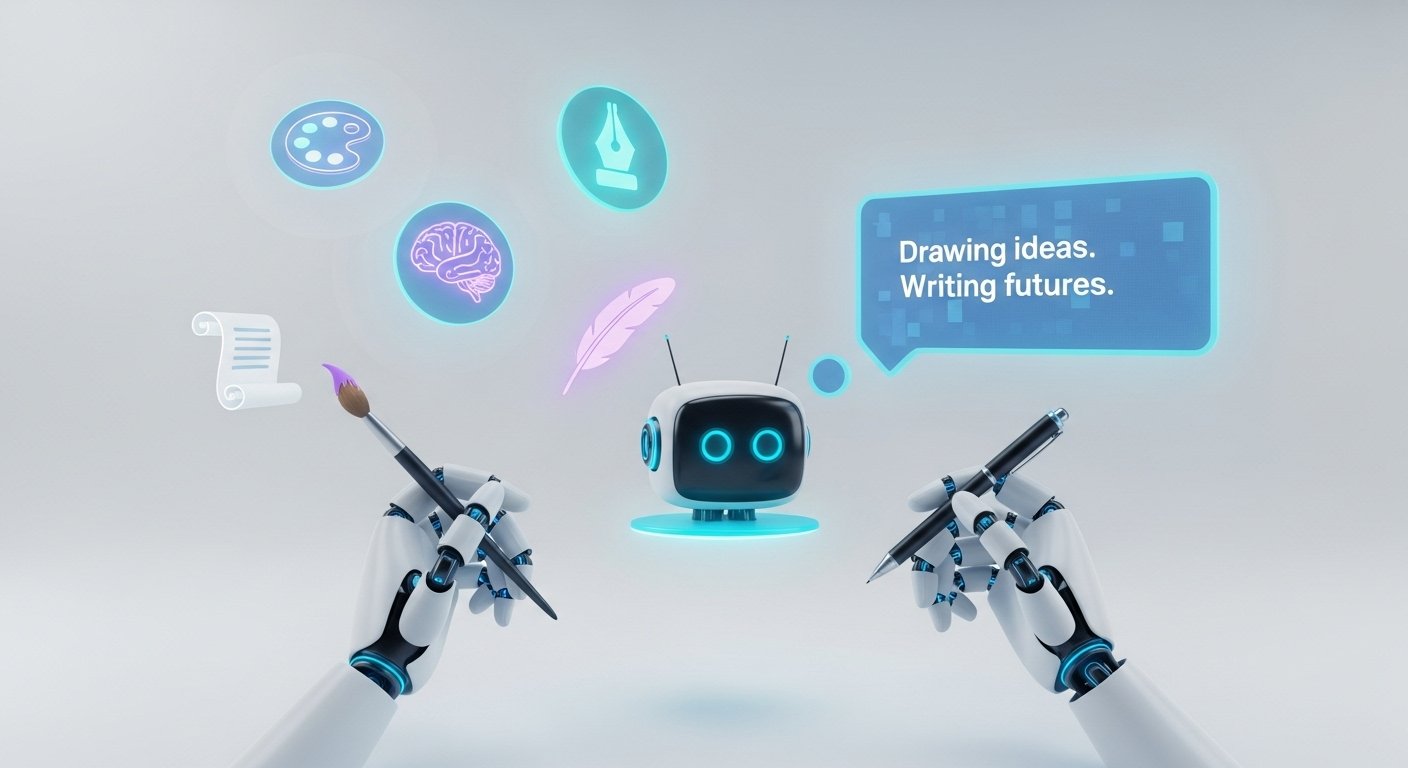
The landscape of human creativity is undergoing a profound transformation, propelled by the advent of Generative Artificial Intelligence (GenAI). This technological revolution extends far beyond mere automation, ushering in a new frontier where innovation flourishes and the very essence of content creation is redefined. GenAI is not simply mimicking human output; it represents an alternative form of intelligence and creativity, operating through distinct mechanisms rooted in mathematical pattern synthesis rather than biological understanding or verbatim replication. This fundamental difference is reshaping the relationship between humans and machines, moving it from one of tool-user to one of collaborative partnership, expanding the scope of what creativity itself can be.
The Building Blocks: Understanding Generative AI Models
At its core, Generative AI is a class of algorithms designed to produce new, original content—be it images, text, music, or even three-dimensional models—by learning from vast datasets. These systems do not merely retrieve or modify existing files; they generate entirely new content by calculating what each pixel, word, or feature should be.
- Generative Adversarial Networks (GANs): These models operate through an “adversarial game” between two neural networks: a generator and a discriminator. The generator creates new data instances that resemble the training data, while the discriminator attempts to differentiate between real data and the data produced by the generator. This continuous competition drives both networks to improve, with the generator striving to “fool” the discriminator and the discriminator becoming increasingly adept at identifying fakes, until an equilibrium is reached where the discriminator can no longer reliably distinguish between real and generated content. Various types of GANs exist, including Vanilla GAN for basic data variation, Conditional GAN (cGAN) for targeted generation based on specific inputs, Deep Convolutional GAN (DCGAN) integrating CNNs for image processing, Super-resolution GAN (SRGAN) for upscaling images, and Laplacian Pyramid GANs (LAPGANs) for generating high-resolution images hierarchically.
- Diffusion Models: These models have revolutionized digital content creation, particularly for images and audio. They operate through a dual-phase mechanism: a forward diffusion process that gradually adds random noise to existing data, transforming it into pure static-like noise, and a reverse diffusion process where a neural network is trained to systematically remove this noise, transforming the random noise back into a structured, meaningful output. Key techniques driving diffusion models include Stochastic Differential Equations (SDEs) for describing noise addition, Score-Based Generative Models (SGMs) for learning to reverse noise, and Denoising Diffusion Probabilistic Models (DDPMs) for probabilistically removing noise.
- Transformer Models: Originally introduced for natural language processing (NLP), Transformer models are neural network architectures that excel at processing sequential data. Their impressive capabilities stem from a self-attention mechanism, which allows them to look at different parts of an input sequence simultaneously and determine the relevance and relationships between sequence components. Unlike older recurrent neural networks (RNNs) that process data sequentially, Transformers can process elements in parallel, making them more efficient and effective for long sequences. Their operation involves breaking input into tokens, converting them into vector embeddings that carry semantic and syntax information, adding positional encoding to preserve order, and then using query, key, and value vectors to compute attention weights that emphasize or deemphasize the influence of specific input elements. This innovation in self-attention has not only revolutionized NLP but has also been adapted for other modalities, such as Vision Transformers (ViTs) for image data.
Table 1: Core Generative AI Model Types and Their Functions
Visualizing the Future: AI in Image, Video, and 3D Creation
Generative AI is profoundly transforming visual content creation, offering unparalleled speed, versatility, and accessibility across diverse applications.
Image Generation: From Concept to Canvas
In the realm of visual arts, graphic design, and marketing, GenAI is enabling a rapid shift from manual processes to automated generation. Artists and designers can now quickly generate mood boards, concept art, and stylistic variations, allowing for the rapid testing of multiple directions before committing to a single design. This technology removes the need for traditional sketching, layering, or manual digital design steps, producing entirely new visuals based on text prompts, sketches, or learned styles. Furthermore, non-designers are empowered to translate their ideas into visuals without requiring formal training, democratizing access to high-quality visual content creation. This lowering of the barrier to entry for visual content creation is a significant development. It means that individuals and small businesses can produce professional-quality visuals without extensive training or resources, fostering a more visually rich digital landscape. However, this also implies a potential saturation of the market with AI-generated content, which could increase the demand for human curators, refiners, and those who can infuse truly unique “taste” or “judgment” into the outputs. The emphasis shifts from technical execution to creative direction and discernment.
- DALL-E 3 by OpenAI, highly regarded for its ability to understand long, complex queries and its conversational style, which facilitates easy modifications. It can generate engaging and dynamic images, making it a strong choice for both amateurs and professionals.
- Midjourney, known for its excellent artistic styles and fine-tuning options, empowering users to bring imaginative concepts to life through detailed prompting.
- Stable Diffusion, an open-source family of AI image models, excels at creating detailed and colorful images with fast generation times and comprehensive editing tools. Tools like DiffusionBee allow Stable Diffusion to run locally on a user’s computer, ensuring privacy and ownership of generated content.
- Adobe Firefly, integrated directly into Adobe Creative Cloud applications like Photoshop, offers excellent artistic styles and is trained on Adobe’s legally licensed stock catalog, addressing copyright concerns.
- Canva provides a user-friendly and accessible option for beginners, specializing in fun, whimsical, and cartoon images.
Generative AI is revolutionizing film, animation, and broader content production by automating and enhancing various stages of video creation. It enables users to:
- Text-to-video: Generate videos simply by describing a scene in text, with the AI interpreting the prompt to create matching video content, complete with movement, lighting, and even physics.
- Image-to-video: Animate static images, bringing them to life with motion effects and helping maintain character, scene, and object consistency throughout a video.
- Video-to-video: Enhance, modify, or transform existing videos, including improving quality, changing styles, or adding special effects.This capability helps create realistic backgrounds, characters, and dynamic elements within scenes, significantly reducing production time and effort.
Prominent AI video generation platforms include:
- Runway, which offers advanced features like motion brush and camera controls for directing motion and shifting camera angles, making clips more cinematic. Its Gen-4 model focuses on consistent characters, objects, and realistic physics for production-ready video.
- Google Veo, known for producing high-resolution videos with great physics and the ability to generate cinematic videos with sound, including surprisingly good lip-sync.
- OpenAI Sora, capable of producing longer, jaw-dropping visuals, including surreal and dreamy shots, though it may struggle with consistent movement or character consistency for realism.
- Synthesia, best for professional videos with lifelike digital avatars, supporting dialogue in over 140 languages and converting various document types into engaging videos.
- Animaker AI, a powerful tool for converting creative ideas into engaging 2D animations, offering AI voice-overs with auto-lip sync and subtitle generation.
3D Model Generation: Building Virtual Worlds
Generative AI is also transforming game design and architectural visualization by automating and accelerating the creation of three-dimensional content. This includes generating concept art, various game assets (such as props, characters, environments, and textures), and even entire scenes from simple text-to-3D or image-to-3D prompts. It streamlines time-intensive processes like geometry creation and texture mapping, allowing artists to focus more on their creative vision.
Generative AI’s impact extends profoundly into the realm of text and language, revolutionizing how narratives are crafted, information is processed, and communication barriers are overcome.
Creative Writing & Content Generation: Overcoming the Blank Page
Large Language Models (LLMs) are exceptionally adept at content generation, producing a wide array of texts such as articles, blog posts, marketing copy, video scripts, and social media updates. These models can adapt to various writing styles and tones, making them versatile for targeting specific audiences. For creative writing, AI can function as a “virtual writing buddy,” offering prompts, brainstorming ideas, assisting with writing problems, creating outlines, generating example text, and helping with fiction outlining. This capability helps writers overcome common hurdles like writer’s block and can significantly improve writing quality, particularly for those who may be less experienced.
- Copy.ai, a GTM AI platform that automates content creation, from blog posts to ad copy, and facilitates content repurposing across multiple channels.
- ChatGPT, widely used as a creative writing coach, offering personalized guidance, idea generation, and a built-in feedback tool for refining work.
- Grammarly, which, while primarily a writing enhancement tool, leverages LLMs for sentiment analysis and tone detection.
- Google Gemini, a conversational AI that can also generate code snippets and assist with debugging.
Translation & Localization: Bridging Language Barriers
Generative AI is revolutionizing language translation by moving beyond simple word-for-word substitutions to comprehend contextual intricacies, idiomatic expressions, and cultural nuances. This deep understanding enables the automation of translation workflows, significantly enhancing quality and providing real-time support. It facilitates seamless multilingual communication and content localization, preserving the original message’s tone and intent across various languages.
Applications include:
- Video conferencing, where AI provides simultaneous translation and transcription, enabling real-time cross-language communication.
- Travel assistance, by instantly translating menus, signs, and conversations.
- Customer service, with companies like Pinterest utilizing machine translation to offer support in numerous languages.
DeepL stands out as a leading AI translation and writing assistant. It offers high-quality, reliable text translation between over 30 languages, with quick detection and features like camera, photo, speech, and file translation. DeepL also provides writing assistance for clarity, conciseness, grammar, spelling, and punctuation.
Code Generation: Accelerating Software Development
GenAI is fundamentally changing software development by automating repetitive coding tasks and reducing the cognitive load on developers. It allows developers to explain a desired feature in simple English and receive a functional code snippet within seconds, significantly speeding up development cycles.
Beyond basic code generation, AI assists in:
- Finding and fixing problems: By analyzing codebases and predicting common mistakes.
- Improving code documentation: Automatically generating comments, usage instructions, and function summaries.
- Enhancing performance: Identifying performance issues and suggesting refactoring or infrastructure changes.
- Fostering creative ideas: Helping teams explore new algorithms or architectural models.
- Accelerating test automation: Writing unit tests, generating test data, and suggesting edge cases.
Popular tools for AI-driven code generation include GitHub Copilot (powered by OpenAI Codex), Amazon Code Whisperer, Tabnine, Google Gemini (for coding), Hugging Face’s Star Coder, and Cursor Editor. These tools enable developers to focus on strategic problem-solving rather than routine tasks.
Generative AI provides concise summaries of articles, videos, or interviews, significantly boosting information accessibility and efficiency. It can extract main points from complex documents, saving users considerable time and improving overall information accessibility.
The Human-AI Symphony: A New Paradigm for Creativity
The emergence of Generative AI is fostering a new paradigm in creative work, one characterized by collaboration and augmentation rather than outright replacement.
AI as a Collaborative Partner
Generative AI is increasingly viewed as a “co-pilot” or “virtual writing buddy” that augments human creativity rather than replacing it. It empowers artists, designers, and writers to overcome creative blocks, generate novel ideas, and explore a broader range of possibilities that might otherwise remain undiscovered. While AI can generate competent content, humans provide the indispensable judgment, taste, and emotional resonance that AI often lacks. The value shifts from manual execution to “using emotion and context to guide machine output”. This implies a fundamental shift in the creative process from detailed craftsmanship to high-level direction, prompt engineering, and curation of AI outputs. Success will increasingly depend on a creator’s ability to articulate vision, critically evaluate AI-generated options, and infuse them with unique human nuance, rather than solely on their technical skill in a traditional medium. This could lead to a broader range of individuals participating in creative fields, but also a higher demand for those with strong critical thinking and aesthetic discernment.
The integration of GenAI tools is profoundly impacting creative workflows, leading to significant gains in efficiency and speed.
- Efficiency and Speed: GenAI drastically reduces production cycles and content creation time. For example, content creation time can drop by 30% to 50%, and campaign time-to-market can be reduced by up to 50%. This efficiency frees up creators to dedicate more time to higher-value, strategic creative decisions.
- Rapid Prototyping and Iteration: AI enables quick iteration on ideas, allowing artists to explore multiple concepts in a fraction of the time it would take manually. This rapid exploration fosters increased experimentation and risk-taking in creative projects.
- Personalization at Scale: GenAI allows for hyper-personalization of content, tailoring messages to individual preferences and behaviors. This leads to increased engagement, higher click-through rates (up to 40% in some cases), enhanced conversions, and improved customer retention. For businesses, the adoption of GenAI for personalization is rapidly moving from a novel capability to a strategic necessity. Companies that fail to leverage AI for tailored content and experiences risk falling behind competitors who can offer more relevant and engaging interactions, driving significant investment in GenAI expertise within marketing, media, and entertainment.
The Evolving Skill Set
The integration of AI is transforming roles within creative industries rather than simply eliminating them. New opportunities are emerging for professionals who can effectively combine their creative expertise with proficiency in AI tools. This necessitates developing hybrid skills, including:
- Prompt Engineering and AI Direction: The ability to craft precise and effective prompts to guide AI output, acting more like a director for the machine.
- Maintaining Core Creative Competencies: While AI handles repetitive tasks, uniquely human creative abilities, critical thinking, and aesthetic judgment remain paramount.
- Technical Understanding: Familiarity with AI tools and their underlying mechanisms is becoming increasingly valuable.
Table 2: Popular Generative AI Tools & Their Key Creative Applications
Navigating the Uncharted: Challenges and Ethical Considerations
While Generative AI offers immense opportunities, its rapid advancement also presents significant challenges and ethical considerations that demand careful navigation.
Authenticity & Misinformation
A critical concern is GenAI’s ability to generate hyper-realistic fake videos, audio, and images, commonly known as “deepfakes”. These synthetic media make it increasingly difficult to distinguish between truth and fiction, posing a significant threat for spreading misinformation and disinformation, which can erode public trust in media and democratic institutions. Furthermore, AI models, by their nature, often repeat similar patterns found in their training data, which can lead to the homogenization of content over time, reducing overall diversity in creative work and potentially limiting the emergence of truly novel ideas.
Intellectual Property & Copyright
The legal framework surrounding intellectual property (IP) faces a fundamental test with GenAI. A major issue revolves around the training data used for AI models: whether copyrighted material is incorporated without consent, raising questions of infringement. Many AI companies are not transparent about their datasets, fueling these concerns.
Another complex question is the ownership of AI-generated content: does it belong to the prompt creator, the AI tool owner, or can it even be protected by copyright at all? In the U.S., copyright generally requires human authorship, though human-AI collaborations may receive protection if the human exercises “sufficient creative control” over the work’s expression. Other jurisdictions, such as China, France, and the United Kingdom, may allow copyright for AI outputs if a “sufficient degree of intellectual achievement” or “personal touch” can be demonstrated. The ethical development and deployment of GenAI necessitate greater transparency from AI developers regarding their training datasets and model architectures. Without knowing what an AI was trained on or how it arrived at an output, it becomes challenging to fully assess its fairness, accuracy, or originality. This also places a burden on users to understand these limitations and apply critical judgment, rather than blindly trusting AI outputs. Regulatory frameworks will need to evolve rapidly to enforce accountability and protect creators and the public from the negative consequences of opaque AI systems.
Job Evolution
While AI automates repetitive tasks and streamlines workflows, it is primarily transforming, rather than eliminating, creative roles. It creates new opportunities for professionals who can effectively combine their creative expertise with AI tool proficiency. However, some traditional roles may see reduced demand, necessitating upskilling and adaptation for workers in fields like content writing, customer support, and software development.
Environmental Footprint
The computational demands of GenAI pose significant environmental concerns.
- Energy and Water Demands: Training and deploying large GenAI models, especially those with billions of parameters, require staggering amounts of electricity. This leads to increased carbon dioxide emissions and puts immense pressure on electric grids. Data centers, which house the computing infrastructure for these models, also consume vast amounts of water for cooling—estimated at two liters of water for every kilowatt-hour of energy consumed. This rapidly growing demand is currently unsustainable and can strain municipal water supplies and disrupt local ecosystems.
- Hardware Impacts: The increasing demand for high-performance computing hardware, particularly GPUs, adds indirect environmental impacts from their manufacturing, transport, and the extraction of raw materials, which often involves environmentally damaging procedures and toxic chemicals.
The tension between accessibility and responsible use is evident here. While many GenAI tools are becoming highly accessible, even free or mobile-friendly, this democratization of creation also facilitates the rapid spread of misinformation and raises concerns about unmonitored “Shadow AI” within organizations. The ease of use often comes without clear information about environmental impact or ethical guidelines. This implies that widespread adoption without corresponding digital literacy, ethical guidelines, and robust detection mechanisms for harmful content can lead to significant societal disruptions. This suggests a need for education on responsible AI use, built-in ethical guardrails in tools, and clear policies for organizations and individuals to mitigate risks like deepfakes and biased content.
Table 3: Generative AI’s Impact on Creative Workflows: Benefits & Challenges
Beyond the Horizon: Future Trends in Generative AI
The evolution of Generative AI is dynamic, with several key trends shaping its future impact on creativity and content production.
The Rise of Multimodal AI
A significant trend is the increasing prominence of multimodal AI, which can understand and process different types of information simultaneously—such as text, images, audio, and video—and generate outputs based on these diverse inputs. This capability enables a more comprehensive understanding of data, leading to fewer “hallucinations” (inaccurate or misleading outputs) and the ability to handle more complex inquiries. It also facilitates more intuitive user interactions, allowing users to communicate with AI through speaking, gesturing, or using virtual reality controllers. For creative industries, multimodal AI will accelerate processes in marketing and product design by seamlessly blending different content types. Popular multimodal models include GPT-4o, Claude 3, Gemini, DALL-E 3, LLaVA, PaLM-E, ImageBind, and CLIP.
Hyper-personalization and AI Agents
The future of personalization is set to become even more granular. AI systems will advance to analyze vast amounts of data, understanding individual customer preferences with unprecedented accuracy and delivering experiences that resonate deeply. This includes predictive personalization, where AI anticipates user needs before they even arise, allowing businesses to create value earlier in the customer journey. Complementing this trend is the rise of AI agents—software solutions designed to complete tasks with minimal human intervention. These agents, built on large language models, offer greater flexibility and a wider array of use cases, with their deployment in enterprises projected to rise significantly in the coming years.
Smarter Devices and Local AI
A notable shift is the increasing integration of GenAI processing capabilities directly into devices like smartphones and PCs. By 2025, the share of GenAI-enabled smartphones could exceed 30% of total shipments, and PCs with local GenAI processing capabilities are expected to reach around 50%. This move towards on-device AI, exemplified by tools like DiffusionBee which run “100% offline” with prompts and generated images remaining on the device, significantly enhances privacy and can improve speed and responsiveness for certain creative tasks. This trend towards edge AI will fundamentally change how and where creative work can be done, offering immediate, personalized assistance without constant reliance on cloud connectivity.
Continued Evolution of Human-AI Creative Synergy
The integration of AI tools will continue to foster new creative methodologies, enabling creators to explore broader possibilities while maintaining their unique artistic vision. The global AI market in media and entertainment is projected to skyrocket, reflecting its rising importance across various sectors. This growth will be accompanied by a continued focus on responsible AI development, addressing ethical concerns and ensuring fairness and trust in AI-generated content. The emergence of “world models,” which learn jointly from video, audio, and language, similar to how the human brain learns, represents a profound next frontier. If successful, these models could lead to AI that not only generates content but also reasons about it, understands cause-and-effect, and even simulates complex realities. This would unlock unprecedented levels of creative control and realism, allowing creators to “world-build” with AI in ways currently unimaginable, from interactive narratives to fully simulated environments that adhere to real-world physics and logic.
Conclusion: Embracing the Creative Revolution Responsibly
Generative AI is undeniably a transformative force, profoundly reshaping creativity and content creation across visual, textual, and multimodal domains. It offers unparalleled efficiency, enabling faster production cycles and rapid prototyping, and unlocks new avenues for artistic expression by helping creators overcome blocks and explore novel ideas. Furthermore, its capacity for hyper-personalization allows for the tailoring of content to individual preferences at scale, leading to increased engagement and improved customer experiences.
However, this creative revolution is not without its complexities. The rise of deepfakes and the potential for content homogenization pose significant challenges to authenticity and trust. Ambiguities surrounding intellectual property and copyright demand urgent attention to protect creators and ensure fair use of training data. The environmental footprint of large-scale AI models, with their immense energy and water demands, necessitates a critical assessment of their sustainability.
The path forward requires a balanced and thoughtful approach. Generative AI is best viewed not as a replacement for human ingenuity, but as a powerful collaborative partner. The value in creative industries is shifting from manual execution to high-level direction, curation, and the infusion of uniquely human judgment and emotional depth. As AI capabilities expand, particularly with the rise of multimodal AI and on-device processing, the need for continuous learning and adaptation among creative professionals will only grow. By focusing on ethical development, promoting transparency, and fostering digital literacy, society can harness GenAI’s immense potential to build a richer, more diverse, and truly collaborative creative future.