✅ Title: Top 10 Humanoid Robot Startups to Watch in 2025
Description:
Humanoid robots are rapidly transitioning from speculative tech to real-world utility. In 2025, this field is no longer a distant vision—it’s a competitive, innovation-driven landscape shaped by AI breakthroughs and global labor demands. From logistics and manufacturing to elder care and home automation, the rise of humanoid robotics is changing how we think about machines in our lives.
This comprehensive article profiles the top 10 humanoid robot startups to watch in 2025, based on their innovation, funding, partnerships, and real-world use cases.
1. Figure AI – Real-World General-Purpose Humanoids
Location: Sunnyvale, California, USA
Notable Robot: Figure 01 / Figure 02
Figure AI has become a household name in the robotics world, thanks to its remarkable progress in humanoid movement, manipulation, and contextual understanding. Their robot, Figure 01, unveiled in 2023, was one of the first functional bipedal humanoids that could walk, carry objects, and respond to voice commands using AI.
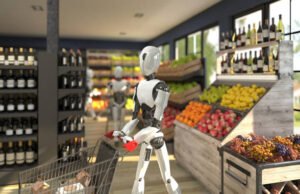
Their next model, Figure 02, is slated for release in 2025 and promises improved dynamic balancing, stronger payload capacity, and faster task execution. Built with integration-ready APIs and trained using LLMs similar to ChatGPT, this robot is designed for real-world job environments including warehouses, grocery stores, and home maintenance.
What sets them apart:
- Deep partnership with OpenAI and Microsoft
- Humanlike walking and dexterity
- Clear roadmap to commercialization by 2026
2. Sanctuary AI – Cognitive AI Inside a Human Body
Location: Vancouver, Canada
Notable Robot: Phoenix
Sanctuary AI’s Phoenix robot goes beyond physical resemblance to humans—it aims to replicate how humans think and solve problems. With soft joints, lifelike proportions, and tactile feedback systems, Phoenix is engineered for safe, collaborative work in human environments.
The company’s Cognitive Architecture, a proprietary AI system, enables the robot to understand cause-and-effect, plan multi-step tasks, and learn from its environment. It already works in pilot programs doing real industrial jobs like warehouse picking, item scanning, and materials transport.
2025 developments to watch:
- Major industrial deployment deals in North America
- Expansion into healthcare automation
- API tools for third-party developers to integrate custom workflows
3. 1X Technologies – The Future of Domestic and Security Robots
Location: Oslo, Norway
Notable Robots: Neo, Eve
1X Technologies (formerly Halodi Robotics) builds humanoid robots with a focus on everyday human environments—homes, offices, hospitals, and public spaces. Their robot Eve is already being used in pilot tests for assisted living, acting as a mobile companion and support robot for elderly individuals.
Their more industrial model, Neo, is designed for surveillance and patrolling, replacing static cameras and security personnel. These robots can detect intrusions, provide alerts, and even respond to basic emergencies.
Unique strengths:
- Funding and tech support from OpenAI
- DeepMind collaboration for visual perception
- Targeting both consumer and enterprise use
4. Tesla Optimus – Billion-Dollar AI Integration
Location: Palo Alto, California, USA
Notable Robot: Optimus
While not a startup, Tesla’s Optimus project is shaping the industry by demonstrating what happens when massive resources meet big vision. Tesla’s Optimus robot, initially mocked as science fiction, has become increasingly capable. In 2024, footage showed Optimus walking unaided, folding clothes, and responding to simple commands.
Tesla aims to use Optimus in its own factories by 2025 to reduce human workload in repetitive, hazardous, or physically demanding tasks.
What to expect in 2025:
- Factory pilot programs
- Real-time integration with Tesla’s neural networks
- Public roadmap for consumer deployment
5. Agility Robotics – Redesigning Warehouses with Digit
Location: Corvallis, Oregon, USA
Notable Robot: Digit
Agility Robotics has taken a functional, utility-first approach to humanoid design. Their robot, Digit, skips the traditional human face and opts for a bird-inspired form with agile bipedal movement. Digit can carry boxes, sort inventory, and navigate changing warehouse layouts.
Amazon is one of the first companies testing Digit in live warehouse settings, and Agility plans to scale its Robot-as-a-Service (RaaS) platform in 2025.
Key highlights:
- Strong logistics sector partnerships
- Fast, dynamic walking over uneven ground
- Modular software for task customization
6. Apptronik – Building the Apollo Robot for Industry and Home
Location: Austin, Texas, USA
Notable Robot: Apollo
Apollo, the humanoid robot from Apptronik, is designed as a modular platform capable of working in both commercial and home environments. It’s a 5’8” robot that can lift 55 lbs, navigate tight spaces, and collaborate with humans using embedded safety protocols.
Apptronik is also working with NASA to develop robots that could function in extraterrestrial environments, including lunar missions. The same tech stack is being adapted for Earth-based use.
Looking forward to 2025:
- Scaled manufacturing runs
- Use in retail and logistics pilot programs
- Optional hardware modules for specialized functions
7. PAL Robotics – Robotics for Health, Research, and Hospitality
Location: Barcelona, Spain
Notable Robots: TIAGo, REEM-C, Ari
PAL Robotics has quietly become a European powerhouse in humanoid development, especially in the service and healthcare sectors. Robots like TIAGo and REEM-C are already assisting in elderly care facilities and research institutions across the EU.
What makes PAL stand out is their open-source-friendly ecosystem, which allows research institutions and developers to customize robot functions for education, assistance, or data collection.
2025 focus areas:
- Elder care expansion in aging European populations
- Integration with multilingual voice systems
- Partnerships with hospitals and government bodies
8. Fourier Intelligence – Rehabilitation and Care Robotics
Location: Shanghai, China
Notable Robot: GR-1
Fourier Intelligence focuses on human-robot synergy in therapy and care. Their GR-1 humanoid robot can carry patients, assist with walking therapy, and even guide rehabilitation sessions. It’s already being used in physical therapy clinics throughout China and Southeast Asia.
GR-1 uses a combination of motion prediction and AI-driven adjustment to help therapists deliver more accurate and consistent care.
In 2025, look out for:
- Launch in European hospitals
- Integration with exoskeleton products
- Insurance-provider-approved pilot programs
9. Robot Era – Humanoids for Public Service and Smart Cities
Location: Pisa, Italy
Notable Robots: Robot Era Humanoid Series
Robot Era specializes in robots designed for urban environments, particularly those governed by smart city principles. Their humanoids can guide tourists, perform light public maintenance, deliver packages, and even support disaster response teams.
With rising demand for contactless services, Robot Era robots are seen as solutions for government buildings, airports, and city information centers.
Unique selling points:
- Public-private partnerships in Europe
- Socially intelligent user interfaces
- Designed for multilingual environments
10. UBTECH Robotics – Consumer-Grade Humanoids for the Masses
Location: Shenzhen, China
Notable Robot: Walker X
UBTECH Robotics is one of the few companies aiming to make humanoid robots affordable for everyday users. Their Walker X robot is capable of walking upright, climbing stairs, dancing, opening doors, and interacting with smart home devices.
UBTECH blends robotics with consumer electronics, making Walker X the closest thing we have to a humanoid home assistant in 2025. It can integrate with Alexa, Google Home, and proprietary IoT ecosystems.
2025 highlights:
- Retail expansion across Asia and EU
- Home safety and companionship features
- Subscription-based upgrades and learning modules
Conclusion: The Age of Everyday Robots is Arriving
Humanoid robots are transitioning from labs to life. Whether it’s Figure AI optimizing warehouse operations, Sanctuary AI transforming cognitive labor, or UBTECH targeting your living room, the use cases are growing—and the technology is catching up.
2025 will be remembered as the year humanoid robots stopped being prototypes and started becoming partners—in work, care, and everyday life. If you’re in tech, robotics, investment, or future-focused industries, these ten startups represent the vanguard of a new age of human-machine coexistence.