China vs. U.S.: The Race Toward Mass Production of Humanoid Robots in 2025
As 2025 unfolds, the world is witnessing a new kind of global race—not in space or computing power, but in humanoid robotics. China is officially entering mass production of humanoid robots this year, marking a major industrial milestone. Meanwhile, the United States continues to drive high-end innovation in the same space, but at a different pace.
So, who’s really leading the race? And how do the two strategies compare?
🗂️ Table of Contents
- China: Mass Production with Strategic Intent
- U.S.: Innovation First, Scale Later
- Comparing Two Strategies
- What’s Driving the Race?
- What to Expect in the Near Future
🇨🇳 China: Mass Production with Strategic Intent
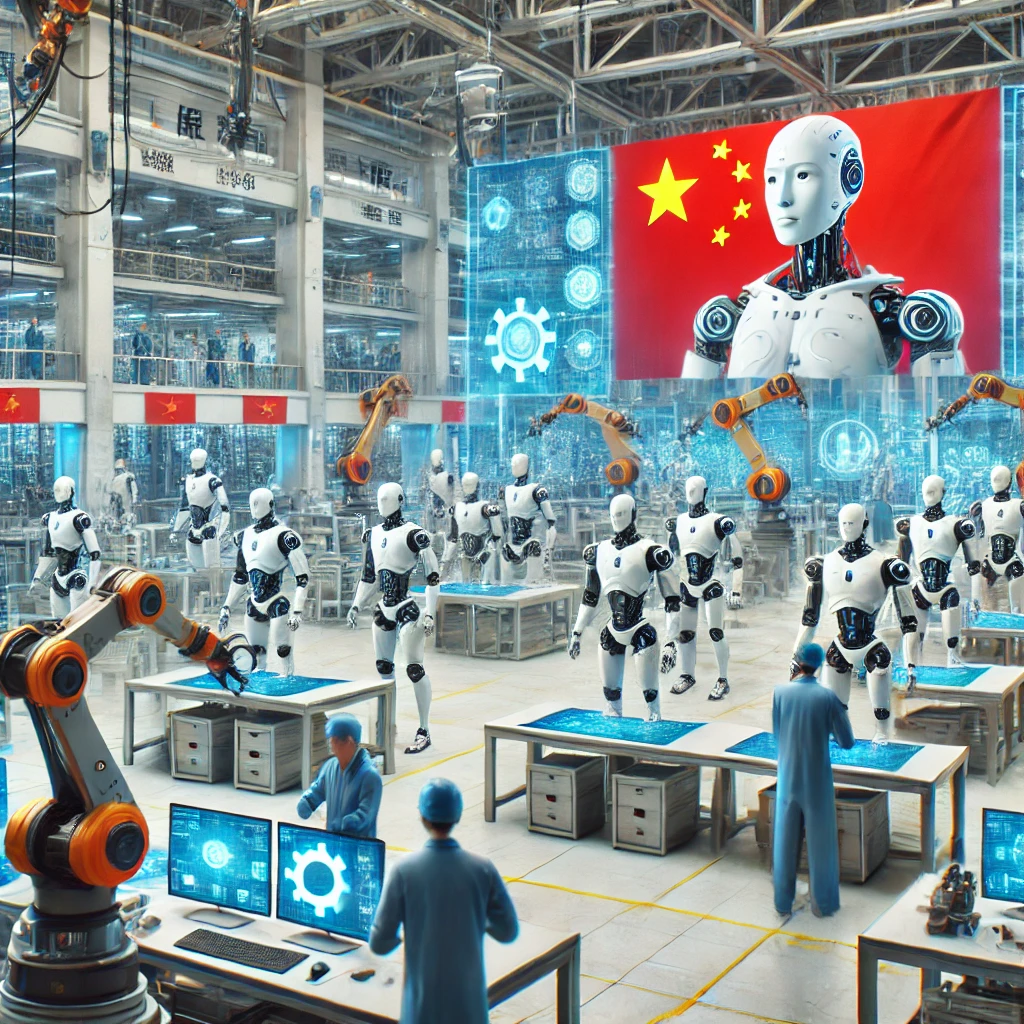
China’s path to humanoid robot production is driven by government policy, speed, and scalability. The “Made in China 2025” initiative has poured massive resources into intelligent manufacturing, pushing companies from the lab to the production line.
Key Players:
- Fourier Intelligence – Leading in rehabilitation and industrial robots.
- UBTECH Robotics – Known for consumer-friendly humanoid robots.
- Unitree Robotics – Focused on agile, mobile robots for industrial tasks.
China’s humanoid robots are being integrated into:
- Factory assembly lines
- Customer service roles
- Elder care centers
- Smart logistics systems
With full-scale production starting in 2025, China is positioning humanoid robots not as novelties, but as essential tools for economic growth and aging population support.
🇺🇸 U.S.: Innovation First, Scale Later
While China builds faster, the U.S. focuses on depth and intelligence. American companies emphasize cutting-edge R&D, human-robot collaboration, and ethical deployment.
Notable Companies:
- Tesla – Its Optimus humanoid robot promises long-term disruption but isn’t yet in mass production.
- Boston Dynamics – Famous for robotics mobility, but not yet commercially focused on humanoids.
- Agility Robotics – Its Digit robot is one of the few being tested for logistics work.
The U.S. is currently more cautious about full-scale deployment, balancing technological advancement with public concerns over safety, job displacement, and regulation.
⚖️ Comparing Two Strategies
| Aspect | China | United States |
|---|---|---|
| Focus | Mass production, deployment | Innovation, modular design |
| Government Role | Strong support & incentives | More decentralized, private-driven |
| Key Markets | Manufacturing, elder care, retail | Logistics, research, advanced R&D |
| Tech Strength | Hardware scale, cost-efficiency | AI, autonomy, robotics software |
| Stage in 2025 | Entering mass production | Still prototyping / early deployment |
Both countries have strengths—but China is clearly betting on speed and integration, while the U.S. is playing the long game in precision and capability.
🔍 What’s Driving the Race?
- Aging populations (especially in China) are creating labor shortages.
- Technological breakthroughs in AI and robotics are making humanoids more practical.
- Geopolitical competition is fueling investment on both sides.
- Economic transformation is pushing nations to rethink human labor.
Humanoid robots are becoming central to national tech strategies, not just futuristic toys.
🔮 What to Expect in the Near Future
- China may flood domestic industries with humanoids in customer-facing and industrial roles.
- The U.S. will likely release more advanced, adaptable robots that are slower to scale—but more flexible in function.
- Global supply chains will shift as both nations try to export their robotics ecosystems.
- Questions of ethics, safety, and regulation will become more pressing.
In summary, 2025 might be remembered as the year humanoid robots moved out of sci-fi and into our daily lives. Whether they’re wearing a “Made in China” badge or running on U.S.-made AI, one thing is certain—the future of labor and life is changing.
📸 Tesla Optimus Robot Demonstration Photo
📸 UBTECH Walker X Humanoid Robot
- 🔗 Source: UBTECH Official Website
(Source: UBTECH Robotics