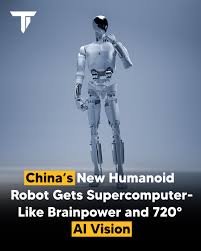
XPENG’s Humanoid Robot “Iron” Gets Super Brainpower and 720° AI Vision
A New Contender in the Race for AI-Powered Robotics
📌 Contents
- Introduction: The Rise of AI Humanoids
- Meet Iron: XPENG’s Next-Gen Robot
- 720° AI Vision – What Does It Really Mean?
- “Super Brainpower”: Inside Iron’s New AI Core
- XPENG Iron vs. Other Top AI Robots
- Tesla Optimus
- Boston Dynamics Atlas
- Figure 01
- Human-Friendly Design and Interaction
- Real-World Use Cases: Where Will Iron Work?
- Why XPENG’s Approach Feels Different
- Mass Production of Iron Set to Begin in 2026
- Challenges Ahead for Iron
- Final Thoughts: Are We Ready for AI Companions?
1. Introduction: The Rise of AI Humanoids
Humanoid robots have evolved from sci-fi dreams into real-world innovations. With Tesla’s Optimus, Boston Dynamics’ Atlas, and Figure AI’s Figure 01 making waves, the landscape of robotics is rapidly changing. But now, XPENG Robotics, a subsidiary of Chinese EV giant XPENG, has thrown a bold new contender into the arena — and it’s called Iron.
2. Meet Iron: XPENG’s Next-Gen Robot
Standing at 1.8 meters (5’11”) and weighing around 50 kg, Iron isn’t just a technical machine — it’s designed to mimic human form, motion, and interaction. Developed by XPENG Robotics, Iron blends mechanical agility with advanced artificial intelligence, aiming to be more than a factory assistant — this is a robot meant to exist alongside humans.
3. 720° AI Vision – What Does It Really Mean?
Most robots today are equipped with 360° vision using multiple cameras and sensors. Iron breaks this boundary by introducing “720-degree AI Vision,” which includes full horizontal and vertical awareness.
This dual-hemisphere vision enables Iron to:
- Detect objects above and below simultaneously
- Navigate complex environments with ease
- Recognize humans and track gestures or eye movement
- React faster and smarter in real-time
It’s like giving Iron a bird’s-eye and worm’s-eye view simultaneously.
4. “Super Brainpower”: Inside Iron’s New AI Core
XPENG has integrated what they call “super brainpower” — a combination of cloud-based intelligence and on-device neural processing.
Key capabilities include:
- Real-time decision making
- Emotional and facial expression recognition
- Natural language understanding
- Gesture-based commands
- Autonomous learning from human interaction
This isn’t just a programmed bot; it’s an evolving, AI-adaptive system designed to improve over time.
5. XPENG Iron vs. Other Top AI Robots
Let’s compare Iron to some of its most prominent competitors:
| Feature | XPENG Iron | Tesla Optimus | Boston Dynamics Atlas | Figure 01 |
|---|---|---|---|---|
| AI Vision | 720° Panoramic Vision | Neural Net Vision | LIDAR & Depth Sensors | Vision + GPT AI |
| Brainpower | Cloud + Onboard AI | Tesla’s Dojo | Mechanical AI | GPT + Predictive AI |
| Agility | Human-like bipedal motion | Limited walking | Parkour-grade | Moderate factory agility |
| Purpose | Home + daily interaction | Factory automation | Search & rescue | Labor replacement |
| Speech | Natural Language AI | Basic response | Minimal | Conversational AI |
While others focus on physical labor or industrial tasks, XPENG Iron is aimed at being a multi-role assistant — combining conversation, perception, and action.
6. Human-Friendly Design and Interaction
XPENG didn’t just build Iron to function — they built it to connect. Iron features:
- Friendly facial features (screen or synthetic face)
- Calm posture and smooth motion
- Non-threatening height and weight
- Natural voice and emotion detection
This makes it more suited for homes, hospitals, and public spaces — unlike industrial-looking bots designed only for labor.
7. Real-World Use Cases: Where Will Iron Work?
XPENG envisions Iron working across several domains:
- Smart Homes: Daily assistance, reminders, chores, and entertainment
- Healthcare: Elderly support, medicine delivery, emotional care
- Retail & Service: Customer support, guides, hospitality roles
- Education: Teaching aid, child interaction, special needs support
It’s not just a robot. It’s being positioned as a lifestyle companion.
8. Why XPENG’s Approach Feels Different
Many tech companies see robots as a way to automate labor. XPENG, however, is focusing on creating a relationship between humans and machines.
Their EV experience gives them strong hardware/software synergy. Combine that with cutting-edge AI — and you have a product that feels more human than mechanical.
9. 🏭 Mass Production of Iron Set to Begin in 2026
XPENG isn’t just aiming to build a demo or research-grade robot.
According to official announcements, XPENG plans to begin mass production of the Iron humanoid robot starting in 2026.
This move positions XPENG as one of the few companies globally to pursue large-scale production of human-like robots designed for real-world use.
Iron brings together XPENG’s expertise in AI, sensor systems, and robotics engineering — and the company intends to lower costs and improve accessibility through mass manufacturing, making Iron available to both enterprise and consumer markets.
📢 XPENG Robotics’ CEO stated, “Iron will enter mass production in 2026, marking a major step toward bringing AI robots into everyday life.”
This plan goes far beyond innovation for its own sake — it signals the arrival of a new era where AI-powered humanoid robots could become a mainstream reality.
10. Challenges Ahead for Iron
Of course, it’s not all polished chrome and success. Iron — like all humanoid robots — still faces challenges:
- Battery life & heat management
- Complex environment navigation
- Public trust in AI behavior
- Affordability and mass production
- Legal/ethical use in public spaces
Iron is a glimpse into the future — but that future still needs solving.
11. Final Thoughts: Are We Ready for AI Companions?
XPENG’s Iron marks a significant evolution in humanoid robotics. With its 720° AI vision and super brainpower, it stands at the frontier between functionality and companionship. It’s not just here to help — it’s here to interact, learn, and maybe even care.
While Iron may not be in every home tomorrow, its development is a strong signal:
🧠 The future of robotics isn’t just about what machines can do — it’s about how they can coexist with us.