OpenAI’s New ‘O3’ Model Ushers in a New Era: AI That Thinks by Seeing
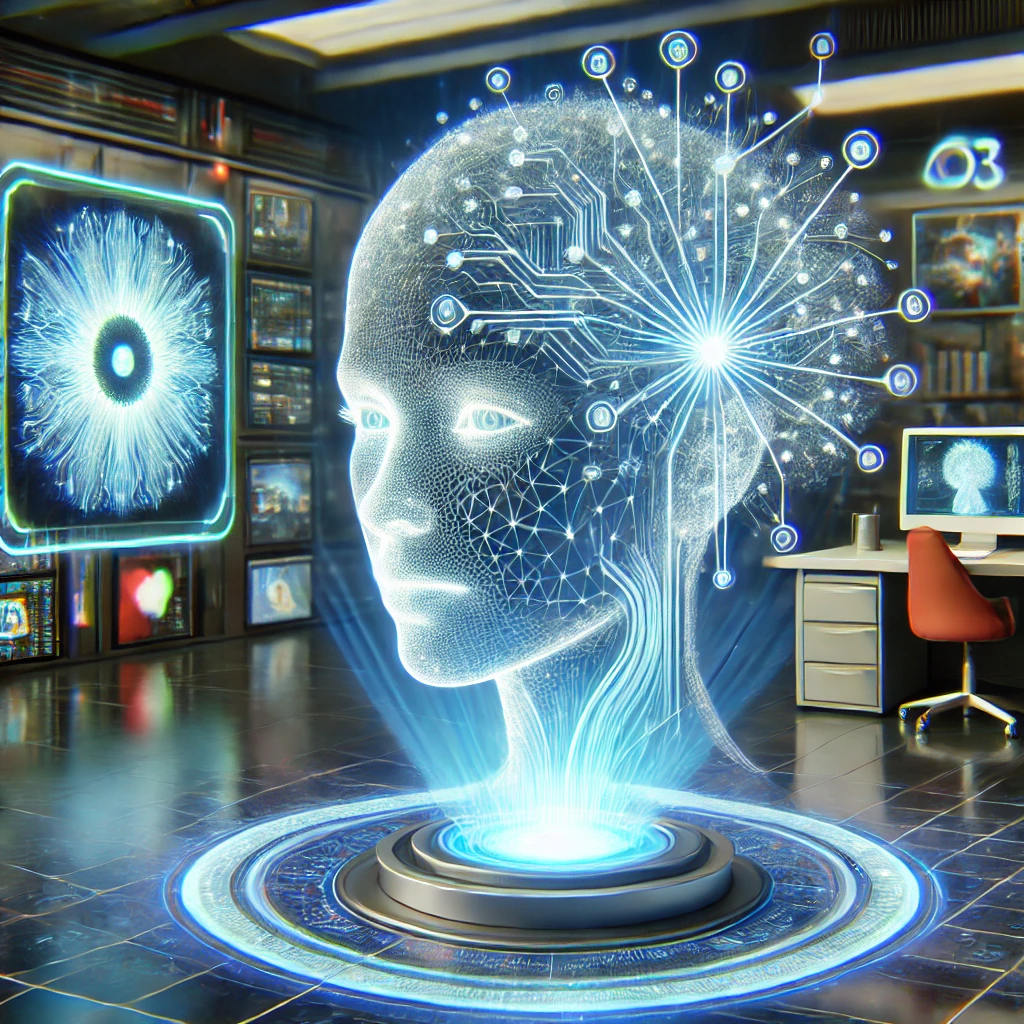
OpenAI has unveiled its latest large-scale AI model, codenamed O3, and it may be the most significant leap in artificial intelligence since GPT-4. The O3 model stands apart as the first OpenAI model capable of visual reasoning — it doesn’t just see images, it thinks through them.
While earlier AI models like GPT-3 and GPT-4 changed how machines understand and generate language, O3 brings something fundamentally different to the table: the ability to analyze visual input and draw conclusions based on what it perceives. In short, O3 introduces inference-level thinking grounded in images, combining the modalities of sight and language in a way no AI model has done before.
🔗 Official release: OpenAI Blog – O3 Announcement
🔄 From GPT-3 to GPT-4 to O3: A Timeline of Evolution
To appreciate how far O3 takes us, it’s helpful to retrace the development of OpenAI’s language models over the last few years:
GPT-3 (2020)
- Over 175 billion parameters
- Specialized in natural language processing (text-only)
- Ushered in a new wave of AI-generated content, coding assistance, summarization, and more
GPT-4 (2023)
- Introduced multimodality (text + image input)
- Capable of limited image analysis, such as captioning, meme interpretation, or OCR (optical character recognition)
- Visual input was more about “understanding prompts” than performing true image inference
O3 (2025)
- First OpenAI model to reason with visuals
- Seamlessly integrates visual and textual context for multimodal inference
- Unlocks complex use cases such as analyzing charts, interpreting sketches, reviewing medical scans, and more
This evolution shows a clear trajectory: from understanding text → to processing basic image input → to visually-informed reasoning. With O3, OpenAI transitions from describing what it sees to making decisions based on what it sees.
🧩 What Makes O3 Different?
While GPT-4’s visual abilities felt impressive at the time — especially when it could describe an image or explain a graph — it was largely performing pattern matching. O3 introduces a deeper level of reasoning, where the model isn’t just recognizing features but interpreting relationships, intent, and meaning from visuals.
Here are some of the major advancements:
1. 🔍 Visual Inference Capabilities
O3 doesn’t just caption or summarize an image — it reasons through it. That means:
- Drawing conclusions from diagrams
- Analyzing trends in visual data (e.g., graphs, heatmaps)
- Interpreting spatial layouts or design patterns
- Understanding visual storytelling and narrative flow
2. ⚡ Faster & More Efficient Inference
O3 runs faster than its predecessors, offering quicker response times on multimodal prompts. This opens the door for real-time applications in research, education, and interactive design.
3. 🧠 Multimodal Context Awareness
Text and image inputs aren’t treated separately. O3 fuses them together into a unified context, allowing it to:
- Use visual context to clarify ambiguous text
- Refer to visual elements in ongoing conversation
- Combine image + text reasoning seamlessly (e.g., reading a chart and answering a question about it)
4. 💾 Improved Memory and Contextual Flow
O3 exhibits stronger contextual retention across longer sessions. Whether you’re showing it a series of images or maintaining a mixed-media conversation over time, it “remembers” and integrates the information smoothly.
📚 Real-World Applications of O3
With visual reasoning capabilities now integrated into the AI’s core functions, the practical applications for O3 expand dramatically. Here are some areas where the model is expected to have immediate impact:
🎓 Education & Tutoring
- Diagram explanations
- Visual math problems
- Interpreting historical charts or maps
- Whiteboard analysis
💻 UX & Graphic Design
- Reviewing UI layouts and giving real-time feedback
- Spotting inconsistencies in visual compositions
- Enhancing automated design tools
🧬 Science & Research
- Interpreting lab notes (even handwritten)
- Analyzing experimental visuals
- Reading plots, data visualizations, and simulations
🏥 Medical Support (with Human Oversight)
- Pre-analyzing medical scans (X-rays, MRIs)
- Spotting trends in diagnostic charts
- Explaining visual data to non-experts
🗂️ Business, Docs, and Productivity
- Summarizing visual presentations (e.g., slides, infographics)
- Interpreting scanned documents
- Parsing forms and tables with complex formatting
🚧 Current Limitations of O3
As groundbreaking as O3 is, it isn’t without its limitations. Visual reasoning is still an emerging area for AI, and current boundaries include:
- Abstract or artistic visuals: Surreal or heavily symbolic art remains difficult for models to interpret meaningfully.
- Low-quality or noisy images: Like most vision models, O3 performs better with clean, well-structured visuals.
- Scene complexity: Busy, real-world images (e.g., crowd scenes or dynamic environments) can confuse the model.
Moreover, ethical questions about privacy, misuse of visual data, and potential hallucination in image-based analysis remain ongoing concerns. OpenAI is expected to continue refining its safety protocols and user guidelines as the model scales.
🌍 Broader Implications: Where Does O3 Take Us?
O3 represents more than just a technical upgrade — it’s a paradigm shift in how humans and machines interact. For the first time, we can engage with an AI that sees the world the way we do: visually.
This has several important implications:
- Multimodal Learning: Future AIs will no longer be limited to reading books; they’ll “learn” from diagrams, videos, and environments.
- Collaborative Design & Creation: Artists, architects, and developers can work alongside AI models that understand and critique visual outputs.
- Enhanced Accessibility: O3 can serve as a bridge for people with visual impairments or reading difficulties by converting complex visual information into language.
The long-term vision? An AI that understands the world in 3D space, recognizes objects and gestures, and reasons through environments — the foundation of truly intelligent assistants, robots, and AR/VR companions.
🧠 Final Thoughts: O3 as the Beginning of a Visual Reasoning Era
O3 isn’t just another language model. It marks a new milestone where AI stops being just a “text responder” and becomes a visually intelligent agent — one that can collaborate, critique, and comprehend across multiple mediums.
This shift could redefine fields ranging from education and healthcare to design and software development. And as more developers, researchers, and creators gain access to O3, the boundaries of what AI can do will only continue to expand.
In a world where language and imagery often go hand in hand, O3 brings us one step closer to AI that truly understands the world like we do — not just by reading it, but by seeing and thinking through it.
🔗 Stay updated at openai.com/blog for the full release and documentation of O3.