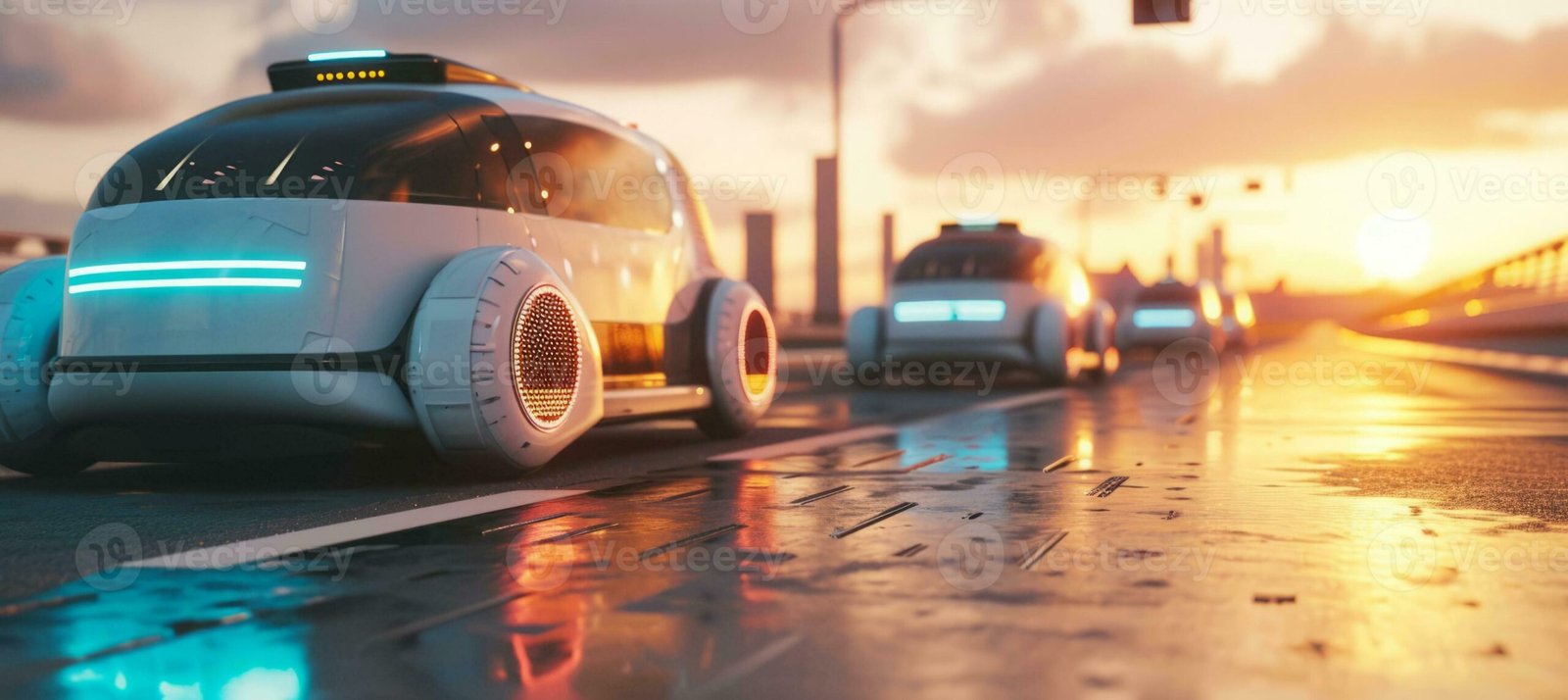
Top 5 Self-Driving Car 2025- How Self-Driving Cars Are Taking Over the Road
Table of Contents:
- Introduction
- How Self-Driving Cars Work
- Latest Advancements in Autonomous Vehicles
- Newest Self-Driving Car Models (2025) & Links
- Challenges and Concerns
- The Future of Autonomous Vehicles
- Conclusion
1. Introduction
The idea of self-driving cars once belonged to the realm of science fiction, but today, they are becoming a reality. With major tech and automotive giants investing heavily in autonomous vehicle (AV) technology, the transportation industry is undergoing a revolutionary shift. From improving road safety to reducing traffic congestion, self-driving cars are poised to transform how we travel.
In 2025, we are witnessing some of the most advanced self-driving technologies, including fully autonomous taxis, AI-powered decision-making, and advanced vehicle-to-everything (V2X) communication systems. Companies like Tesla, Waymo, Mercedes-Benz, Cruise, and Hyundai are leading the charge in bringing autonomous cars to the mainstream.
But how do self-driving cars work? What are the latest innovations in this space? And what are the biggest challenges facing their widespread adoption? Let’s explore.
2. How Self-Driving Cars Work
Self-driving cars rely on a combination of sensors, artificial intelligence (AI), and real-time data processing to navigate roads without human input. Here’s how they operate:
Key Technologies Behind Autonomous Vehicles
🔹 LIDAR (Light Detection and Ranging)
LIDAR uses laser beams to create a 3D map of the car’s surroundings. It detects objects, measures distances, and helps the car “see” in all directions.
🔹 Radar & Ultrasonic Sensors
Radar sensors help the vehicle detect objects at long distances, such as other cars or obstacles on the road. Ultrasonic sensors assist with parking and low-speed maneuvers.
🔹 Cameras & Computer Vision
High-resolution cameras analyze traffic signals, lane markings, pedestrians, and other vehicles. AI-powered vision systems process this data in real time.
🔹 AI & Machine Learning
AI-powered algorithms analyze sensor data to make real-time driving decisions. These systems continuously learn from past experiences to improve performance.
🔹 Vehicle-to-Everything (V2X) Communication
V2X technology enables cars to communicate with each other, traffic lights, and road infrastructure, helping to prevent accidents and optimize traffic flow.
Together, these technologies enable self-driving cars to navigate complex environments, avoid obstacles, and make split-second driving decisions.
3. Latest Advancements in Autonomous Vehicles (2025)
Autonomous driving technology is advancing rapidly, and in 2025, we are seeing major breakthroughs in:
✅ Fully Autonomous Taxis
Companies like Waymo and Cruise are rolling out Level 4 self-driving taxis that operate without a human driver in select cities. These robotaxis are already serving real passengers.
✅ Improved AI Decision-Making
AI-powered systems are now capable of predicting pedestrian and vehicle movements more accurately, reducing the risk of accidents.
✅ Integration with Smart Cities
Autonomous vehicles are increasingly being integrated with smart city infrastructure, allowing them to communicate with traffic signals and optimize traffic flow.
✅ Regulatory Approvals for Level 3 & 4 Autonomy
Governments are beginning to approve Level 3 self-driving technology for highways, allowing cars to drive themselves under certain conditions without human intervention.
These advancements are bringing us closer to a future where fully autonomous cars become the norm.
4. Newest Self-Driving Car Models (2025) & Links
Here are the latest self-driving car models leading the industry in 2025:
1. Tesla Model S with Full Self-Driving (FSD)
🚀 Key Features:
- Tesla’s most advanced Full Self-Driving (FSD) package.
- AI-powered Autopilot for highway and city driving.
- OTA (Over-the-Air) updates ensure continuous improvement.
2. Waymo One (Fully Autonomous Taxi)
🚀 Key Features:
- Operates as a fully autonomous taxi with no human driver required.
- Uses LIDAR, radar, and AI-powered navigation.
- Available in cities like San Francisco, Phoenix, and Los Angeles.
3. Mercedes-Benz EQS with Drive Pilot
🚀 Key Features:
- First Level 3 autonomous car certified for highway driving.
- Allows hands-free driving under specific conditions.
- AI-assisted navigation for enhanced road safety.
4. Cruise Origin (Self-Driving Shuttle)
🚀 Key Features:
- Fully electric and driverless shuttle designed for urban ride-sharing.
- No steering wheel or pedals, optimized for passenger comfort.
- Operating in San Francisco, with expansion plans.
5. Hyundai Ioniq 5 Robotaxi
🚀 Key Features:
- Developed with Motional for Level 4 autonomy.
- Designed for ride-hailing services.
- Advanced remote monitoring and AI safety features.
These models represent the cutting edge of self-driving technology, bringing us closer to a world where autonomous cars are widely adopted.
5. Challenges and Concerns
Despite their potential, self-driving cars still face several hurdles:
🚧 Regulatory Uncertainty – Different countries and states have varying laws regarding AVs. Policymakers are still figuring out how to regulate autonomous driving.
🚧 Public Trust Issues – Many drivers are hesitant to trust a car without a human behind the wheel, even though AI-driven vehicles can be safer.
🚧 Technical Limitations – Autonomous cars struggle in extreme weather, poorly marked roads, and complex urban environments.
🚧 Cybersecurity Threats – Self-driving cars must be protected from hackers who could potentially take control of the vehicle.
Overcoming these challenges will be crucial for the widespread adoption of autonomous vehicles.
6. The Future of Autonomous Vehicles
What’s next for self-driving cars?
🔮 Level 5 Autonomy – The goal is to achieve fully autonomous cars that require no human intervention at all.
🔮 More Autonomous Ride-Sharing – Companies will continue to expand self-driving taxi fleets, reducing the need for personal car ownership.
🔮 AI-Driven Traffic Optimization – Autonomous vehicles will help reduce congestion and improve traffic efficiency.
🔮 Integration with Smart Cities – Future self-driving cars will work seamlessly with intelligent traffic systems, making urban mobility safer and more efficient.
With continuous advancements, we may soon live in a world where manual driving becomes a thing of the past.
7. Conclusion
Self-driving cars are transforming the future of transportation. With Tesla, Waymo, Mercedes-Benz, Cruise, and Hyundai leading the charge, we are moving closer to a world of fully autonomous vehicles.
🚗 Would you trust a self-driving car for your daily commute? Let us know your thoughts in the comments! 🚀