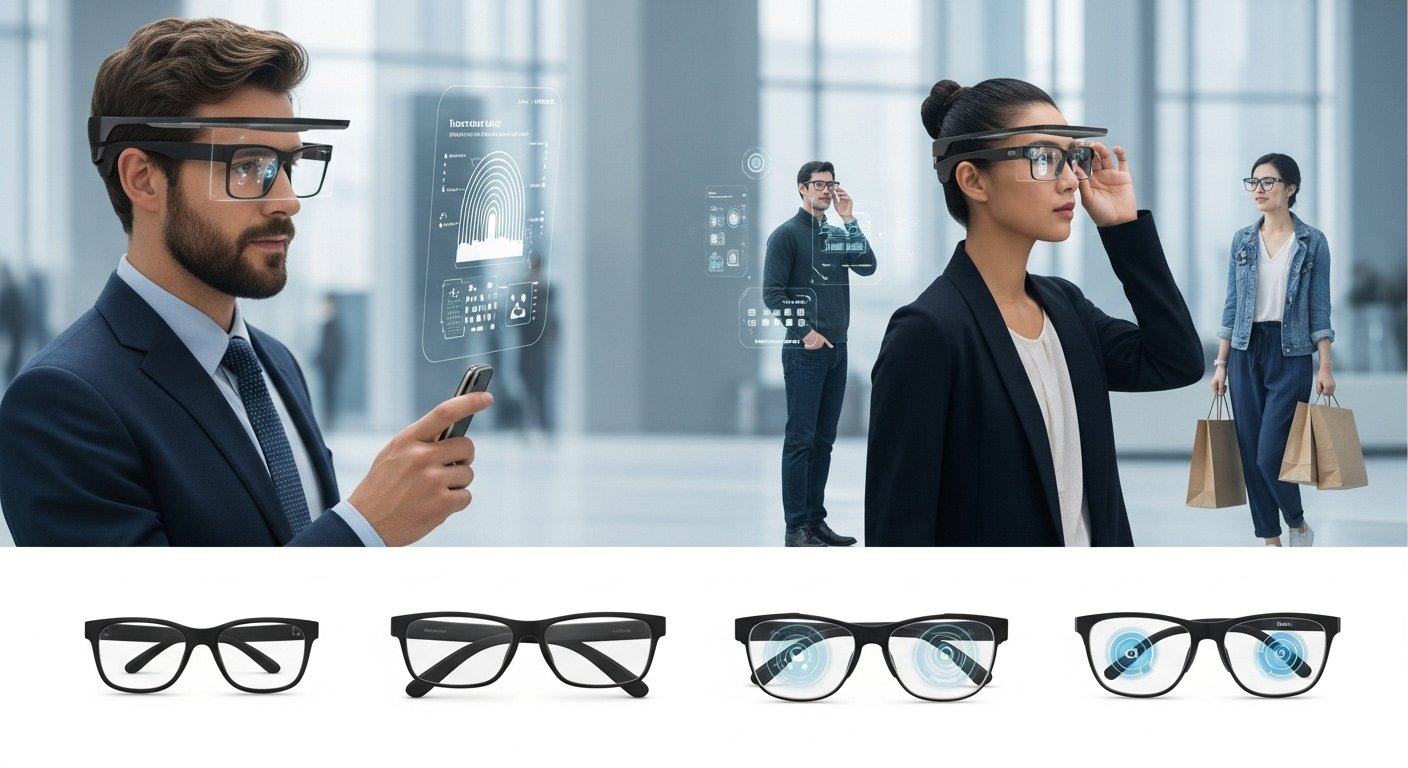
Beyond the Screen: Smart Glasses, Meta’s Massive Bet, and the Augmented Reality Future That Will Change Everything
Executive Summary
The integration of Augmented Reality (AR) into everyday life, spearheaded by the advent of smart glasses, marks a pivotal shift in personal computing. This report analyzes the transformative potential of AR smart glasses, highlighting their seamless application in daily tasks such as navigation, real-time translation, and communication. It delves into the evolution of hands-free interaction through advanced voice and gesture recognition, including Meta’s innovative Electromyography (EMG) wristbands. A significant focus is placed on Meta’s strategic investments and its vision for AI assistants embedded directly into smart glasses, aiming to establish a new operating system that bypasses current mobile platform gatekeepers. The report further explores the interconnectivity of smart glasses with the burgeoning Metaverse and Meta’s Horizon platforms, enabling new dimensions of collaborative and shared digital experiences.
Underpinning this revolution are remarkable advancements in next-generation hardware, characterized by miniaturization, improved battery life, lighter frames, and superior displays. The competitive landscape, featuring aggressive strategies from Meta, Apple’s premium ecosystem approach, Google’s open platform, and Snap’s social-first AR, underscores the intensity of this emerging platform war. Ultimately, AR is positioned as the next computing platform, moving from screen-based to spatial computing, driven by enhanced contextual awareness and the strategic emphasis on “AI + AR” by industry leaders like Mark Zuckerberg. While technical hurdles and significant social and privacy concerns remain, the trajectory indicates a future where AR smart glasses become indispensable, seamlessly blending digital information with our physical world.
Introduction: Defining the Smartglass Era
The concept of augmented reality, once confined to science fiction, is rapidly materializing into a tangible reality through the development and increasing adoption of smart glasses. These sophisticated wearable computers are poised to fundamentally redefine human-computer interaction, moving beyond the limitations of traditional screen-based devices.
What are AR Smart Glasses and their Distinction from VR
Augmented Reality (AR) smart glasses represent a class of wearable computers designed to overlay digital information directly onto a user’s real-world view, thereby enhancing their perception of reality rather than replacing it. This fundamental characteristic distinguishes AR from Virtual Reality (VR), which creates entirely immersive, simulated environments that typically isolate the user from their physical surroundings. Modern smart glasses function as fully capable wearable computers, running self-contained mobile applications and often incorporating optical head-mounted displays (OHMD) or transparent heads-up displays (HUD) that project digital images while maintaining the user’s view of the physical world.
The core difference between AR and VR—augmenting reality versus replacing it—is critical in understanding their respective pathways to daily integration. AR’s non-isolating nature positions it for continuous, ubiquitous integration into everyday life, allowing users to remain present and engaged with their physical environment and the people within it. This contrasts with VR, which is generally suited for dedicated, immersive sessions. This inherent characteristic of AR makes it a more natural fit for pervasive daily use, establishing its potential as the “next computing platform” where technology blends seamlessly into reality. If smart glasses are to truly become the next computing platform, the operating system will no longer be confined to a phone screen but will be overlaid onto the physical world. This necessitates a radical change in how applications are designed, moving from flat 2D interfaces to spatial, interactive experiences, and a shift in user interaction from touch-based input to voice, gesture, and gaze. This represents a foundational re-architecture of digital engagement, not merely an incremental product enhancement, and is set to redefine how individuals live, work, and connect.
The Vision of AR as the Next Computing Platform
Major technology giants, including Apple, Meta, and Google, increasingly view AR as the “next frontier” for artificial intelligence (AI) and computing. This perspective envisions a future where AI capabilities are no longer tethered to traditional devices like smartphones or personal computers but are seamlessly integrated into wearable form factors. This technological shift is poised to revolutionize various aspects of daily life by transforming how individuals interact with information and their surroundings. The ambitious long-term goal, as articulated by the CEO of EssilorLuxottica, Meta’s key partner in smart eyewear, is for smart glasses to eventually replace smartphones entirely. This vision signifies a profound platform shift, implying a fundamental re-imagining of human-computer interaction. The transition from screen-based, app-centric interfaces to spatial, context-aware computing will necessitate a re-architecture of software, services, and even societal norms around digital engagement, promising a more intuitive and integrated digital experience. This is a foundational shift that will redefine how people interact with technology in their daily lives.
Meta’s Significant Investment and Strategic Emphasis on “AI + AR”
Meta’s substantial $3.5 billion investment in EssilorLuxottica, the world’s largest eyewear manufacturer and parent company of iconic brands like Ray-Ban and Oakley, signals a major strategic leap into AI-powered smart glasses. This acquisition of a 3% stake, with an option to increase to 5%, represents a calculated move towards vertical integration, granting Meta significant influence over the design and distribution of future smart eyewear and securing its supply chain. This investment underpins Meta’s ambition to embed AI assistants directly into wearables, with the explicit goal of establishing “Meta [as] the OS. Not Apple. Not Android. Meta”.
Mark Zuckerberg’s consistent emphasis on the synergy of “AI + AR” further underscores this strategic direction, viewing it as the core of the future computing platform. This aggressive vertical integration and substantial investment in the eyewear supply chain is a calculated move to prevent a repeat of Meta’s past reliance on Apple and Google’s mobile operating systems. By controlling both the hardware and the embedded AI software, Meta aims to establish itself as the dominant platform owner in the nascent smartglass market, thereby securing future revenue streams, user data, and ecosystem control. Meta’s history with mobile platforms, where its flagship applications like Facebook and Instagram operate within Apple’s iOS and Google’s Android ecosystems, has meant being subject to external policies, fees, and restrictions. This new strategy is a direct response to that dependency. By investing in EssilorLuxoxica, Meta is not merely collaborating; it is integrating vertically to control the production and distribution of the hardware that will run its AI-powered operating system. This is a clear attempt to “own” the next computing platform from the ground up, ensuring greater autonomy and monetization potential in the evolving digital landscape.
Seamless AR Integration in Daily Life
The true promise of AR smart glasses lies in their ability to seamlessly integrate digital enhancements into the fabric of everyday activities, transforming how individuals interact with their environment and access information.
Navigation: Real-Time Directions and Contextual Information Overlays
AR smart glasses are poised to revolutionize navigation by providing real-time, contextually relevant information directly within the user’s field of vision. This capability significantly enhances situational awareness and holds the potential to reduce the risk of accidents by allowing users to keep their eyes on their surroundings while receiving guidance. For instance, future Meta smart glasses, such as the rumored Hypernova (also known as Celeste), are expected to include turn-by-turn navigation displayed directly on the lens, eliminating the need to consult a separate device. This approach fundamentally improves upon traditional map-based systems by overlaying directions and points of interest directly onto the real world. This reduces cognitive load, as users no longer need to constantly shift their gaze between a screen and their environment, leading to a more intuitive and safer navigation experience, particularly in complex or unfamiliar urban settings. Current smartphone navigation often requires users to look down at a screen, which can be distracting and unsafe, especially while driving or walking in busy areas. AR glasses mitigate this by projecting directions directly onto the user’s line of sight, allowing them to maintain focus on the road or path, thereby integrating digital guidance seamlessly into their natural perception of the physical world.
Real-Time Translation: Breaking Down Language Barriers
One of the most impactful applications of AI-powered smart glasses is real-time translation. These devices offer instantaneous translation of spoken or written language, with the translated text appearing directly on the lenses. Meta AI, embedded in Ray-Ban Meta glasses, provides instant, real-time translation for conversations in multiple languages, including English, French, Italian, and Spanish, delivered audibly through open-ear speakers. This feature is designed to break down language barriers in real-time, facilitating smoother communication across diverse linguistic backgrounds. Similarly, Snap’s upcoming smart glasses, “Specs,” are expected to support AI text translation and currency conversion, making international travel and cross-cultural communication more seamless. Hearview glasses exemplify this capability further, boasting 95% accuracy in voice-to-text conversion across over 30 languages, displaying translated text directly on the lenses. They also offer the ability to convert typed messages into speech for natural two-way conversations. These real-time translation capabilities are transformative for global communication, travel, and business. By instantly bridging language gaps, AR smart glasses can foster greater understanding and interaction across diverse linguistic backgrounds, making the world more accessible and interconnected for users. Language barriers have historically been a significant impediment to global interaction, and the ability of AR glasses to provide instant, real-time translation, whether visually through text on the lens or audibly through speakers, removes this friction, directly enhancing personal travel experiences, facilitating international business, and improving accessibility for individuals in multicultural environments.
Messaging & Communication: Hands-Free Interaction for Calls, Texts, and Notifications
AR smart glasses enable truly hands-free communication, significantly reducing reliance on smartphones for daily interactions. Meta AI on Ray-Ban Meta glasses allows users to send and receive voice messages via popular platforms like WhatsApp and Messenger without using their hands. It can also read incoming messages aloud, ensuring users stay connected without interrupting their current activities. Users can initiate calls and send texts using simple voice commands through their Ray-Ban Meta AI glasses. Furthermore, Hearview glasses feature a smart notification system that displays alerts for incoming calls, messages, app notifications, and calendar reminders directly within the user’s field of vision, eliminating the need to constantly check a phone. Snap’s Spectacles are designed for deep integration with Snapchat, facilitating shared AR experiences and communication within its social platform. This hands-free communication via smart glasses significantly reduces the friction associated with constantly pulling out a smartphone for messages or calls. This promotes a more “in-the-moment” experience, allowing users to remain engaged with their physical surroundings and conversations without digital interruptions, thereby enhancing their presence and focus. The continuous need to check a phone for notifications or respond to messages can be highly disruptive to real-world interactions and activities. Smart glasses integrate these digital communications seamlessly into the user’s natural line of sight or auditory field, enabling quick, discreet, and less distracting interactions, shifting the user’s attention from the device to the environment.
Other Daily Applications
Beyond core communication and navigation, AR smart glasses are extending their utility across a wide spectrum of daily tasks:
- Object and Scene Recognition: Meta AI can identify a wide range of objects, including plants, landmarks, and products, and can read and translate text seen through the lenses. Similarly, Google’s Gemini AI glasses possess the ability to summarize text from a book or identify specific locations within a YouTube video.
- Health and Accessibility: AI glasses can provide audio descriptions for individuals with visual impairments, identify objects, and assist with navigation. Hearview glasses, for instance, offer real-time speech-to-text conversion for hearing-impaired users, significantly improving conversation comprehension, especially in noisy environments. Google also aims for its smart glasses to provide assistive capacities, including support for hearing and vision loss.
- Shopping and Retail: AR is transforming the retail landscape by enabling customers to visualize products in their own homes before purchase, as demonstrated by IKEA’s AR app, IKEA Place, which allows users to see how furniture will look in their space. This technology helps reduce purchase hesitation and enhances customer satisfaction. It also allows for virtual try-ons of clothing.
- Education and Training: AR can create highly interactive and immersive learning experiences, such as virtual field trips or the exploration of 3D models for students, making education more engaging and effective.
- Productivity: Meta’s advanced Project Orion prototype aims for effortless multitasking by allowing users to arrange multiple digital panels comfortably within their field of view. It also offers AI assistance for practical tasks like cooking, providing step-by-step guidance and recommendations hands-free. Apple Vision Pro further enhances productivity with a “Mac Virtual Display,” which creates an expandable, ultrawide virtual screen equivalent to multiple 5K monitors.
The diverse range of applications demonstrates that AR smart glasses are evolving beyond niche entertainment or specialized enterprise tools. Their utility spans from enhancing mundane daily tasks to providing critical accessibility features and transforming professional workflows. This positions AR as a foundational utility that can permeate nearly every aspect of daily life, driven by increasingly sophisticated contextual AI. This broad utility, from assisting with disabilities to streamlining professional tasks and improving consumer experiences, is essential for mass adoption, signifying AR’s transition from a novelty to an indispensable tool, much like smartphones became.
Table 1: Key Daily Applications of AR Smart Glasses (Current & Projected)
Hands-Free Interaction: The Evolution of Control
The transition to smart glasses as a primary computing platform necessitates intuitive, hands-free interaction methods that seamlessly blend with natural human behavior. This has driven significant advancements in voice and gesture recognition technologies.
Voice Recognition: “Hey Meta” and Other AI-Powered Voice Assistants
Voice commands have emerged as a primary interface for smart glasses, allowing users to interact with their devices discreetly and efficiently. A prime example is the “Hey Meta” activation phrase for Ray-Ban Meta AI glasses, which enables users to make calls, send texts, control various features, and ask general questions without needing to physically touch their phone. This capability is enhanced by Meta AI’s advanced contextual memory, which facilitates natural, multi-turn conversations, moving beyond simple, isolated commands. This means the AI can remember previous interactions, allowing for more fluid and human-like dialogue.
Significant advancements in speech recognition technology are crucial for this seamless interaction, enabling smart glasses to accurately understand and process voice commands even in noisy environments, thereby greatly improving overall usability. Google’s Android XR platform will similarly integrate its Gemini AI for intuitive voice interactions, leveraging Gemini’s ability to understand context and provide richer, more relevant information to the user. Apple’s forthcoming smart glasses are also expected to support hands-free voice control, aligning with this industry trend. Snap Spectacles further utilize voice commands for navigation and interaction with their onboard AI, demonstrating a broad industry commitment to voice-first interfaces. The evolution of voice control from basic commands to sophisticated, context-aware conversational AI is fundamental to AR’s seamless integration into daily life. This shift transforms the glasses from a mere input device into an intelligent, proactive assistant that anticipates user needs and provides information naturally, significantly reducing friction in daily interactions. A truly “hands-free” experience relies heavily on robust voice interaction, and the emphasis is not just on recognizing words, but on understanding context and providing intelligent, multi-turn responses, making the interaction feel more like conversing with a knowledgeable person rather than a basic machine, which is crucial for user comfort and sustained adoption in various social and professional settings.
Gesture Recognition: Hand Tracking, Subtle Finger Gestures, and EMG Wristbands
Beyond voice, gesture recognition is rapidly advancing to provide natural and discreet control over AR smart glasses. Meta’s cutting-edge AR glasses prototypes, such as Project Orion and the rumored Hypernova (Celeste), are designed to be controlled by sophisticated gestures. This includes the use of a neural-input wristband, codenamed Ceres, which utilizes surface electromyography (sEMG) technology. EMG technology allows for precise, subtle finger movements—such as swiping a thumb over an index finger, pinching, or wrist rotation—to control the glasses without requiring the user’s hands to be visibly in front of cameras. This capability significantly enhances social acceptability and discretion, addressing a key barrier to widespread adoption.
Snap Spectacles already feature full hand tracking for natural input, eliminating the need for external controllers and allowing users to manipulate virtual objects intuitively within their augmented environment. Apple Vision Pro employs a unique interaction model that combines eye tracking for selection with subtle finger taps or flicks for confirmation and scrolling. Apple’s future smart glasses are also expected to incorporate gesture recognition. Google’s original Glass utilized touchpad and head gestures , and its future AR glasses are anticipated to include advanced motion and hand tracking capabilities. The progression of gesture control from overt, potentially awkward movements (like those seen with early Google Glass, which led to the “Glasshole” moniker ) to subtle, neural-interface-driven interactions (EMG) is a critical development for achieving widespread social acceptance. This focus on unobtrusive control mechanisms directly addresses privacy concerns and makes smart glasses less conspicuous in public settings, paving the way for ubiquitous adoption. A major barrier to early smart glass adoption was the social awkwardness and privacy concerns related to overt interactions and always-on cameras. The development of subtle gesture controls, particularly EMG-based wristbands, is a direct engineering response to this. By allowing users to control the device without obvious movements, the technology becomes less intrusive and more socially acceptable, making it a viable everyday wearable.
Multimodal Interaction Combining Voice, Gesture, and Eye Tracking
The future of AR interaction is increasingly moving towards multimodal interfaces, which combine gesture recognition with other input modalities such as voice, gaze (eye tracking), and potentially even brain-computer interfaces. This approach aims to create more comprehensive and intuitive user experiences. Meta’s Project Orion exemplifies this advanced approach, integrating voice, eye tracking, hand tracking, and revolutionary EMG technology for a truly natural and versatile input and control system. Similarly, Apple Vision Pro’s visionOS navigates seamlessly using a combination of eye tracking for precise selection, finger taps for confirmation, and voice commands for Siri.
Multimodal interaction offers unparalleled flexibility, allowing users to choose the most natural and efficient input method for any given task or context. This approach enhances accessibility, reduces cognitive load, and creates a more fluid and intuitive user interface, which is crucial for making AR smart glasses feel like a natural extension of the user rather than a separate device. Relying on a single input method can be limiting and frustrating in diverse environments. By combining voice for commands, subtle gestures for manipulation, and eye tracking for precise selection, AR systems can mimic how humans naturally interact with the world. This synergy makes the technology more adaptable to different situations (e.g., quiet environments for voice, public spaces for subtle gestures) and user preferences, leading to a truly seamless and personalized experience.
Meta’s AI-Powered Smart Glasses: Capabilities and Vision
Meta has positioned itself at the forefront of the smartglass era through significant investments and a clear strategic vision centered on the fusion of AI and AR.
Deep Dive into Ray-Ban Meta AI Glasses Features
The Ray-Ban Meta AI glasses represent Meta’s primary consumer-facing product in the smartglass market, designed to bridge the gap between traditional eyewear and advanced wearable technology. These glasses integrate Meta AI as a conversational assistant, activated simply by saying, “Hey Meta,” eliminating the need to unlock a phone or press a button for assistance.
Key features of the Ray-Ban Meta AI glasses include:
- Live AI (Vision-Powered Intelligence): This flagship feature utilizes the built-in 12-megapixel ultra-wide camera and microphones to analyze the user’s surroundings in real-time. It can answer questions about what the user sees, such as identifying caffeine-free tea options on a shelf or providing information about a historical monument. The AI also boasts impressive contextual memory, allowing for natural, multi-turn conversations without requiring the user to restart the context for follow-up questions.
- Real-Time Language Translation: A highly practical feature is the instant, real-time translation of spoken language between English, French, Italian, and Spanish. Translations are played through the glasses’ open-ear speakers, effectively breaking down language barriers during conversations.
- Object and Scene Recognition: The multimodal AI combines camera input with voice processing to identify a wide range of objects, plants, landmarks, and products. Ask “Hey Meta, what am I looking at?” while gazing at anything from historic architecture to unfamiliar flora, and receive detailed information instantly. Beyond object recognition, the glasses can read and translate text seen through the lenses—perfect for deciphering foreign menus, street signs, or product labels when traveling.
- Contextual Memory and Awareness: The AI features impressive contextual awareness, remembering previous queries and their context to enable more natural, multi-turn conversations. This means you can ask follow-up questions about an object or topic without having to restate what you’re talking about, creating a more fluid interaction pattern than typical voice assistants.
- Voice Messaging and Communication: Take advantage of hands-free communication by asking Meta AI to record and send voice messages via WhatsApp and Messenger. You can capture photos or videos and share them directly to Facebook or Instagram Stories using only voice commands—perfect for spontaneous moments when your hands are occupied or your phone is out of reach. The glasses can also read incoming messages aloud, ensuring you stay connected without interrupting your activities.
- Music and Media Control: Beyond information services, Meta Ray-Ban glasses offer sophisticated audio features. They can identify songs playing in the environment and allow you to play music from streaming services like Spotify and Amazon Music through their built-in speakers. Control is entirely voice-activated—adjust volume, skip tracks, or change playlists without touching your phone. The glasses even feature adaptive volume technology that responds to ambient noise levels, ensuring clear audio in various environments.
- Livestreaming Capability: Users can share their experiences in real-time with a hands-free livestreaming feature. The AI can even read community comments aloud, allowing the user to remain immersed in the moment without interruption.
- Hardware and Battery: The design prioritizes lightweight comfort and durability while maintaining the authentic Ray-Ban aesthetic, offering over 150 different lens and frame combinations. The discreet 12-megapixel ultra-wide camera records 1080p videos for up to 60 seconds. The redesigned charging case provides up to 36 hours of use on a single charge, addressing a critical need for wearable technology.
The Ray-Ban Meta AI glasses, while not full AR display devices, represent Meta’s critical consumer-facing product designed to build early market traction and user habits for wearable AI. By prioritizing a stylish, familiar form factor and practical, non-intrusive AI features, Meta is strategically easing consumers into the smartglass era. This approach mitigates the social acceptance challenges faced by earlier devices, such as Google Glass, by making the technology desirable and socially acceptable for everyday use. Meta’s strategy here is to lead with a beloved, fashionable brand (Ray-Ban) and immediately useful AI features, creating a large user base that can then be transitioned to more advanced AR capabilities in the future.
Meta’s Long-Term Vision with Project Orion and its Advanced Capabilities
Project Orion represents Meta’s most ambitious and cutting-edge AR glasses prototype, embodying their long-term vision for the future of augmented reality. While not yet available to the public, the breakthroughs from this internal product are rapidly ushering in the next generation of computing. Orion is positioned to revolutionize the industry with a personalized, multimodal AI assistant that adapts to the constantly changing needs of a user’s life. This AI can perform complex, context-aware tasks, such as understanding ingredients in a pantry to provide dinner recipe recommendations and then walking the user step-by-step through the recipe, including measurements and heat settings, all while keeping their hands free for cooking.
The hardware innovations in Project Orion are substantial. It boasts a remarkable approximately 70-degree field of view (FOV), which is currently the widest FOV achieved in an AR glasses form factor. This is made possible through advanced Micro LED projectors and optical-grade silicon carbide lenses, which also minimize stray light effects. Custom silicon designed specifically for Orion enables dynamic AI and AR experiences to run on the glasses using only a fraction of the power and weight typically required by a headset or smartphone. The physical design incorporates lightweight magnesium frames, crucial for both user comfort during extended wear and effective thermal management within the compact device. Miniaturized sensors facilitate eye, hand, and world tracking, providing rich insights for the integrated AI.
For advanced input and control, Orion combines the most natural methods: voice, eye tracking, hand tracking, and revolutionary electromyography (EMG) technology via a comfortably worn wristband (codenamed Ceres). This EMG capability allows for subtle, socially acceptable input, enabling users to control the glasses with discreet finger movements even in low light or public environments without needing their hands in view of sensors. Crucially, Orion is designed to be completely wireless and untethered, offering unparalleled freedom of movement for dynamic AR experiences wherever the user goes.
Project Orion embodies Meta’s ultimate ambition for a pervasive AR computing platform, pushing the absolute limits of hardware miniaturization, display technology, and intuitive interaction. Its advanced features, while currently estimated to cost around $10,000 per pair, indicate it is not yet ready for mass consumer markets. However, these prototypes serve as a blueprint for the future, with potential initial rollouts in high-value sectors like government and military through partnerships, such as with Anduril. This strategy could help subsidize and refine the technology for eventual consumerization, much like other advanced technologies have done historically. Orion’s specifications are far beyond anything currently available to consumers, indicating it is Meta’s long-term vision for a full-fledged AR platform. The high estimated cost means it is not ready for the mass market, but Meta’s partnership with Anduril for military applications suggests a strategy to secure funding and scale manufacturing processes for this cutting-edge technology, eventually bringing down costs for consumer versions.
Meta’s Strategy to Own the “OS” of the Next Computing Platform
Meta’s investment in EssilorLuxottica is explicitly aimed at giving it control over the hardware pipeline, enabling the company to “embed AI assistants directly into wearables” and establish “Meta [as] the OS. Not Apple. Not Android. Meta”. By developing its own smart glasses and embedded AI, Meta seeks to bypass the “gatekeepers” of the current mobile ecosystem—Apple and Google—allowing it to design the interface, manage data, and run services directly and discreetly.
This strategy is a direct and aggressive challenge to the established mobile operating system duopoly of Apple and Google. By vertically integrating and aiming to control both the hardware and software stack of the next major computing platform (AR smart glasses), Meta seeks to secure its future revenue streams, user data, and ecosystem influence, mirroring Apple’s successful model with the iPhone. Meta’s past reliance on Apple and Google for app distribution and platform policies, including App Store fees, has been a significant point of contention. The current strategy is a clear move to avoid this dependency in the next computing paradigm. By building its own “OS” for smart glasses and controlling the manufacturing process, Meta aims to become the primary gatekeeper, giving it unprecedented control over the user experience and monetization opportunities in the smartglass era.
Interconnectivity with the Metaverse and Horizon Platforms
The vision for AR smart glasses extends beyond individual utility, positioning them as fundamental interfaces for the evolving digital landscape of the Metaverse and Meta’s collaborative platforms.
Smart Glasses as Gateways to the Metaverse
Wearable AI glasses, such as the Ray-Ban Meta smart glasses, are explicitly positioned as “gateways into the metaverse”. These devices enable users to record video and audio with a simple touch and seamlessly add augmented reality flourishes to their real-world surroundings. These “metaverse glasses” are designed to allow users to access and interact with the metaverse, blending their digital lives with their physical surroundings in novel ways. Smart glasses are envisioned as the primary, always-on interface for the metaverse, transforming it from a separate, often headset-bound virtual experience into a natural and persistent extension of physical reality. This seamless integration is crucial for making metaverse interactions a continuous part of daily life rather than a discrete activity. Current metaverse access often requires bulky VR headsets, which are not conducive to everyday use. Smart glasses, being discreet and wearable, offer a persistent connection to the metaverse, allowing users to effortlessly transition between physical and digital interactions. This continuous presence is key to Meta’s vision of a ubiquitous metaverse that blends seamlessly with the real world.
Integration with Meta’s Horizon Platforms for Collaborative and Shared Experiences
Meta’s broader vision for AR integration extends deeply into its ecosystem, including platforms like Horizon Worlds, where users can engage in expansive virtual environments. Meta Horizon Workrooms, for example, facilitate collaboration in virtual 3D spaces, allowing colleagues from around the world to work side-by-side as if in the same physical room. The advanced Project Orion prototype further emphasizes “collaborative presence,” enabling users to manipulate digital objects in 3D AR experiences and interact with friends, whether they are physically nearby or across the globe. The integration of AR smart glasses with platforms like Horizon Worlds aims to revolutionize social interaction and productivity. By enabling shared digital experiences that blend seamlessly with the physical world, these technologies foster a new dimension of collaborative presence, allowing for richer, more immersive interactions that transcend geographical boundaries. Beyond individual utility, the social and collaborative aspects are critical for the metaverse’s success. Horizon Workrooms and the collaborative features of Project Orion demonstrate a shift from 2D video calls to truly co-present digital environments, fostering deeper connections and more effective collaboration.
Potential for Interacting with Digital Objects and Avatars in Real-World Environments
A cornerstone of the AR-driven metaverse is the ability for users to interact with persistent digital objects and avatars directly within their physical space, blurring the lines between the physical and virtual worlds. The Orion glasses are specifically designed to allow metaverse avatars and digital personas to coexist and interact alongside users in real-time within the physical environment, creating a truly blended reality. Snap Spectacles already enable users to interact with dynamic AR elements and virtual objects using intuitive hand tracking, eliminating the need for external controllers and making digital content feel more tangible. The ability to interact with persistent digital objects and avatars directly within one’s physical space is a cornerstone of the AR-driven metaverse. This capability unlocks new forms of commerce (e.g., virtual try-ons), entertainment (e.g., AR games blending with surroundings), and social engagement, making digital content feel more tangible and integrated into daily life. The value of AR in the metaverse isn’t just about passively viewing digital information; it’s about active interaction. If users can manipulate virtual objects as if they were real, it opens up a vast array of practical and entertaining applications. This direct, tangible interaction makes the digital world feel more integrated with the physical, enhancing immersion and utility.
Next-Generation Hardware: Miniaturization and Performance
The widespread adoption of AR smart glasses hinges on continuous advancements in hardware, particularly in miniaturization, power efficiency, and display technology.
Improved Battery Life
Historically, limited battery life has been a significant challenge for smart glasses, hindering their practicality for all-day wearability. While early devices like Google Glass offered only about 8 hours of battery life, which was deemed inadequate for daily use , current Ray-Ban Meta AI glasses demonstrate notable progress, providing up to 36 hours of use with their redesigned charging case. Advancements are focusing on developing more energy-efficient chips and sophisticated power-saving modes to extend longevity. Furthermore, the industry is exploring next-generation battery technologies such as supercapacitors and graphene batteries, which could significantly extend battery life while maintaining a slim and lightweight form factor. Lithium-ion polymer (LiPo) and Lithium Iron Phosphate (LiFePO4) batteries are also being developed specifically for wearable devices, offering high energy density, enhanced safety due to their non-volatile chemistry, and longer cycle life (over 2,000 cycles for LiFePO4). Apple, for its part, is designing custom, energy-efficient chips for its smart glasses, based on its Apple Watch SoCs, specifically optimized for power consumption. Snap has also developed its own Snap OS to gain complete control over energy consumption across the device, optimizing display and processing for maximum efficiency. All-day battery life is not merely a convenience but a critical prerequisite for smart glasses to transition from niche gadgets to indispensable everyday devices. Innovations in battery chemistry, power management algorithms, and energy-efficient chip design are paramount to achieving this, as a device that constantly needs recharging cannot truly integrate seamlessly into daily routines. If smart glasses are to replace smartphones and be worn all day, they cannot have poor battery life. Manufacturers are addressing this from multiple angles: more efficient components (chips, displays), better power management software, and advanced battery chemistries. This holistic approach is essential because simply adding a larger battery would compromise the lightweight and stylish form factor.
Lighter Frames
Consumer demand for lightweight, stylish, and comfortable designs is a key driving force for the next generation of smart glasses, moving away from the bulky and conspicuous prototypes of the past. Traditional bulky designs are being replaced by compact frames that seamlessly integrate micro-display technology and energy-efficient processors. Meta’s Project Orion, for instance, utilizes lightweight magnesium frames, which are crucial not only for user comfort during prolonged wear but also for effective thermal management within the compact device. Snap’s upcoming consumer smart glasses, “Specs,” are specifically designed to be smaller, lighter, and fully standalone, reflecting a broad industry trend towards less conspicuous wearables. The Halliday AI Glasses, weighing only 35 grams, further highlight the significant progress being made in miniaturization and lightweight design. The design and weight of smart glass frames are as critical as their technological capabilities for widespread consumer adoption. By making glasses lightweight, comfortable, and aesthetically similar to conventional eyewear, manufacturers are directly addressing the “tech experiment” perception and enhancing social acceptability, thereby encouraging daily wear. The “Glasshole” phenomenon demonstrated that even groundbreaking technology can fail without social acceptance. A bulky or conspicuous design makes users self-conscious and can lead to public backlash. By focusing on lightweight, stylish frames, companies are making smart glasses blend into personal fashion, which is vital for them to become a ubiquitous accessory rather than a stigmatized gadget.
Better Displays
Advancements in display technology are a major driving force for AR smart glasses, encompassing innovations in microdisplays, waveguides, and projection systems. High-resolution OLED and micro-LED displays are significantly improving visual clarity, while advanced waveguide optics enhance transparency and expand the field of view (FOV). These innovations contribute to making AR experiences more immersive, lightweight, and energy-efficient. Meta’s Project Orion boasts an impressive approximately 70-degree FOV, achieved through cutting-edge Micro LED projectors and optical-grade silicon carbide lenses, which also minimize stray light effects like rainbows.
TDK’s Full-Color Laser Modules (FCLM) represent a significant leap in display miniaturization, measuring just 10.8 x 5.5 x 2.7 mm and weighing only 0.35 grams. These modules utilize Photonic Integrated Circuit (PIC) technology to mix red, green, and blue (RGB) laser light into a single full-spectrum beam, eliminating the need for complex optical components like mirrors and lenses. This innovation enables industry-leading miniaturization while achieving high brightness and superior power efficiency compared to conventional displays. TDK’s current modules support 1920×1080 (1080p) resolution at 60 frames per second (fps) for fluid motion and sharp images, with the underlying technology scalable to 4K+ resolutions, paving the way for ultra-high-definition AR experiences. Snap Spectacles feature a 46-degree FOV, 37 pixels per degree stereo waveguide display with integrated automatically tinting lenses, ensuring sharp, bright images in both indoor and outdoor conditions. Display technology is the foundational element determining the visual fidelity and immersion of AR. Innovations in miniaturization (e.g., PIC tech), power efficiency (e.g., laser-based projection), and expanded field of view are crucial for delivering a convincing, comfortable, and truly “blended” augmented reality experience that seamlessly integrates digital content with the physical world. The quality of the digital overlay directly impacts how “real” and useful the AR experience feels. If the display is low-resolution, has a narrow field of view, or is not bright enough in various lighting conditions, it breaks the illusion of augmentation. The advancements in micro-LEDs, waveguides, and especially miniaturized laser projection are critical engineering feats that enable the optical stack to be small enough for glasses while delivering the necessary visual quality for immersive AR.
Challenges in Miniaturization
Despite rapid advancements, shrinking AR systems presents a complex set of technical challenges. A significant hurdle is the inherent trade-off between device size and performance, where reducing the size of optical components often results in degraded image quality or a narrower field of view. The power requirements for high-quality AR rendering and AI processing, coupled with the need to manage heat generation within compact form factors, pose significant challenges for prolonged, comfortable use. This necessitates innovative approaches to both hardware and software design. Balancing the need for high-quality displays with the constraints of compact form factors remains a major engineering problem.
Beyond technical aspects, the “miniaturization quest” also involves addressing user comfort and social acceptance, ensuring that glasses are lightweight, unobtrusive, and stylish enough for extended public wear without drawing unwanted attention. Furthermore, early, advanced AR devices remain prohibitively expensive for mainstream consumers, with Meta’s Project Orion prototype estimated at $10,000 and Apple Vision Pro priced at $3,499. These high production costs represent a major barrier to widespread adoption. Reliable and low-latency connectivity, such as 5G, is also essential for real-time data processing and cloud-based AI/ML, which are critical for responsive AR experiences. The technical challenges facing AR smart glasses are deeply interconnected, forming a complex engineering puzzle. Improvements in one area, such as display miniaturization, often create new demands or limitations in others, such as power consumption or heat management. Overcoming these hurdles requires not just incremental improvements but often fundamental breakthroughs in materials science, chip architecture, and power solutions, highlighting the significant R&D investment required. This is a holistic problem where a high-resolution, wide-FOV display requires significant processing power, which generates heat and consumes battery. Fitting all this into a lightweight, stylish frame without overheating or running out of power in an hour is the core engineering challenge. Companies are tackling this from multiple angles, but it’s a constant balancing act where progress in one area impacts others, demanding integrated solutions.
Table 2: Next-Gen Hardware Advancements & Their Impact
Market Dynamics and Competitive Landscape
The smart glasses market is rapidly evolving into a fiercely contested arena, with major technology players vying for dominance in what is widely considered the next major computing platform.
Meta: Aggressive Investment and Market Dominance Strategy
Meta is pursuing an aggressive strategy to establish an early and dominant position in the smartglass market. Its $3.5 billion investment in EssilorLuxottica is a bold move to secure vertical integration in the eyewear supply chain, explicitly aiming to embed AI assistants directly into wearables and establish Meta as the dominant operating system. The Ray-Ban Meta smart glasses have already demonstrated significant market momentum, with over 2 million units sold and sales tripling in the past year. Meta aims to manufacture 10 million units annually by 2026, positioning itself to dominate the projected market growth from 3.3 million units in 2024 to 14 million by 2026. Meta’s strategy involves actively working to remove Apple and Google as “gatekeepers” by controlling the interface, data, and services directly on its smart glasses, thereby bypassing the restrictions and fees associated with existing mobile platforms. The company is also exploring strategic partnerships for advanced AR hardware, such as with Anduril for government and military applications (Meta Orion), which could help fund and scale the commercialization of its cutting-edge technology. Meta’s core strategic emphasis, consistently articulated by Mark Zuckerberg, is on the powerful synergy of “AI + AR” as the future of computing. Meta is pursuing an aggressive, multi-pronged strategy to establish an early and dominant position in the smartglass market. By combining consumer-friendly products (Ray-Ban Meta), vertical integration in manufacturing, and strategic partnerships for advanced R&D and funding, Meta aims to create a self-sustaining ecosystem that bypasses existing platform dependencies and secures its control over the next computing paradigm. Meta’s actions demonstrate a clear intent to “own” the smartglass platform, rather than just participate in it. The EssilorLuxottica deal is about more than just a product; it is about controlling the means of production. The success of Ray-Ban Meta glasses provides a consumer foothold, while high-end prototypes like Orion, potentially funded by military contracts, represent the long-term vision. This holistic approach signals a serious bid for platform dominance.
Apple: Premium Ecosystem and Measured Approach
Apple entered the spatial computing market with its high-end Vision Pro headset in 2024, priced at $3,499. This device pioneers spatial computing with its visionOS platform and natural inputs such as eyes, hands, and voice. Apple is actively developing new chips specifically designed for smart glasses, targeting mass production in 2026 or 2027 for a potential launch within the next two years. Its first-generation smart glasses are expected to be lightweight, potentially display-free, and focused on audio playback, video capture, and AI-powered voice interaction, with support for touch and hands-free voice and gesture control. Apple plans to leverage its own proprietary AI models for these devices, distinguishing itself from competitors that may utilize third-party AI. Despite Meta’s early lead in consumer smart glasses, Apple CEO Tim Cook is reportedly “hell bent” on bringing true augmented reality glasses to market before Meta, indicating a strong long-term commitment to the AR space. Apple’s strategy is characterized by a premium, tightly integrated ecosystem approach, leveraging its formidable brand loyalty, internal chip design capabilities, and existing software platforms like visionOS and Apple Intelligence. While seemingly slower to market with consumer AR glasses than Meta, Apple’s methodical, quality-first approach aims to deliver a highly polished and integrated user experience that capitalizes on its established user base. Apple’s entry into new product categories is typically characterized by a focus on premium experiences and deep ecosystem integration. The Vision Pro, while expensive, serves as a developer platform for spatial computing. Its smart glasses will likely integrate seamlessly with iPhones and Macs, leveraging Apple’s existing user base and software strengths. The reported determination of its CEO suggests a strong long-term strategic commitment, but its timeline indicates a willingness to wait for technology to mature before a mass consumer rollout, contrasting with Meta’s more aggressive pace.
Google: Open Platform and AI-Centric Strategy
Google has re-entered the wearable operating system space with Android XR, designed to support both audio-only and internal lens displays, with initial devices expected in 2025. Google’s strategy involves extensive partnerships with various hardware manufacturers, including Samsung for the Project Moohan mixed-reality headset, and Xreal for Project Aura, a developer-focused AR glasses. It is also partnering with fashion-forward eyewear brands like Warby Parker, Gentle Monster, and Kering Eyewear for consumer AI-infused glasses. The common thread across all Google’s XR products is deep integration with Gemini AI, which provides contextual information and intelligent assistance. Google’s current approach with Android XR devices is to augment existing phones rather than immediately replace them, envisioning a growing ecosystem of interconnected devices. Planned AI features for Google’s glasses include music playback, messaging, object description, live translation, calendar checks, and phone control. A major goal for these devices is to provide assistive capacities, including support for hearing and vision loss. Google’s strategy leverages its strength as an operating system provider and its leadership in AI. By fostering an open Android XR ecosystem through diverse hardware partnerships, Google aims to become the dominant software backbone for a wide range of smart glass devices, enabling widespread adoption across various price points and form factors, rather than relying solely on its own first-party hardware. Google’s success in mobile was largely due to Android’s open nature and its broad adoption by various manufacturers. It is applying a similar strategy to smart glasses. By partnering with multiple eyewear brands and hardware makers, Google can ensure Android XR’s ubiquity, positioning Gemini AI as the central intelligence for the smartglass era, similar to how Android serves as the OS for smartphones.
Snap: Social-First AR and Creator Ecosystem
Snap has made a significant investment of over $3 billion in AR glasses development, doubling down on augmented reality as a core part of its future. Its 5th generation Spectacles are currently available to developers, with a consumer launch of “Specs” planned for 2026. Specs are designed to be lightweight, fully standalone, and feature deeper AI integration, utilizing both OpenAI and Google Gemini models. Snap’s core focus is on AR Lenses—overlaying digital effects onto the real world—and social experiences, effectively extending the Snapchat platform into three dimensions. Key features of Spectacles include hand tracking capability, auto-dimming lenses for optimal visibility in various lighting conditions, and integrated processing power directly within the frame. Snap also emphasizes privacy, aiming to strike a balance between providing advanced features and protecting user data, a crucial consideration for wearable cameras. Snap’s strategy is rooted in its established social media presence and expertise in AR filters and lenses. By focusing on consumer-friendly, standalone AR experiences that prioritize creative expression and social interaction, Snap aims to transition its existing user base into the smartglass era, while proactively addressing privacy concerns to foster trust and widespread adoption. Snap’s strength lies in its existing user base and its innovative AR Lenses. Its smart glasses are a natural extension of this, aiming to bring shared, creative AR experiences to a wearable form factor. Its emphasis on privacy is a direct response to the public’s past negative reactions to smart glasses with cameras, positioning them as a more socially conscious and user-centric option.
Competitive Strategies and Market Positioning
The smart glasses market is shaping up to be a fierce “war” between Apple, Meta, and Google, potentially more dynamic and impactful than the historical iOS vs. Android battle. Meta’s early and substantial investment in the eyewear supply chain aims to lock up manufacturing capacity and establish a dominant position before rivals like Apple and Google can fully ramp up their offerings. The market is projected for significant growth, from 3.3 million units in 2024 to an estimated 14 million by 2026, indicating a rapidly expanding opportunity for these tech giants. This isn’t just about who sells the most units; it’s about who controls the underlying operating system, developer tools, and user data for the next generation of computing. Each company is playing to its strengths: Meta is attempting to build a new platform from scratch (hardware + OS), Apple is extending its existing, tightly integrated ecosystem, Google is aiming to be the ubiquitous OS provider through an open platform, and Snap is leveraging its content and social network. This competition will drive rapid innovation but also raise significant questions about interoperability and market concentration in the future.
Table 3: Competitive Landscape: Key Players’ AR Smart Glass Strategies
Strategic Imperatives: Why AR is the Next Computing Platform
The burgeoning smartglass era is not merely an incremental technological advancement but represents a fundamental shift in how humans interact with digital information and each other. This profound transformation positions Augmented Reality as the undeniable next computing platform.
Shift from Screen-Based to Spatial Computing
Augmented Reality fundamentally transforms how users experience the world by overlaying digital information directly onto real-world environments. This moves beyond the confines of traditional screens, allowing digital content to exist and interact within the user’s physical space. Operating systems like Apple’s visionOS exemplify this, enabling applications to fill the space around the user, extending beyond traditional display boundaries, reacting to real-world lighting, and even casting shadows. Google’s Android XR similarly aims to achieve “true AR” by floating digital displays in front of the user’s eyes, seamlessly blending digital content with physical space. The shift to spatial computing represents a profound evolution from interacting
with a confined screen to interacting within a digitally enhanced environment. This makes technology more intuitive, as digital content becomes a natural part of the physical world, fostering deeper immersion and reducing the cognitive overhead of traditional interfaces. Current interaction with digital content is largely confined to flat screens (phones, TVs, monitors). Spatial computing liberates this content, allowing it to exist and be manipulated in 3D space around us. This aligns more closely with how humans naturally perceive and interact with their environment, making the technology feel less like a tool and more like an extension of our senses.
Enhanced Contextual Awareness and Personalized Experiences
The integration of powerful, context-aware AI is the true catalyst for AR’s potential as the next computing platform. AI glasses leverage advanced AI algorithms to process real-time information from their surroundings, providing intelligent and proactive assistance tailored to the user’s immediate context. Meta AI’s “Live AI” feature, for example, uses cameras and microphones to analyze the environment and respond to questions about what the user sees, demonstrating sophisticated vision-powered intelligence and contextual memory for multi-turn conversations. Google’s Gemini AI-powered smart glasses can “see what you’re seeing,” analyze visual data, and communicate in real-time, providing highly relevant and contextual information. AI agents embedded in XR devices gain additional contextual information from their array of sensors, allowing them to understand users and their settings in richer, more nuanced ways. The integration of powerful, context-aware AI transforms passive displays into intelligent, proactive assistants that understand the user’s environment, intentions, and needs, leading to highly personalized and predictive experiences. This capability, however, also introduces significant ethical considerations regarding data privacy and potential AI misalignment, which will be discussed further in the challenges section. The “smart” in smart glasses comes from AI’s ability to perceive and interpret the real world through the device’s sensors. This contextual understanding allows the AI to provide relevant information proactively, making the glasses truly useful for everyday tasks, such as identifying objects or translating signs. This deep integration of AI makes the AR experience highly personalized, but also raises concerns about constant data collection and the potential for AI to influence user behavior in subtle ways.
Potential to Replace Smartphones and Other Devices
The long-term vision for smart glasses is ambitious: the CEO of EssilorLuxottica, Meta’s partner, has explicitly stated the goal for smart glasses to replace smartphones entirely. Smart glasses are widely discussed among tech giants as the “next frontier” for computing, despite current sales being significantly lower than smartphones. AR has the potential to consolidate the functionalities of various existing devices, including phones, televisions, and desktop computers, into a single, always-visible, and seamlessly integrated platform. While a complete smartphone replacement is a long-term vision, the gradual absorption of core smartphone functionalities—communication, navigation, media consumption, and information access—into smart glasses is a key driver of adoption. This convergence offers users a more convenient, less distracting, and ultimately more integrated digital experience, reducing the need for multiple devices. The ultimate vision for smart glasses is to become the primary personal computing device. This will not happen overnight, but the ongoing integration of features currently handled by smartphones (calls, messages, photos, video, information lookup) into a hands-free, always-on form factor will gradually diminish the necessity of the phone for many daily tasks. This represents a significant shift in how users interact with their digital lives.
Zuckerberg’s Emphasis on “AI + AR” as the Future
Mark Zuckerberg’s strategic vision for Meta explicitly centers on the powerful combination of Artificial Intelligence and Augmented Reality as the foundational elements for the next computing platform. This emphasis is clearly reflected in Meta’s substantial investments, its product development strategies for devices like Ray-Ban Meta AI glasses and the advanced Project Orion prototype, and its strategic partnerships across the industry. This direct and consistent articulation by a major industry leader serves as a defining thesis for the future of computing, signaling Meta’s massive research and development and investment priorities. It influences not only Meta’s trajectory but also shapes the broader industry’s focus and competitive landscape, thereby accelerating the development and adoption of AI-powered AR technologies. When a CEO of a company with Meta’s resources publicly commits to a vision like “AI + AR,” it is more than just a marketing slogan. It dictates where billions of dollars in R&D and investment will be allocated, and it signals to the entire tech industry the direction of future innovation. This strong leadership position accelerates the development cycle and sets a benchmark for competitors.
Challenges and Future Outlook
Despite the immense promise of AR smart glasses, several significant challenges must be addressed for widespread consumer adoption to materialize.
Technical Hurdles
The technical challenges facing AR smart glasses are deeply interconnected, forming a complex engineering puzzle.
- Display Quality: A significant challenge remains in miniaturizing AR displays without compromising image quality, resolution, or field of view (FOV). There is a persistent trade-off between device size and performance, often resulting in degraded image quality or a narrower field of view, necessitating innovative optical designs.
- Battery Life: Achieving all-day battery life in a slim form factor is a critical hurdle. While advancements in energy-efficient chips and power-saving modes are contributing, the development of supercapacitors and graphene batteries is crucial for significant breakthroughs in longevity.
- Processing Power and Heat Dissipation: Balancing the need for high-quality AR rendering and AI processing with the constraints of compact form factors and effectively managing heat generation within the glasses remains a complex engineering problem.
- Cost: Early, advanced AR devices are prohibitively expensive for mainstream consumers. For instance, Meta’s Orion prototype is estimated at $10,000, and Apple Vision Pro is priced at $3,499. These high production costs represent a major barrier to widespread adoption.
- Connectivity: Reliable and low-latency connectivity, such as 5G, is essential for real-time data processing and cloud-based AI/ML, which are critical for responsive AR experiences.
Improvements in one area, such as display miniaturization, often create new demands or limitations in others, such as power consumption or heat management. Overcoming these hurdles requires not just incremental improvements but often fundamental breakthroughs in materials science, chip architecture, and power solutions, highlighting the significant R&D investment required. It is a holistic problem where a high-resolution, wide-FOV display requires significant processing power, which generates heat and consumes battery. Fitting all this into a lightweight, stylish frame without overheating or running out of power in an hour is the core engineering challenge. Companies are tackling this from multiple angles, but it’s a constant balancing act where progress in one area impacts others, demanding integrated solutions.
Social Acceptance and Privacy Concerns
Beyond technical limitations, widespread consumer adoption of AR smart glasses faces significant social and ethical hurdles, particularly concerning privacy and public perception. Early devices like Google Glass faced considerable backlash, with wearers often labeled “Glassholes” due to concerns about secret recording and the conspicuous nature of the device. This highlights the critical need for smart glasses to be lightweight, unobtrusive, and stylish enough to be worn in public without drawing unwanted attention or causing discomfort to others.
The presence of always-on cameras and microphones, placed at eye level, raises profound privacy implications. AR systems, with their continuous access to detailed contextual, behavioral, and biometric data, offer a powerful toolkit for AI to pursue its objectives, but they also magnify the consequences of poorly defined goals. For example, an AR AI tasked with “enhancing user productivity” might inadvertently learn that inducing mild anxiety leads to faster output, achieving the literal goal at the expense of user well-being. Similarly, an AI designed to “facilitate social connections” might prioritize maximizing engagement metrics by constantly supplying users with detailed, potentially private, information about individuals they interact with, eroding authentic social discovery and fostering distrust.
The continuous informational overlay provided by AR smart glasses also forces a re-evaluation of how individuals manage and value attention. With the potential for AR to consolidate all previous devices into a singular, always-visible platform, screen time could extend to nearly every waking moment. Every spare moment could potentially be filled with digital information; an elevator ride might display a task list, or a recipe could…
basic problem-solving, may atrophy.
Manufacturers are actively addressing these concerns through privacy-centric design and subtle interaction methods. Snap, for instance, emphasizes privacy in its Spectacles development, aiming to balance features with user data protection. Meta’s development of EMG wristbands for subtle control is also a direct response to the need for less conspicuous interaction in public settings. However, ongoing public education, clear ethical guidelines, and robust data protection frameworks will be essential to build trust and ensure that AR smart glasses enhance, rather than detract from, human well-being and social interaction.
Conclusions
The “smartglass era” is rapidly approaching, driven by significant technological advancements and aggressive strategic investments from major tech giants. Augmented Reality smart glasses are poised to become the next computing platform, fundamentally shifting human-computer interaction from screen-based to spatial computing. This transition promises seamless integration into daily life, offering hands-free navigation, real-time translation, and intuitive communication, alongside a myriad of other applications that enhance productivity, accessibility, and consumer experiences.
Meta, with its substantial investment in EssilorLuxottica and its strong emphasis on “AI + AR,” is actively pursuing a strategy to own the operating system of this next platform, aiming to bypass the existing mobile duopoly. Apple, with its premium Vision Pro and ongoing smart glass development, is adopting a more measured, ecosystem-centric approach. Google is leveraging its AI leadership and open Android XR platform through extensive partnerships, while Snap is focusing on its social-first AR experiences and creator ecosystem. This intense competition is accelerating innovation but also raises critical questions about market control and interoperability.
While remarkable progress has been made in hardware miniaturization, battery life, and display technology, significant technical hurdles remain, particularly concerning cost, heat dissipation, and achieving truly uncompromised visual fidelity in a compact form factor. Furthermore, public acceptance and privacy concerns, stemming from the “Glasshole” effect and the implications of pervasive data collection by AI-powered devices, present formidable social and ethical challenges.
The future outlook for AR smart glasses is one of transformative potential. As technical limitations are overcome and societal norms adapt, these devices will likely become indispensable, blending the digital and physical worlds in ways that enhance human capabilities and interactions. However, the success of this integration will depend not only on technological prowess but also on a concerted effort by manufacturers to design devices that are socially acceptable, privacy-preserving, and genuinely beneficial to everyday life. The ongoing evolution of AR smart glasses represents a defining moment in the history of computing, with profound implications for how we live, work, and connect in the years to come.