Step into the Future with H2L’s “Avatar Capsule” Robot Telepresence
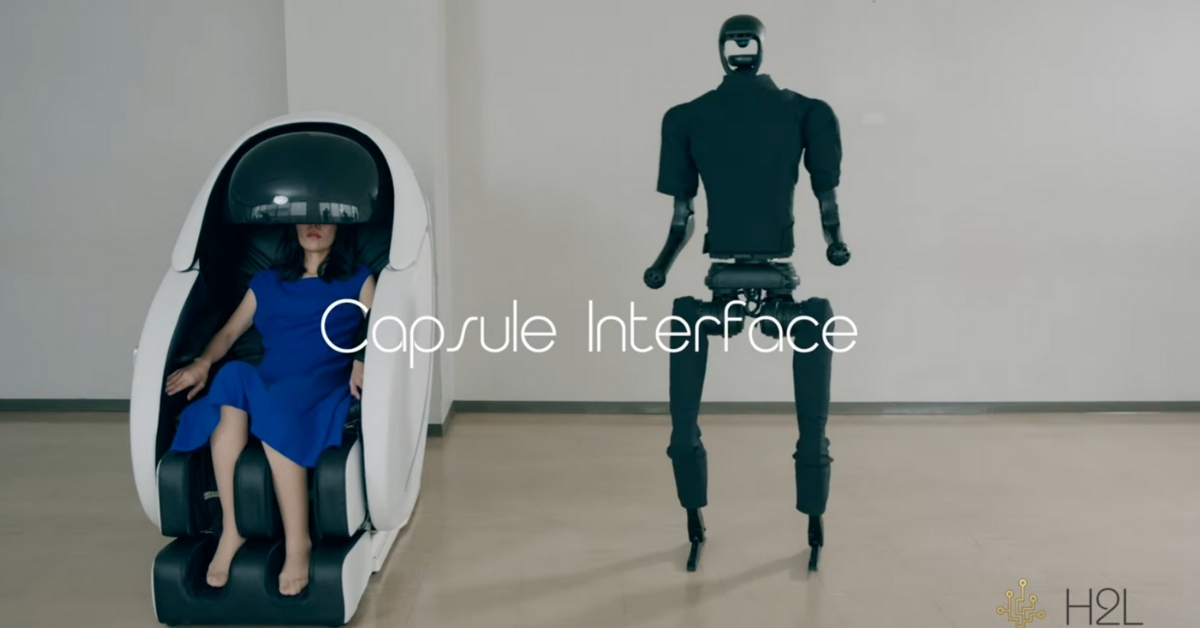
Imagine sitting in what looks like a high-tech massage chair or spacecraft pod – and controlling a robot on the other side of the world with your own body. That’s exactly the promise of H2L’s new Capsule Interface (nicknamed the “avatar capsule”). This Japanese tech startup has built a lounge-seat device packed with muscle sensors, a screen and speakers. Tiny displacements in your muscles (like a calf tensing or a finger flex) are picked up by the pod and sent as commands to a humanoid robot. In other words, your body becomes the robot. As H2L puts it, their muscle-based system lets a robot mirror “not just what you do but how hard you’re doing it”.
How It Works: Muscle Sensors and Real-Time Control
The Capsule Interface uses sophisticated muscle displacement sensors embedded in the seat and cushions. Even subtle twitches in your legs, arms or torso are detected instantly. The system then drives every joint of a humanoid robot (in demos, a Unitree H1) to copy your posture and the force behind it. There’s no need for gloves, joysticks or VR goggles – you simply lie or sit normally. A built-in display and speakers in the capsule stream video and sound from the robot’s point of view, so you see and hear what it does in real time. This creates a closed-loop feedback loop: you move, the robot moves; you see (and eventually feel) what the robot senses. H2L is even working on proprioceptive feedback, meaning the robot could send sensations back to you. For example, if the robot picks up a heavy box, your arm in the capsule would actually feel the weight.
Real-World Applications
H2L’s avatar capsule is more than a novelty – it’s designed for practical, life-changing uses. By letting humans teleoperate robots so naturally, it could transform many fields. For instance:
- Remote Work & Industry: Imagine attending a meeting via a robot-body without boarding a plane, or lifting heavy materials from a warehouse miles away. Technicians could repair power lines or factory equipment from home, avoiding dangerous conditions. Delivery drivers might control robots to carry packages while staying safe.
- Healthcare & Caregiving: Doctors and specialists could treat patients far away – even performing surgeries – by moving a robot’s arms as if their own. At the same time, a robot caregiver could help an elderly person get out of bed or take medicine, all controlled remotely by a nurse. One writer imagines “robotic caregivers operated from across the country,” or a person folding laundry from bed without ever standing up.
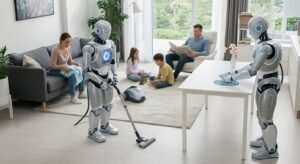
- Home & Daily Life: From washing dishes to fetching groceries, everyday tasks could be done remotely. A parent at work might play with a child through a friendly robot at home, or someone could vacuum and clean their apartment via their capsule. Heavy chores become easier and distance is no barrier to being present.
- Agriculture & Outdoors: Farmers may control tractors or harvesters without stepping onto the field. Even dangerous jobs like checking high-voltage lines or exploring collapsed buildings could be handled by a human-driven machine, keeping people out of harm’s way.
In short, H2L’s tech can extend human presence to anywhere robots can reach – from hospitals to factories to farms – and let “dual-income families, the elderly, and [do] everyday household tasks” be handled more safely and conveniently.
Transforming Human–Robot Interaction
This avatar capsule represents a new kind of bond between people and machines. Instead of clumsy controllers, you use your own muscles and natural movements, making the experience intuitive and almost magical. Experts say this could make teleoperation more than simple mimicry – a shared, visceral interaction. As one tech reporter put it, the Capsule Interface offers a glimpse of a future where “our physical presence and abilities can be extended far beyond our own bodies”. In other words, you’re not just piloting a robot – you are the robot. This deep connection can boost empathy and immersion: studies show that feeling even a little force feedback makes people more engaged. Ultimately, H2L expects the capsule will redefine industries and daily life, fostering deeper collaboration between humans and machines.
Looking Ahead: Demos and Buzz
The Capsule Interface is still cutting-edge and costly (reported around ¥30 million, or ~$208,000), but it’s already turning heads. H2L showcased a video demo of a woman using the capsule to control a Unitree H1 humanoid – she walks the robot across the room, orders it to wipe a table, and even shakes another person’s hand. Media outlets from VICE to Fox News and tech blogs have splashed it as “real-life avatar” technology. Tech writers note how H2L’s system “sidesteps the usual limits of motion-capture gear” by tapping directly into your body’s signals.
As researchers around the world (at Stanford, Simon Fraser and elsewhere) develop smarter teleoperation systems, H2L’s capsule could become even more powerful. Future upgrades like wireless setups and richer tactile feedback would let users feel texture and temperature too, making the illusion complete. In the near term, look for trials in areas like agriculture or logistics, and collaborations with robot-makers. As one columnist enthused, the capsule “could change how we work, help others and connect across distances”.
H2L’s avatar capsule is more than science fiction – it’s a peek at a future where anyone can reach out and be in another place, instantly. By blending advanced sensors, robotics and a dash of human magic, it promises safer jobs, richer experiences, and a whole new level of remote presence for people everywhere.
Sources: Recent reports from H2L and tech media, including VICE, Fox News, and robotics journals, describe the Capsule Interface and its demos and applications. These developments are based on H2L’s own announcements and demonstrations in 2025.